

Welcome to the Last Render Time of 2025
What a year to cover this industry.
A year where every corner of video tech turned into an arms race. AI. Streamers. Display. Distribution. And then there was geopolitics: the US-China tech cold war moved from screens to skies, nuking creator toolchains in the process.
This week’s Render Time has a bit of everything: tech bans with collateral damage, trailers that look worse on purpose, Larry Ellison risking a sixth of his net worth on Warner Bros.
Also, a calendar that might actually make you stick to your resolutions. (It won’t, but take a look anyway.)
Thanks for reading all year. See you in 2026.
Render Reel
LG unveils world’s first on-device 5K Ai upscaling monitor Ahead of CES 2026 LG unveils the UltraGear evo which delivers 5K-class clarity without forcing GPU upgrades. Spanning OLED, MiniLED, and ultra-wide formats, the lineup reframes the monitor as an active image processor, potentially triggering a display arms race.
Tropfest Returns in 2026 With $100K Fund and a Global Reset
After a six-year hiatus,Tropfest is back, reclaiming its spot as the world’s largest short film festival with a major live event set for February 22, 2026 in Sydney’s Centennial Park. The relaunch comes with a new $100,000 fund and global YouTube livestream.
Ellison Personally Backs Paramount’s $78B Shot at Warner Bros Paramount escalated its hostile bid for Warner Bros. Discovery by having Larry Ellison personally guarantee $40.4B of the financing (a sixth of his net worth).
Marty Supreme Posts a Historic Indie Opening Josh Safdie’s Marty Supreme, led by Timothée Chalamet, delivered the highest per-screen average of 2025 and the biggest limited debut in A24’s history.
DJI enters no-buy zone
When the FCC added DJI to its Banned List last week, the story seemed straightforward: foreign drones banned for national security reasons but the actual ruling does something far more expansive.
The ban also sweeps up “critical drone components, communications equipment, and video surveillance technology” from foreign manufacturers.
It’s that last phrase where things get interesting.
DJI hasn’t been a “drone” company for years.
They’ve been steadily building out an entire stabilization and imaging ecosystem: Osmo action cameras, pocket gimbals, phone stabilizers, motion-tracking modules. And those same sensors, firmware, and control systems that power their drone, also power all of this.
By banning the underlying components, the FCC has effectively killed DJI’s ability to sell new action cameras and gimbals in the US.
This goes way, way beyond aerial shooters and FPV pilots.
DJI hardware is embedded in creator workflows everywhere. The official line is “airspace sovereignty” and national security but the FCC’s own language tells you what’s really happening here: they want to “unleash the American consumer drone ecosystem.”
Elephant in the room
There is no American consumer drone ecosystem.
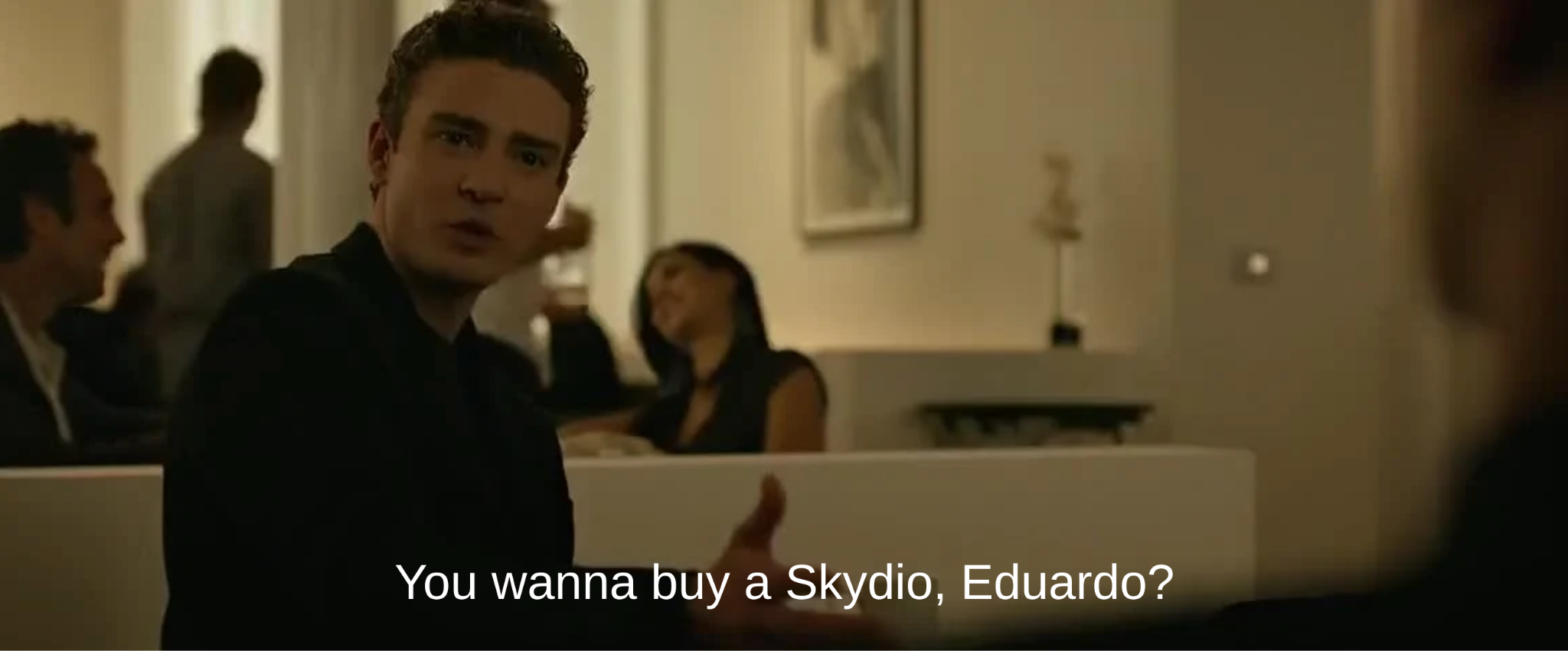
Well, there’s Skydio. But they literally gave up on consumers in 2023 only to sell to government, military, and enterprise at sky-high prices.
Or how about these?
AeroVironment: Military drones
Impossible Aerospace: Long-endurance industrial drones
3D Robotics, GoPro, Teal: All failed spectacularly trying to compete with DJI
The fact is, DJI has a 75% market dominance of drones and this ruling will dramatically affect the US market. One to watch.
1080p: A Bitrate Odyssey
The first trailer for Christopher Nolan’s The Odyssey landed with 121.4 million views in 24 hours, doubling Oppenheimer and setting a personal record for Nolan.
Early reaction fixated on historical inaccuracies (yawn). The real story, as Polygon also noted, was the YouTube bitrate.
Low bitrates, forced 1080p, and compression artifacts are par for the course when uploading to YouTube, but this time it felt intentional because it's Universal and they absolutely knew how to avoid it.
Consider: Universal, one of the largest studios in the world, with the infrastructure to QC a trailer upload in its sleep. Nolan shooting on two million feet of IMAX film using four custom-built cameras with some of the highest-resolution captures in history.
So why did the trailer look so compressed?
In 2025, uploading UHD footage to a scrapeable platform like YouTube is a liability. Studios are learning that once HQ assets go public, it’s no longer theirs.
Trailers get ripped and fed into generative models within hours. Entire channels now farm algorithmically-juiced “official-looking” fake trailers. From that angle, deliberately shipping a compromised version looks more like damage control.
This explains the pattern of official studio uploads consistently looking worse than random creator videos with commenters especially flagging similar artifacts across other Universal trailers.
Then there’s the IMAX angle. The Odyssey wasn’t meant to be experienced on YouTube.
The gap between a muddy online trailer and an IMAX screening might be strategic because the worse it looks online, the more the theater becomes the only place to actually see it.
Movie Marketing Is Everywhere… And Still Not Working A recent Vulture piece cuts to the uncomfortable truth behind modern movie marketing. Studios have saturated promos to the point of exhaustion, yet audience awareness of new releases keeps falling.
IDF Opens 2026 Short Pitch Call The Institute of Documentary Film has opened submissions for its 2026 Short Pitch Program, inviting emerging filmmakers from Central and Eastern Europe to submit short documentary projects (up to 25 minutes) in development or rough cut. Applications close February 1.
Disney Crosses $6B Worldwide They became the only studio to clear $6B at the global box office in 2025, powered by theatrical-first releases like Avatar: Fire and Ash, Lilo & Stitch and Zootopia 2.
Cut of the Week - Time Crisis: The Story of Arcade Legend Eddie Esguerra
Singular character, hyper-specific obsession, and a runtime built for sharing. We’ve seen that before but this creator profile does so much more than just documenting a quirk.
The video follows arcade legend Eddie Esguerra, who spends most weeks circling Los Angeles arcades to play a single game: Time Crisis. The twist is how he plays it: running two-player mode alone, simultaneously, in a style that turns an arcade cabinet into grand performance.
We move from observational doc,to screenlife, to UGC phone footage, to arcade screens, and to social media. All collapsing into one scroll.
The cut understands that Eddie isn’t just playing Time Crisis, he’s being watched, recorded and circulated.
After a solid festival run, including Palm Springs International ShortFest and San Francisco Documentary Festival, the short is now rolling out online via Short of the Week.
Retail Therapy
Apolosign Digital Calendar Display: The “Actually Stick to It” Home Reset ~$399

If your New Year’s resolutions include being more organized and arguing less about who forgot what in the house (spoiler: it was them), take a look at Apolosign. It turns a wall into a shared source of truth: synced calendars, chores, tasks, and reminders everyone can see without opening an app.
It also doubles as a photo frame and smart-home control panel, so it earns its place even when motivation dips mid-January.
If you’re reading in the app, tap the little ❤️ so we know you’re out there.