
Hi everyone!
Will you be at NAB in Las Vegas next month? I’d love to meet with you.
Come to our booth: N1672, North Hall. Yes we made enough customers happy that they subscribed and gave us money that we decided we could afford booth space at NAB and share our mission with future customers! :)
Demo: Sunday, April 19, 2:10pm W1143, Tech Chat Theatre. I am speaking about AI agents in post production and I’ll demo the latest with Eddie. And if you know us by now, we like to launch new things. ;)
Connect with us to setup a 1:1 meet or stay in touch re: events we will host: fill out this form. We will demo Eddie. You can try Eddie yourself. Please bring your questions (and concerns). How can Eddie improve content ops? What does Eddie mean for video editors and post production teams? Is AI immoral or amoral? Should we limit or ban AI in creative areas? Harder the question, the better. I’m here for it all. :) And mostly, looking forward to seeing ole friends, chatting to customers and hearing your feature requests, and meeting new awesome people.
Can’t wait to see you at NAB.
Enjoy today’s Rough Cut.
—Shamir Allibhai
CEO & Co-founder, Eddie AI
This week:
The UK government is investigating Adobe’s cancellation fees, the Daniels say their Everything Everywhere follow-up needed five years because the world is too complex to rush, Val Kilmer is starring in a new film five years after his death, and bots are crushing a 27-year-old film review site,
Render Reel
The Daniels’ follow-up to Everything Everywhere All at Once is a “fun sci-fi, action comedy with a big heart” shooting this summer and hopefully releasing November 2027. Daniel Kwan said the delay is because “what we’re feeling and what we’re hearing from the world is very complex and really nuanced.”
The UK’s Competition and Markets Authority is investigating Adobe’s cancellation fees: specifically the 50% early termination charge on annual plans billed monthly. The CMA wants to know if customers are being given clear enough information before signing up. Adobe could face fines of up to 10% of global turnover.
A trans editor is suing DreamWorks over harassment on Bad Guys 2: alleging a supervisor repeatedly used their deadname, sent unsolicited memes about transgender people, and asked invasive questions about their transition.
Val Kilmer is starring in a new film, five years after his death. His estate and family approved the use of generative AI to place him in As Deep as the Grave, a role he was cast in but too sick to shoot. The filmmakers followed SAG guidelines, compensated the estate, and say this is what Kilmer wanted.
A first-time director borrowed a friend’s Black List login, read 100 scripts, and just premiered at SXSW. Will Ropp found the script for Brian in 15 pages, shot it in 18 days in Oklahoma on a tax rebate, and cast William H. Macy and Randall Park. The most useful indie filmmaking case study you’ll read this week.
A producer published the most practical pre-production checklist we’ve seen from LLC formation to call sheet quotes from Robert Bresson. Adam Kritzer documented every step of making his feature Lost Cause and turned it into a downloadable PDF. Check it out below:

Kids-in-mind.com, the site that’s been analyzing films for child-appropriateness since 1998 is being crushed by bot traffic. Servers crashing, site going down for hours, forced to add intrusive verification screens. They’re asking for donations to hire developers and move to more secure hosting. No bot can watch a movie and review it the way a human has been doing every week for 27 years.
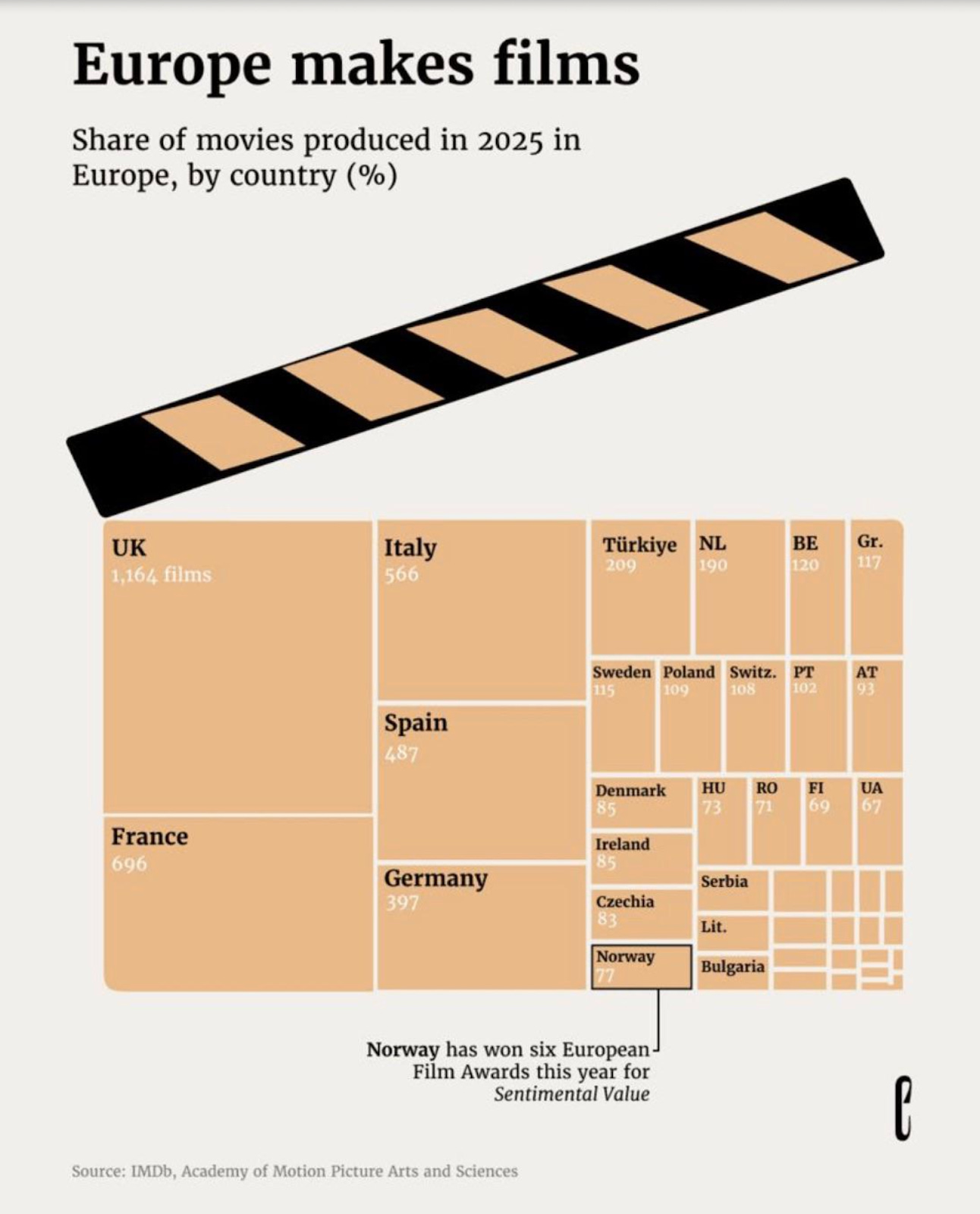
The UK produced 1,164 films in 2025, more than France, Germany, Spain, and Italy. Norway, which made 77, won six European Film Awards for Sentimental Value. Volume and quality remain on different tracks.
How a Fisherman’s Wharf jeans shop funded the worst film ever made
SFGATE published a fantastic deep dive into how Tommy Wiseau funded “The Room” and it’s too good not to summarize here.
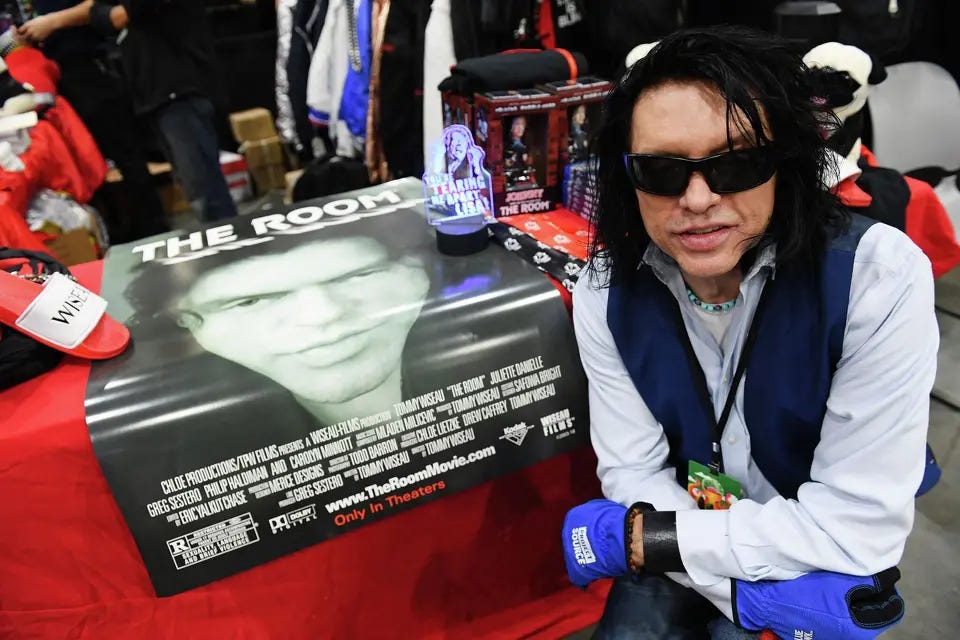
Mid-80’s. Before Tommy Wiseau was the man behind “The Room”( the $6 million disaster that became cinema’s most beloved cult film) he was a guy selling Levi’s to tourists out of a “Street Fashions” at San Francisco’s Fisherman’s Wharf.
Wiseau, who claimed to be from Louisiana but spoke with an unplaceable European accent, had arrived in the US with nothing and worked his way into retail by selling yo-yos and trinkets.
But his real play was denim. This was before Levi’s had its own retail locations, which meant tourists who wanted to buy the quintessential American jean had to go through middlemen and Wiseau was one of them.
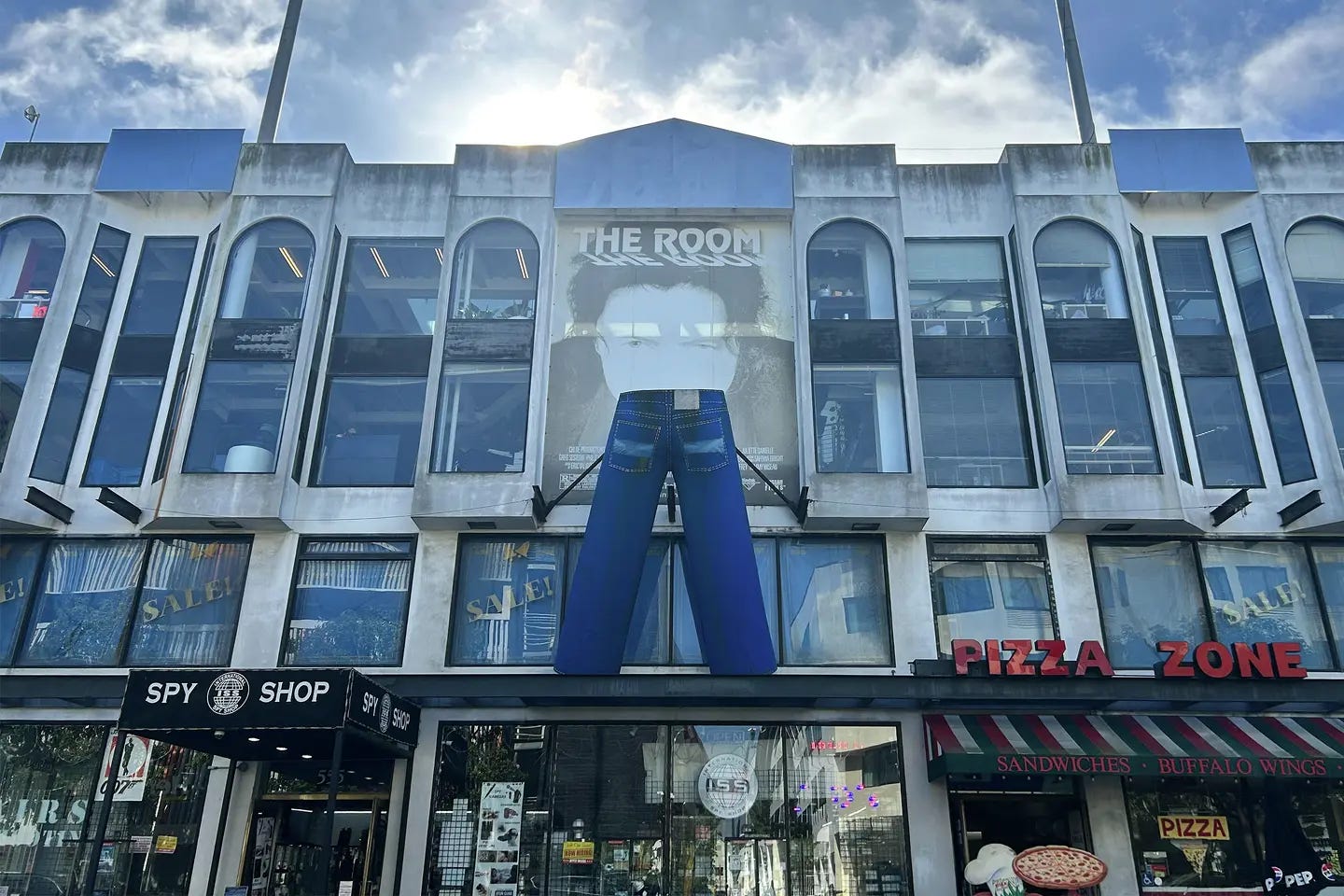
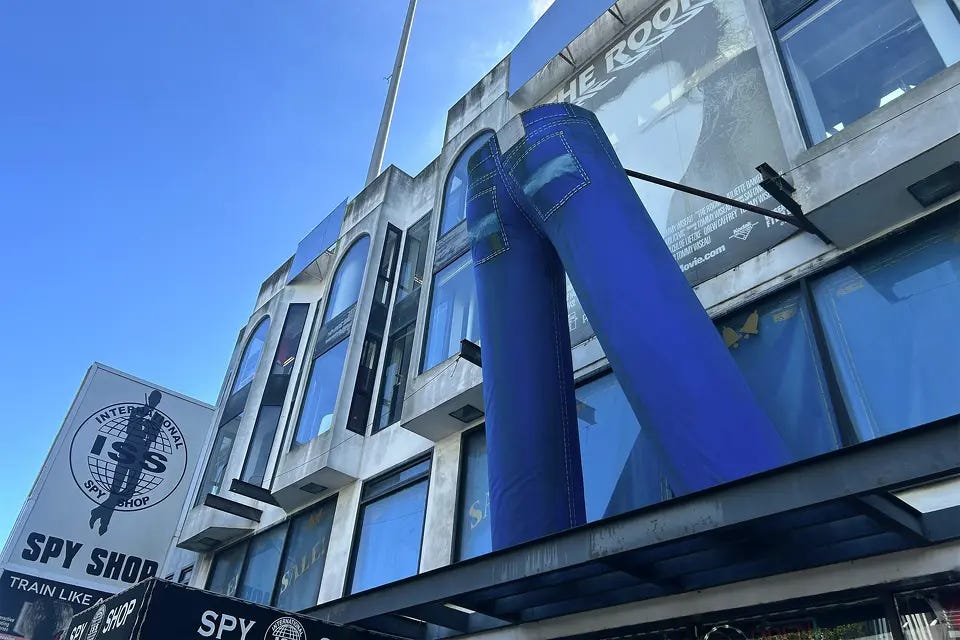
He put a massive pair of inflatable jeans on the front of the building and an American flag so large that nearby residents complained it was blocking their view.
According to former employee, close friend and now a San Fran circus director, Gregangelo Herrera, the operation was extremely lucrative.
Herrera handled the cash directly for a decade through the ‘80s and ‘90s, and says Wiseau “earned every f—king dime” that eventually went into financing his film.
Street Fashions expanded to multiple locations including building on Sutter Street. One night Wiseau called Herrera at 2am for help but when Herrera arrived, Wiseau was standing alone, drenched in sweat, having demolished half the second floor with a sledgehammer.
Herrera:
I don’t know how it was even humanly possible.
The business had its problems and European seasonal employees were reportedly sneaking jeans out of upper-floor windows and tossing them to accomplices on the street below.
Around the same time, federal agents were investigating a multinational Levi’s theft ring that was moving 5,000 stolen pairs a week to Eastern European markets at $200 a pop.
Eventually Levi’s opened its own flagship in downtown SF and the middleman model collapsed. Herrera eloped to run his circus full-time and when Wiseau held a private screening of “The Room” for friends, Herrera said he “wanted to crawl into a dark cave.”
Most staff would go on to leave Street Fashion but not Wiseau. He took The Room’s catastrophic reception and rebranded it as an intentional comedy, screening it at midnight showings where audiences threw plastic spoons at the screen and shouted along with the dialogue.
The film became such a phenomenon that even James Franco made a film about it in 2017 called The Disaster Artist. The original still screens regularly, two decades later.
Wiseau still owns the Fisherman’s Wharf building, leasing it to a spy shop that sells surveillance cameras, stink bombs, and ISIS action figures (yes). The Street Fashions sign is still on the side of the building, advertising a sale that ended well over 20 years ago.
Next door, a pizza place has a crumpled photo of Wiseau at an awards ceremony taped to the wall.
The whole story is the most American origin myth you could imagine.
An immigrant sells jeans to tourists, buys real estate, demolishes his own building with a sledgehammer, makes worst film ever produced, and then turns it into a career.
Sony dropped a major FX6 firmware update: new home screen, improved autofocus, Blackmagic RAW support via HDMI, and Monitor & Control upgrades. If you shoot on the FX6, this one’s worth the 8-minute install.
Sony is winding down Pixomondo (the Oscar-winning VFX house behind Hugo, Game of Thrones, and House of the Dragon) just three years after buying it. Around 500 people were affected with VFX work now consolidated into Imageworks. It provides a stark reminder that winning an Academy Award doesn’t make you acquisition-proof.
Singapore-based Video Rebirth raised $80 million for its AI video model Bach: Backed by AMD Ventures and Hyundai, targeting professional-grade 30fps output for advertising and film. They’re positioning against consumer tools like Veo and Pika by focusing on temporal consistency and controllable automation. Yet another entrant in the AI video space, except this one actually says the word “consistency” out loud.
This week we’re watching:
For the compositors out there, this video is an absolute goldmine.
It’s a highly technical speed-compositing breakdown demonstrating how to take a raw blue-screen plate and turn it into a final, Marvel-level cinematic shot using Foundry’s Nuke.
Retail Therapy: Glasses for editors who forgot to blink

Gunnar’s new mineral glass lenses are made from the same material as camera and telescope optics but can now sit on your face while you scrub through a timeline at 4am.
Scratch-resistant, distortion-free, with a 0.2 diopter focusing power designed to reduce the eye strain you’ve been pretending isn’t happening.
Two tint options included: Amber for blue-light blocking and contrast, or Clear Pro for accurate color.
Available at gunnar.com.