
Hi everyone —
I was reflecting on a chat I had with a new customer…
A lot of AI tools fail creative people for the same reason: they confuse automation with creativity.
They assume the goal is to remove the human from the process.
But anyone who has actually edited a film, cut a documentary, shaped a YouTube story, or worked through the tenth version of a brand piece knows the real work isn’t mechanical. It’s emotional. Intuitive. Iterative. Often frustrating. Occasionally magical.
Creative work isn’t a straight line from prompt to output.
It’s exploration.
And that’s where many AI products break down.
They generate polished-looking results quickly, but leave no room for discovery. No room for instinct. No room for the tiny human decisions that make something feel alive instead of merely correct.
Worse, many AI tools interrupt the very workflows creatives rely on. They ask editors to leave their timelines, upload assets into disconnected interfaces, or trust black-box outputs they can’t meaningfully control.
That might work for a demo.
It doesn’t work under deadline.
At Eddie AI, we think the future of creative AI looks different.
We don’t believe the editor disappears.
We believe the busywork disappears.
The searching. The organizing. The first-pass assembly. The repetitive mechanical steps that drain energy before the real storytelling even begins.
The goal isn’t to replace creative people. It’s to help them stay in creative flow longer.
Because the best editing decisions still come from humans:
the pause before a reaction shot,
the instinct to hold on a moment,
the feeling that a scene needs air,
the realization that the story is actually about something else entirely.
AI can accelerate the process.
But taste, emotion, and storytelling judgment still belong to people.
And honestly, that’s a good thing.
—Shamir
This week:
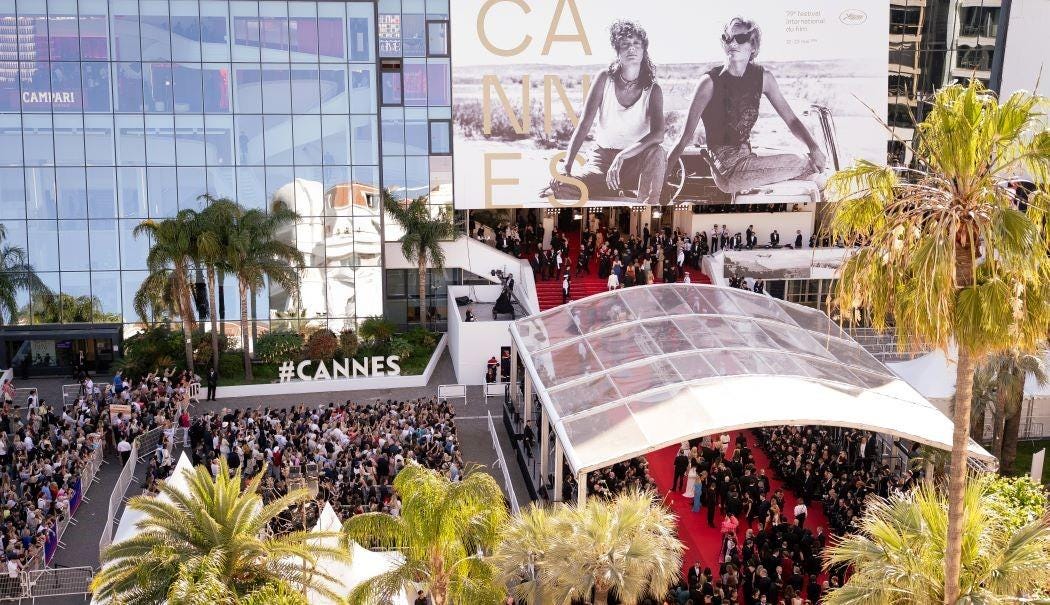
DJI launched a cinema-grade Pocket camera at Cannes that may never reach the US, a Harlem Renaissance documentary premiered 50 years after the footage was shot, Sony pushed a major BURANO firmware update, and someone tracked 13,000 indie buyer deals since January and published the whole dataset for free.
Render Reel
A24 paid $17 million for Cannes breakout about washed-up party promoter. Jordan Firstman’s Club Kid. His directorial debut, also starring Cara Delevingne and Diego Calva premiered Friday in Un Certain Regard and triggered an eight-figure bidding war by Saturday. A24 outbid Focus, Searchlight, Netflix and Mubi; Warner Bros.’ new indie label Clockwork tapped out early.
A Harlem Renaissance documentary premiered at Cannes 50 years after footage was shot. In 1972, filmmaker William Greaves gathered surviving figures of the movement at Duke Ellington’s townhouse and filmed them for four hours but never finished a film. After his death in 2014, his son and granddaughter restored 60,000 feet of 16mm film and completed it.
ScriptMatch tracked 4,100+ indie buyers and 13,000+ deals since January and published the data. Horror’s share of buyer mentions doubled. Boutique theatrical distributors scaling up. Vietnamese, South Asian, Filipino, and Chilean projects are getting pickups at unusual rates.
Sony BURANO gets major firmware update. Version 3.00 adds full-frame 5.8K 6:5 for anamorphic lenses, Super 35 3.8K at 120fps, X-OCN recording for S35 1.9K, and normal peaking support. If you shoot on a BURANO, this is the update you’ve been waiting for.
Soderbergh’s Full Metal AI
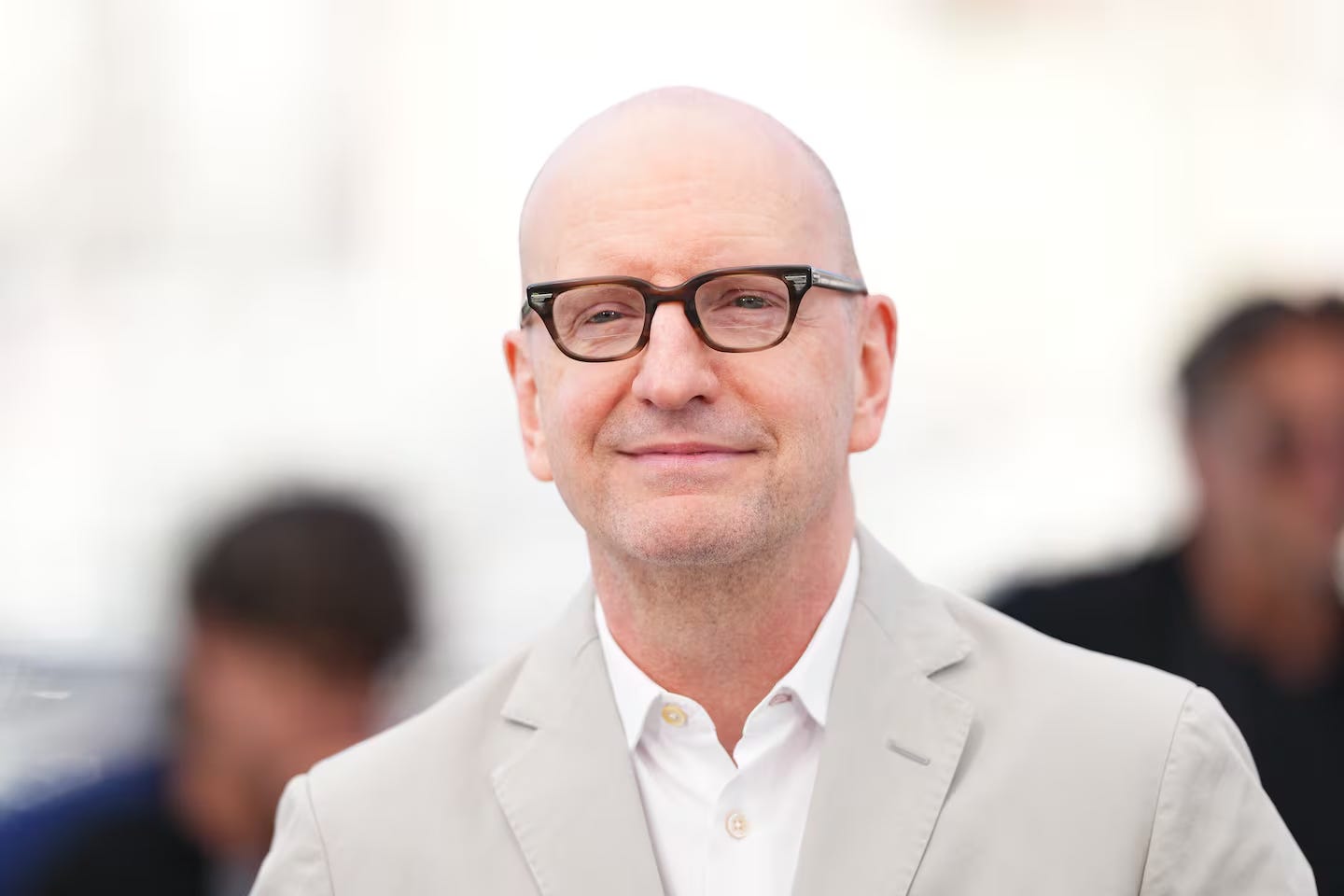
Steven Soderbergh used Meta’s generative AI to fill in about 10% of his new John Lennon documentary and the reception at Cannes ranges from polite confusion to outright contempt.
Time called the imagery pointless and bad but Soderbergh is unbothered.
The film is built around a two-hour radio interview Lennon and Yoko Ono gave a small KFRC crew at the Dakota on December 8, 1980 hours before Lennon was shot. The audio is the spine and for most of it, Soderbergh leans on archival photos and footage.
For the more philosophical stretches, he reached for AI.
“I worked on everything that could be solved except that for as long as I could,” he told the AP. Then he ran out of time and money and the Meta deal closed the gap.
Fair to hate the visuals. Bad AI in a doc about one of the 20th century’s most uncompromising creative weirdos is, on its face, isn’t great.
But the argument underneath is more interesting than the imagery. Soderbergh has been saying out loud that someone with creative credibility needs to “go full-metal AI” in public so the rest of the industry can actually see what crosses the line, and what doesn’t.
Soderbergh is a man who refuses to be told what tools he can or can’t reach for.
Considering this is the guy who shot Unsane on an iPhone it makes all the sense.
And Soderbergh is not alone. 2026 is truly the first Cannes where AI has moved from debate to being on the slate.
Sales agents at the Marché say the embarrassment around using the tech evaporated in twelve months. AGC’s Critterz is branded “human-led but AI-assisted.” Doug Liman’s Bitcoin is co-produced by Kavanaugh’s new venture, Acme AI & FX.
Thierry Frémaux gave a measured “we are on the side of the artists” then programmed Soderbergh anyway.
Two things can be true but whether Soderbergh’s Lennon experiment worked remains to be seen. But if you know Soderbergh that’s all he’s ever done.
Filmsupply launched Editfest 2026 a 30-day editing competition with $65K in prizes across title sequence, advertisement, and trailer categories. Download the starter kit, cut something from their cinematic library, submit by June 5.
Canal+ says it will blacklist over 600 French cinema figures who signed a petition warning that leaving French cinema in the hands of far-right billionaire Vincent Bolloré risked “a fascist takeover of the collective imagination.” The CEO’s response: “I will no longer work with the people who signed that petition.” Among the signatories: Juliette Binoche and a director with a film in Cannes competition this week.
DJI launches Osmo Pocket 4P at Cannes. First time the company has positioned a Pocket as a filmmaking tool rather than a vlogger gadget. The regulatory pressure on Chinese drone and wireless products in the US means it’s unclear if or when the 4P actually makes it stateside
This week we’re watching:
A CalArts animated short by Melody Cheng where every frame is hand-illustrated to the point where you’d hang any still on a wall.
Two characters navigate a building complex that grows on its own, a structure so uncontrollable it’s scheduled for demolition.
Four minutes with no dialogue wasted, and a visual quality that makes you forget a student made it.
Sound could use some work but everything else is already there.
Retail Therapy: The guitar that plays itself (almost)
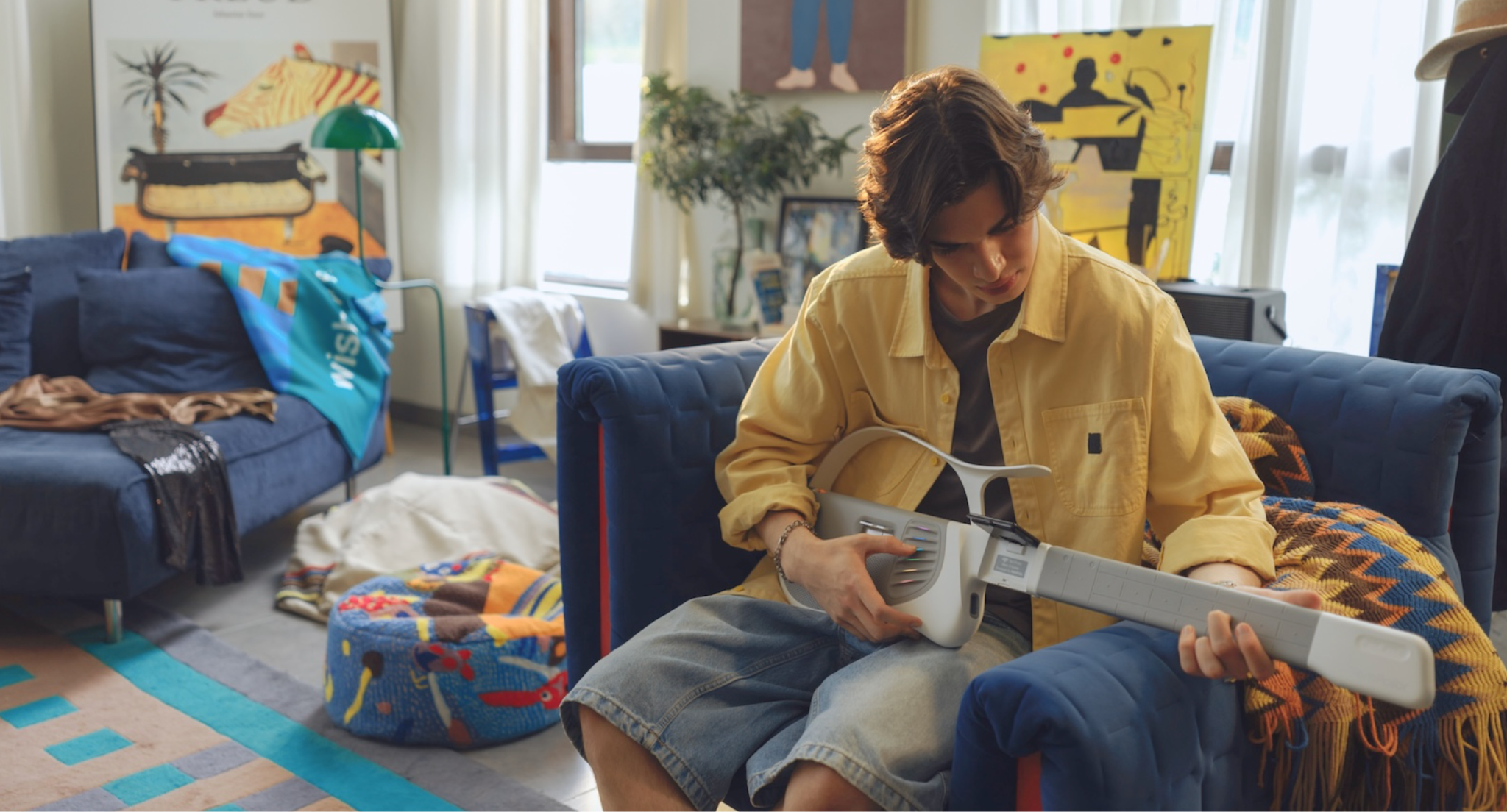
The Melo-D is a foldable AI guitar with LED frets, a built-in touchscreen, and the ability to convert any song into playable chords the moment you paste a link. Hum a melody and it turns it into a guitar solo. Type a mood and it generates an original piece.
It also does piano, electric guitar, and guzheng sounds, because apparently one existential crisis about whether you’re actually playing music wasn’t enough.
Available here.