
This week, Product Hunt featured us on their homepage. It's not for what might think.
We were using a bunch of tools that weren't great or were overpriced, and we thought, what the heck, we can do this better.
And so we did.
Hello, Review by Eddie AI.
We're an agentic AI video editing co for pros, and we make a lot of videos on this team. I have lots and lots of feedback for the folks in AI science, software eng, design, and video marketing.
Leaving timestamped comments on a video is not revolutionary. So why is frame.io so expensive? And why are so many of the tools just meh?
This is a tax on video storytelling.
As a team and as a company, we're driven to enable more people to tell more and better video stories. Huddling with your team on the latest cut, getting their read on how it lands - that's part of this.
So welcome Review. It's free.
And there's a novel twist: you can ask Eddie AI for feedback too. It's surprisingly good.
Try it and let me know what you think. It's my turn to receive feedback :)
I hope you’re having an epic week.
—Shamir
Also this week:
A workprint of The Last Boy Scout surfaced because Warner shipped the wrong print to a college film club, Alamo Drafthouse launched a distribution arm for festival films nobody bought, Wes Anderson is screening Bottle Rocket to save a 1947 Houston cinema, and SanDisk’s 8TB SD cards are finally shipping two years late and needing a new reader.
Render Reel
Insta360 and Bambu Lab launched a 3D printing challenge for Luna Ultra accessories. Design a mount or mod for the 8K gimbal camera and submit to MakerWorld by August 9, no printer required. Smart collaboration or free R&D, depending on your mood. Probably both.
Netflix in early talks to buy Letterboxd. Sony, Paramount Skydance, TPG, and Reddit co-founder Alexis Ohanian are also reportedly circling, with LionTree floating a $250 million valuation which is roughly 5x what Tiny paid for its majority stake in 2023.
SanDisk’s 8TB SD cards are finally, actually, probably shipping. Announced in 2024, missed 2025 entirely, now confirmed at Computex with 4TB microSD versions alongside. The catch is that they’ll likely require next-gen SD Express readers, so your existing gear won’t read them.
Wes Anderson to screen Bottle Rocket in Houston to save a 1947 movie theater. The one-night benefit on July 17 marks 30 years since his debut and will fund the preservation of the Garden Oaks Theater. Anderson picked the accompanying shorts himself and will do a pre-show conversation. Hometown filmmaker rescues hometown cinema is the kind of story that shouldn’t be rare but is.
A workprint of The Last Boy Scout was discovered by accident. A college film club asked Warner for a print of Tony Scott’s action comedy and Warner shipped the pre-release workprint by mistake, complete with different edits and more violence. Arrow is now trying to get it cleared for the upcoming 4K release. Somewhere in a warehouse, an archivist is having a very bad week and film fans are having a great one.
Alamo Drafthouse launched a distribution arm for festival films nobody bought. Alamo Exclusives will give limited nationwide runs to unacquired titles from Sundance, SXSW, Cannes, TIFF, and Fantastic Fest, with marketing support included. First up is a Butthole Surfers documentary (they’re an actual band btw). Between this, the animated shorts programme, and the phone petition, the Sony-owned chain keeps doing more for independent film than most distributors.
Cameras of God?
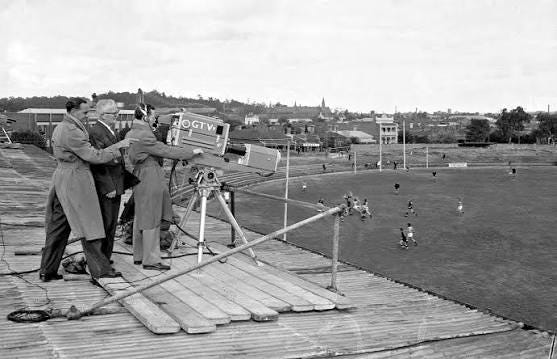
Every World Cup doubles as a broadcast technology expo, and this one is no exception.
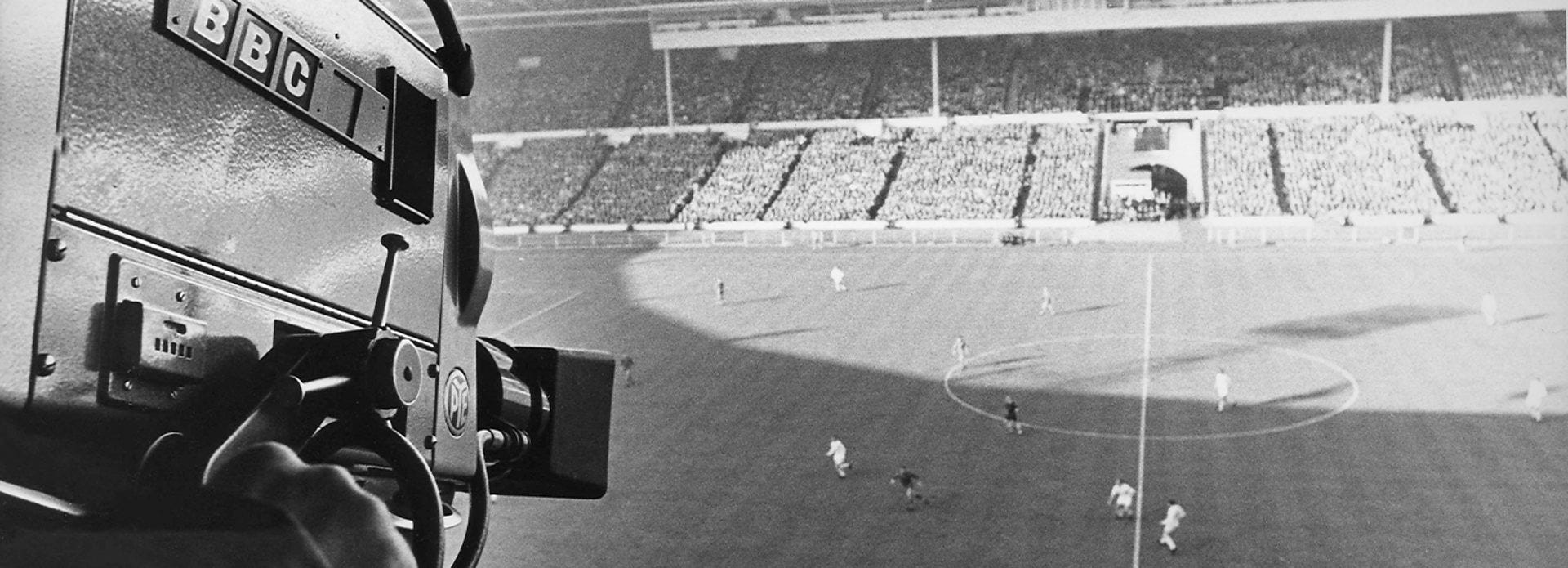
Switzerland 1954 was the first televised tournament, and Mexico 1970 was the first beamed around the world by satellite in colour which is why Pelé’s yellow shirt became global memory rather than merely Brazilian history.
By ‘86, slow-mo replay had turned Maradona’s Hand of God into the most litigated image in sport. For the first time, millions of people at home had better information than the officials running the match, and that gap became football’s central technical problem.
Frank Lampard’s disallowed goal for England against Germany in 2010 made it impossible to ignore any longer.
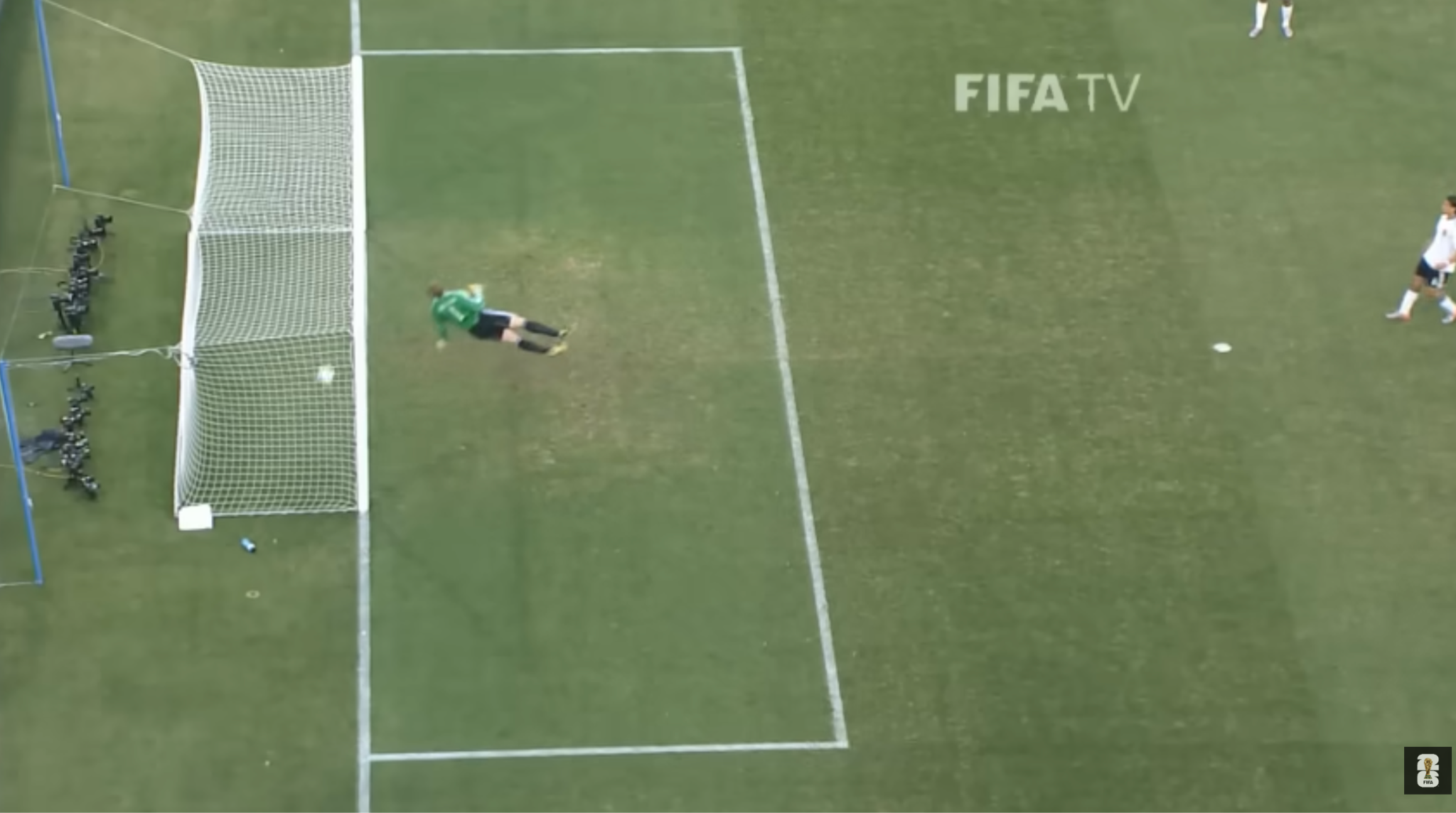
The ball crossed the line by half a metre and everyone watching knew it except the referee. It was a decision so egregious that goal-line technology arrived in 2014, and Video Assistant Referee in 2018, and semi-automated offside in 2022, each sold the same thing:
Humans miss things, our cameras don’t.
This World Cup completes that argument, then turns it inside out.
The Adidas Trionda ball contains a sensor measuring movement 500 times a second, working alongside 16 optical-tracking cameras per stadium that collect 29 data points per player. The ball needs charging with roughly 90 minutes plugged in buys six hours of play, a sentence that would’ve gotten you laughed out of any pub in 1998.
In the round of 32, the system cancelled a Croatia equaliser by detecting a touch that neither the naked eye nor replay could resolve.
Then came Norway.
During the quarter-final against England, a clearance appeared, to Norway’s goalkeeper, its bench, and virtually everyone watching, to strike the overhead camera cable and drop vertically out of the sky.
England recovered the ball and Jude Bellingham scored England’s equaliser. FIFA’s conclusion was that the sensor recorded no spike, therefore there was no contact.
Norway coach Ståle Solbakken supplied the line of the tournament: “If there has been nothing there in the chip, what can I say against that?”
Quite a lot, theoretically. In practice, nothing.
For seventy years cameras were the correction to human fallibility. Now the camera is just one witness among competing systems, and when every human eye said the ball hit the wire, the telemetry overruled them all.
The accused object was itself broadcast infrastructure, investigated by cameras and acquitted by a chip inside the ball.
Who knows what World Cup 2030 will look like in terms of video tech?
The next tournament spans six countries and three continents, but the bigger shift is from filmed matches to rendered ones. Volumetric capture can already reconstruct live action in three dimensions and generate viewpoints where no physical camera existed.
FIFA is producing virtual replays from tracking data, and AI systems are cutting different feeds for different audiences.
The endpoint is a World Cup without a single definitive broadcast.
One viewer watches from the referee’s eyeline, another from a synthetic seat floating above the penalty area, while an AI director follows your favourite player and reframes it all vertically for your phone.
Every version generated from the same underlying model of the pitch.
The 1954 tournament asked whether football could survive being televised. The 2030 one might ask whether it needs cameras at all.
P.S Spain vs Messi in the final on Sunday - who you got?
European broadcasters issued guidelines against sexualising female athletes on camera. European Athletics and the EBU are advising against prolonged body close-ups, low-angle shots, and slow-mo replays that add nothing to the sport.
Neon launches Neon TV. Tom Quinn stays as CEO, fresh off a seventh consecutive Palme d’Or. Months after calling an A24-Neon merger “ridiculous,” the anti-consolidation studio is quietly becoming a mini-major on its own terms.
Dances With Wolves is getting a four-hour director’s cut at Locarno. The 4K restoration adds 30 minutes of unseen material. We covered director’s cuts you’ll never see a few issues back but here’s one that actually escaped the vault 36 years later.
This week we’re watching:
Artist Olga Sizoy’s handmade “Inception rig” is a photography setup built from more than a dozen layered cut-out city images that she shot through with an iPhone.
Subjects appear suspended inside a folding skyline with streets stacking on streets like the Paris scene from Nolan’s film, except this is cardboard and clever depth staging rather than VFX.
Thirty seconds on Instagram that’ll actually make you want to build something.
Retail Therapy: The 200-inch screen that weighs 93 grams
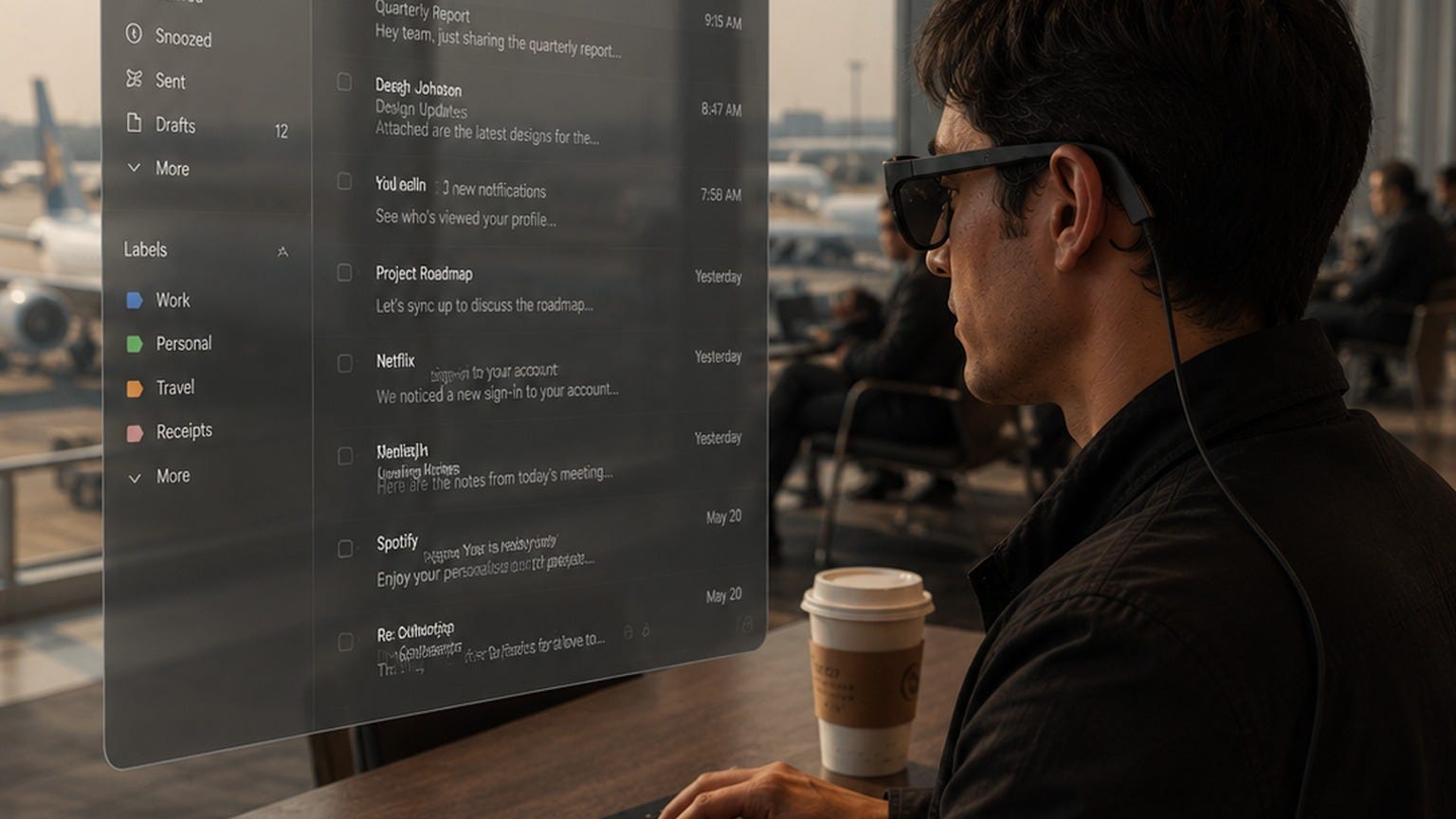
The URXR One is a pair of spatial display glasses that turn your laptop, handheld, or console into a private 200-inch screen.
Micro-OLED panels at 2448 x 2064 per eye, a 90-degree field of view, and a tracking chip that locks the display in physical space so it doesn’t chase you around the room.
One USB-C cable with hand tracking instead of a controller.
Heading to Kickstarter in August at urxr.com.