
Happy Monday!
It’s been an intense few weeks. But the good kind.
We had a rush of new users to Eddie, the AI AE for video pros. And a meaningful inflection.
The quiet work we’ve been doing for at least 7 months (but truthfully, since day 1) has really made a difference for this latest surge. The behind-the-scenes work is not sexy; it’s table stakes like better workflows, better UI, faster tech.
And you can feel the impact in users telling us about their delightful experience. They’re getting better edits and better outcomes. They’re spending less time on tedious work, more time on creative.
Their clients are happier.
They, themselves, are happy.
Feel free to reply to me and let me know about your recent experiences with Eddie AI. What should we improve next? What’s the next feature you want us to add?
To that end — as you should expect by now if you’ve been following along ;) — we have something brewing. And it’s kinda cool. (I am totally, 100% not biased.)
I can’t wait to share more on it soon.
Kick butt this week.
—Shamir

This week:
Netflix walked away from an $83 billion deal for Warner Bros, a podcast is using generative AI to make the films Hollywood didn’t make, ARRI is putting its image science into a smartphone, Project Hail Mary has 2,018 VFX shots but 0 green screens, Blu-ray refuses to die, SXSW kicks off its most radical restructuring in decades and I’ll be there with a Julia Fox film.
Render Reel
Netflix walked away from an $83 billion deal for Warner Bros., then immediately bought Ben Affleck’s AI startup.
They acquired InterPositive, Ben Affleck’s 16-person AI startup that’s been in stealth since 2022.
InterPositive is nothing like Sora or Runway as it doesn’t generate video from prompts. Instead, it trains on a production’s own dailies, then lets filmmakers relight, fix continuity, and adjust color within its existing pipeline.
Netflix spends about $20 billion a year on content so even a modest efficiency gain across post-production compounds across every title. The framing is quality, not cost with Sarandos saying the business is in making content 10% better, not 50% cheaper.
UK government is exploring a state-backed “British YouTube” a platform built into the free TV infrastructure already on millions of TV sets, ad-funded through Channel 4’s existing sales operation, with creators keeping 100% of their IP.
“Project Hail Mary” has 2,018 VFX shots and zero green screens. Co-director Christopher Miller clarified that the Ryan Gosling space film built the entire ship interior as a practical set, shot against black and color-shifting backgrounds for true interactive light. Guillermo del Toro called it “an aspiration and a commitment, especially now.” Opens March 20.
4K Blu-ray sales rose 12% in 2025 while overall physical media dropped less than 10%. Streaming still accounts for 92% of home entertainment spending, but the disc that everyone keeps eulogizing is refusing to die.
Someone mapped the exact minute every Pixar film makes you cry. 77% of the tear moments land in the final 30% of the runtime. Only two films break you in the opening minutes (Up and Finding Nemo). The most profitable cry factory in cinema, visualized.
Podcast uses AI to make Hollywood’s unmade
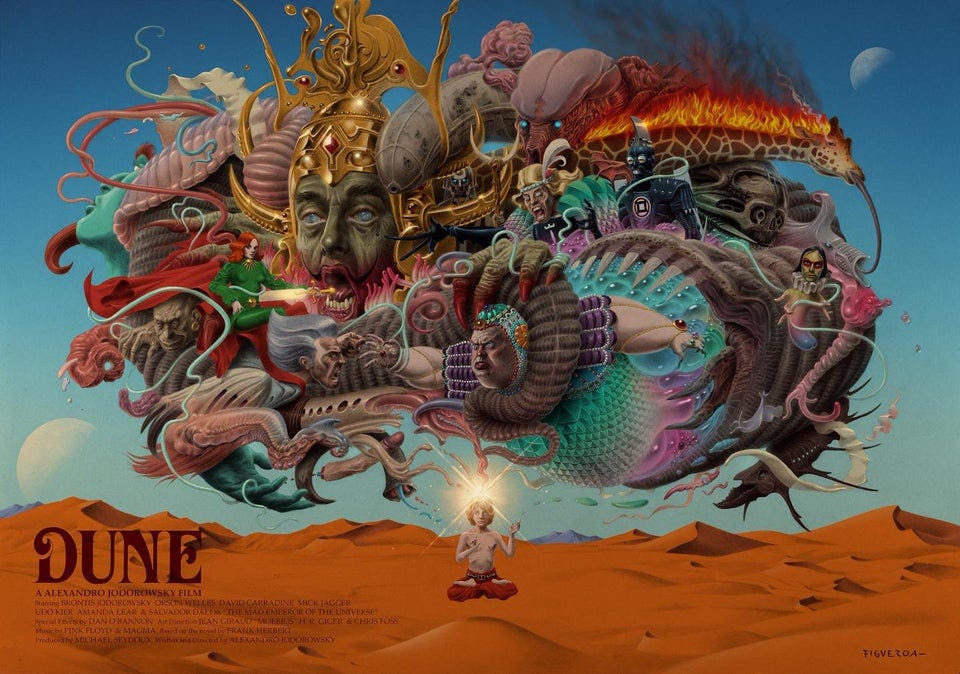
What would Jodorowsky’s Dune really have been like? Or Kubrick’s Napoleon?
I guess we’ll never know. But a new podcast is trying anyway.
New pod, Films Not Made, from veteran producers Avi Zev Weider and Amy Hobby, is doing something interesting with that space. Each week, they revisit projects that died then use generative AI to produce trailers, scenes, and stills to bring them to life.
It’s interesting because understanding why films don’t get made is often more instructive than understanding why they do.
It’s also a genuinely novel use case for AI: visualizing work that never existed.
The kind of the next evolution of remastering scratchy early recordings into full-fidelity audio, or colorizing black-and-white footage. Except here, the original never existed at all.
Will be interesting to see where this goes, even just as an experiment.
First episode is out now on Apple Podcasts and Spotify.
ARRI is putting its image science into a smartphone partnering with HONOR on a “robot phone” arriving later this year. Unlike the Leica/Xiaomi or Hasselblad/OnePlus deals, which are mostly color profiles and lens branding, ARRI says this goes deeper.
Time Out published 100 greatest cinemas list: from a Berlin kino with a nuclear bunker to a Canadian theater with only 12 seats. A love letter to the places streaming was supposed to kill.
Filmmaker magazine just moved to Substack Its first editorial letter covers a lot of ground. The Paramount/Warner Bros. merger, Netflix's cost-plus model, the NonDé movement, the Berlinale fallout, and Sundance's move to Boulder. Worth a subscribe if you're in indie film.

What actually is SXSW?
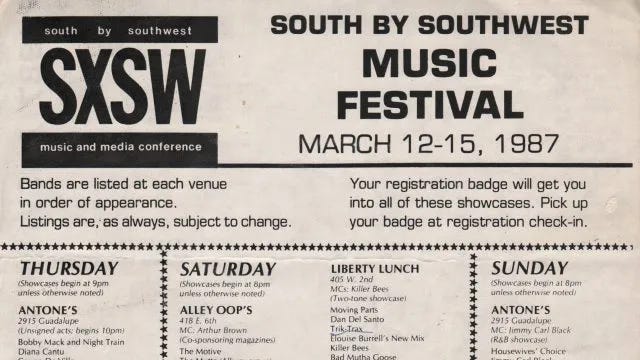
This year's edition starts this Thursday and got me thinking about what SXSW actually is.
I’ve been to most of the majors now and you get a feel for them quite quickly. Cannes seals attendees behind hierarchy on the French Riviera. Sundance traps everyone in a small mountain town and lets the industry bring its heat to the snow.
But SXSW is different.
It’s a top-10 film festival that isn't really a film festival at all.
It’s the only place in the world where filmmakers, tech bros, VCs, and touring musicians cram into the same city block, all peddling something that doesn’t really exist yet and hoping this is the week it sees the light of day.
It started in 1987 as a regional music showcase with 700 people showing up to watch 200 bands across fifteen Austin venues. Film arrived in ‘94. Tech followed soon after and by 2010, the Interactive track had officially overtaken music in attendance.
Twitter was a nothing but a niche microblog when launched at SXSW in 2007. Jack Dorsey and co. placed live tweet displays in the convention center hallways, encouraging real-time conversation among attendees.
Usage tripled almost overnight, jumping from 20,000 daily messages to 60,000.
It was the moment Silicon Valley realized SXSW was the launchpad for consumer tech and suddenly the scruffy “Keep Austin Weird” festival was now hosting six-story Doritos vending machines and TEDx-esque keynotes.
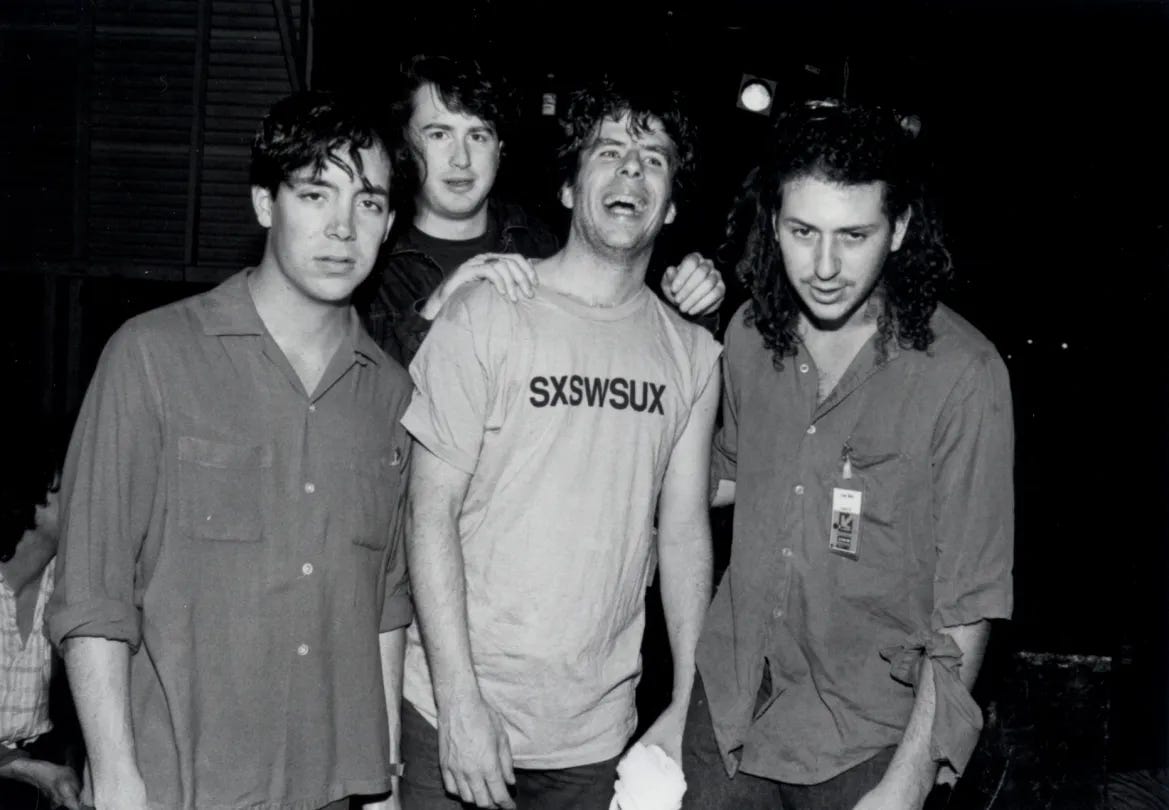
Anyway, back to film.
The term “mumblecore” was literally invented at SXSW.
Coined at a bar during the 2005 festival after premieres from the Duplass brothers, Andrew Bujalski, and Joe Swanberg. Greta Gerwig’s career also started here. Lena Dunham’s too. Even Jordan Peele’s Get Out premiered here.
The Midnighters section evolved into arguably the best horror launchpad in the world with Blair Witch, Insidious, X, Cabin in the Woods all premiering to Austin midnight crowds.
And when A24 needed to launch Oscar romp Everything Everywhere All at Once, SXSW was the only home that made sense.
This year marks the festival’s most radical restructuring in decades.
The Austin Convention Center is being demolished, forcing a decentralized “clubhouse” model across three neighborhoods. The schedule has been shortened from ten days to seven, with film, tech, and music running simultaneously for the first time under the theme “All Together Now.”
It’s either a return to the organic, street-level energy of the early years or a logistical nightmare. Probably both.
I’ll have to let you guys know as I’ll be there March 11–18 for my first SXSW as co-exec producer of PERFECT, starring Julia Fox and directed by Millicent Hailes in her feature debut.
If you’re coming to SX please let me know :)
Two fun SXSW facts:
“South by Southwest” is a play on Hitchcock’s North by Northwest.
The festival’s official email address in its early years was 72662.465@compuserve.com. Early panel talks included “The Web Is Dead?” and “So You Want to Make a CD-ROM?” I’ll be honest, I had to Google what CompuServe was but I was born in ‘94.
This week we’re watching:
A fly-on-the-wall look at the most expensive self-funded film ever made and proof that $120 million of your own money doesn't solve the one problem every other self-funded project has: nobody in the room who can tell you no.
Retail Therapy: The phone that starts fires
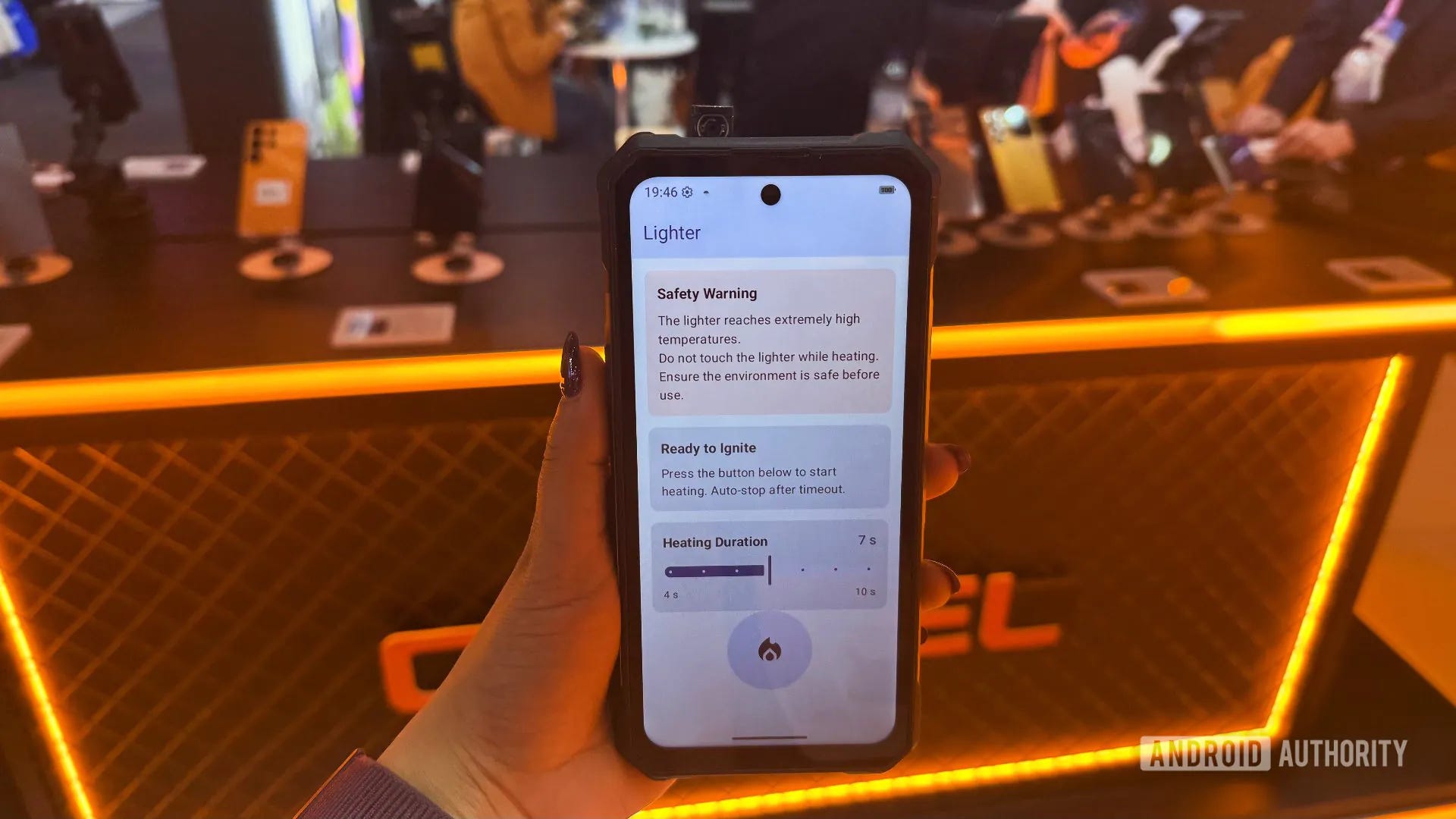
The Oukitel WP63 is a rugged Android phone with a 20,000mAh battery. It can survive a 100-foot drop, charge your MacBook, and literally light a campfire.
It’s marketed for off-grid adventurers and wilderness types, which is corporate for “preppers who still want to check their email.” The battery is so large the phone is essentially a power bank that happens to make calls.
Not yet out but you can get more info here.