

This week, Nikon and RED start merging color science like a cinematic treaty. Camerimage in Poland, turned into a playground of 17K sensors, race-car rigs, and Lynchian mysticism. Meanwhile Todd Field suggests Eyes Wide Shut might not even be the film Kubrick meant us to see, and OpenAI and Google are rationing video generations because their GPUs are overheating.
Meta is building VR worlds from a sentence, and documentary filmmakers are bracing for a future where truth itself has no baseline.
Craft, tech and uncanny dread: all in a week that also gives us a $150-per-person indie lab run by Ari Aster, a Forbes deep dive into faceless automation and Sundance filmmakers refreshing their inbox like it’s a blood sport.
All topped off with Apple’s puppet musical Xmas ad to remind us what “real” feels like;
Render Reel
Nikon and RED Tease ‘Cinematic’ Color Recipes for Nikon Bodies
Nikon is rolling out RED-developed Imaging Recipes to its Z-series via Imaging Cloud on December 10, effectively dropping slices of RED color science straight into hybrid cameras
Camerimage 2025 Doubles Down on Craft, Tech, and the Future of the Image
From David Lynch tributes and POV Cyclops rigs to F1 race cams, Blackmagic’s 17K URSA Cine and Vision Pro immersive demos.
Todd Field Says Eyes Wide Shut Might Just Be Kubrick’s First Draft
Field now argues the version we all know is likely Stanley’s first cut, not his final word.
OpenAI and Google Throttle Sora and Nano Banana Pro as GPUs ‘Melt’
Holiday-week demand forced both companies to tighten generation limits. Sora down to six free videos a day, Nano Banana Pro to two free images.
Liberty Global Buys a Piece of ElevenLabs to Own the Voice Layer
The telecom giant’s strategic investment in ElevenLabs is a bet that ultra-realistic multilingual voice AI will become default infrastructure.
Meta’s WorldGen: AI-Generated VR Worlds From a Single Prompt
Meta just dropped one of the biggest XR moves of the year: WorldGen, a research-stage system that can generate fully navigable 3D worlds from a single text prompt. This isn’t “make me a Minecraft biome.” The workflow chains procedural layout generation, diffusion-driven 3D reconstruction, and automated texturing into scenes you can immediately drop into Unity or Unreal.
It even breaks environments into editable objects using an accelerated AutoPartGen process, turning the output into real production assets rather than decorative backgrounds.
It matters because Horizon Worlds has been bottlenecked by creator tooling and overall visual quality, and this is Meta’s clearest attempt yet to bulldoze that ceiling. The company has already shipped AI mesh generation, texture generation, sky generation, ambient audio, and code assistance; WorldGen is the first time they’ve bundled the entire pipeline into a single “build my world” prompt box.
The limitations are there though as it still relies on a single reference view, which caps scale; it can’t generate multi-floor structures or seamless indoor–outdoor transitions; and it doesn’t reuse geometry or textures, which kills performance at large sizes.
But even with those constraints, WorldGen signals where Meta’s long game is heading: toward worlds that can be vibe-constructed into existence, leaving human creators to handle the storytelling instead of grunt-level environment building.
If the tool lands anywhere close to its research ambitions, Horizon Worlds shifts from looking dated to looking like a sandbox for AI-native level design.
NYT Warns AI Is Undermining the Very Idea of Documentary Truth
As generative video floods the ecosystem, filmmakers fear a “liar’s dividend” world where real footage is doubted, fake footage passes as history, and the entire documentary contract of trust starts to collapse.
DJI Osmo Pocket 4 Pops Up in FCC Filing With a Bigger Battery
FCC docs confirm DJI’s next pocket gimbal cam is imminent, showing a 20%+ battery bump, Wi-Fi 5 carryover, and a design nearly identical to the Pocket 3.
Ari Aster’s Square Peg Social Recap
Out of 1,800 applicants, just 35 filmmakers spent four days in Austin with Ari Aster and 27 mentors. No pitches, no development theater, just blunt conversations about how the industry actually works, all for a $150 entry fee.
ARRI Cuts 150 Jobs and Shuts Two German Facilities
Hollywood’s production freeze keeps rippling outward, forcing the 107-year-old camera giant into its harshest restructuring in decades.
The Faceless YouTube Gold Rush
Forbes also dropped a clear-eyed breakdown of the faceless-YouTube boom and why it’s not a fad but a structural shift in how educational and evergreen content gets made.
The premise is simple: audiences want utility without performance, and the algorithm rewards anything that delivers watch-time without the fluff.
The case study is wild. Scott Smith, a behind-the-camera operator turned automation obsessive, built two faceless channels from zero to six figures in under 90 days.
His method isn’t mystical. He picks niches with enduring demand, A/B test thumbnails and titles like a quant trader, publishes relentlessly, and outsources everything except judgment. Editing, scripting, voiceovers, all handled by a micro-team or AI.
Faceless content has fast become the highest-leverage format on YouTube. It travels internationally, resists personality-driven volatility, and scales like a small media company.
It also reflects a cultural shift around performance: viewers are tired of being “performed at,” and creators are tired of performing.
THR Spotlights Synthetic Sincerity, IDFA’s Boldest AI Experiment
Marc Isaacs’ hybrid doc-fiction feature asks a provocative question: can AI characters be taught authenticity? Blending real research labs, scripted scenes, and absurd humor, the film uses fabricated “Synthetic Sincerity Lab” experiments to probe what happens to documentary truth
Billie Eilish Taps James Cameron for a 3D Concert Film Hitting Theaters in 2026
Eilish is launching Hit Me Hard and Soft on the big screen with James Cameron co-directing. A flex that could redefine concert movies as theatrical spectacle and give cinemas the kind of event-driven ammunition they’ve been starving for.
Sundance 2026 Enters “Probably Not” Week
Notifications are closing, acceptance rates hover at 0.5%, and for most filmmakers a quiet inbox means a pass which set the stage for Penny Lane’s candid post about why Sundance rejection stings in the short term but fades entirely in the long run.

Cut of the Week : A Critter Carol (Apple)
Every holiday season, brands fire up their most sentimental tricks: snow, strings, soft light. This year, Apple went the other direction and doubled down on something rarer: touch.
A Critter Carol, shot entirely on the iPhone 17 Pro, feels handmade because it is handmade. A forest full of puppets stitched, carved, and painted into existence. A raccoon, a bear, an owl, a rabbit: nine creatures built one joint at a time, animated by puppeteers in blue suits erased later in post.
The premise is simple.
A hiker drops their phone. The woodland cast picks it up and makes a music video to Flight of the Conchords’ “Friends.”
While Coca-Cola leaned into generative AI this year with its glide, weightless physics, and stitched-together vibe, Apple went the other way with seams, texture, woodblock type, and intentional imperfection.
Even the BTS footage is a small rebellion, showing blue screens, hand-soldered puppet rigs, and puppet outtakes that are funnier than the final cut.
You’ll probably roll your eyes at the “shot on iPhone” tag because by now, everyone knows a $1,000 phone isn’t delivering this alone.
What you’re seeing is a small million dollar army of crew, lighting, puppeteers, and weeks of prep disguised as simplicity.
Retail Therapy
Zhiyun ML100R: Pocket-Sized RGB Sun for Run-and-Gun Shoots - $244
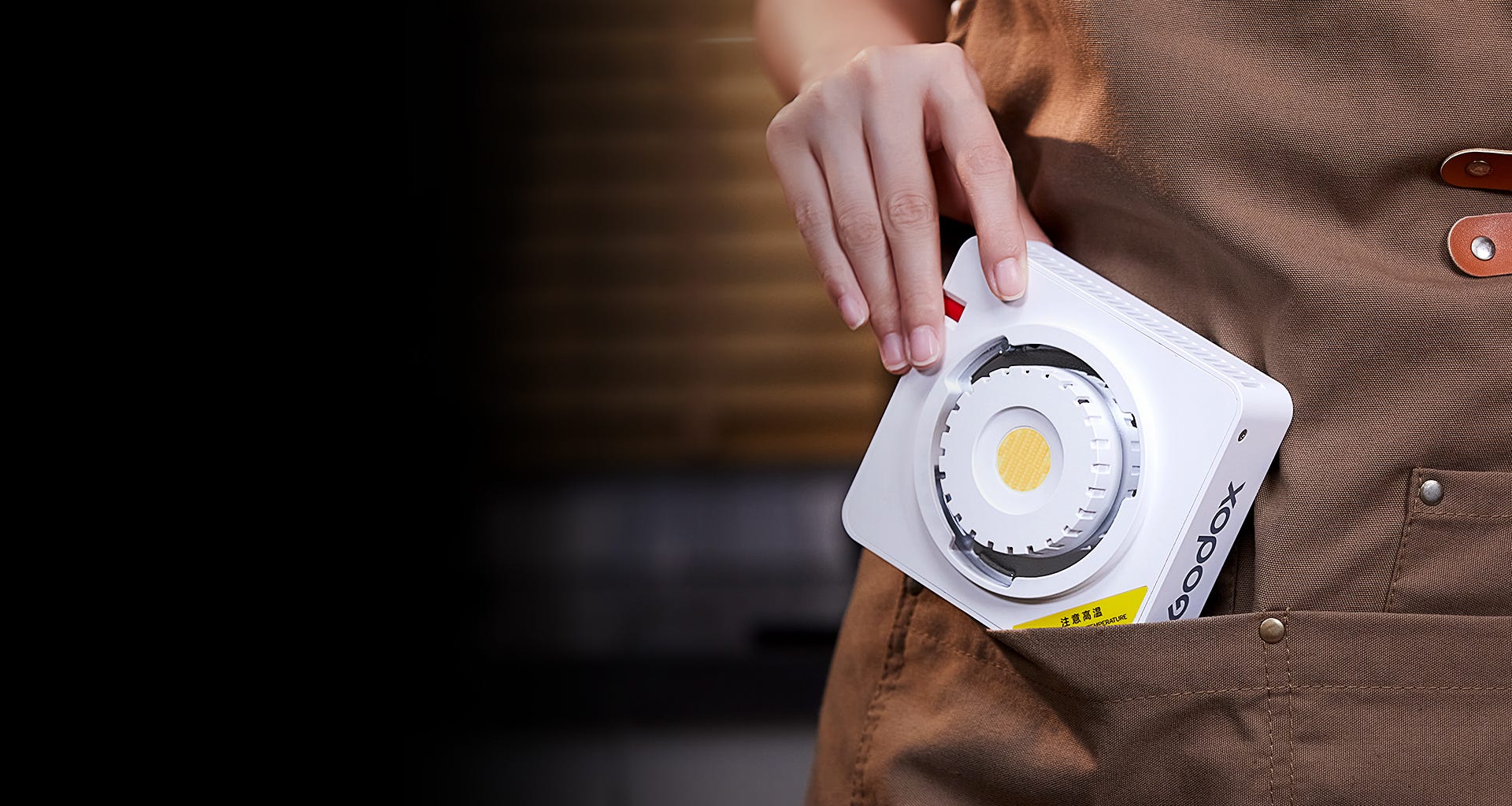
At 122×110×46mm, it’s tiny enough to live in a jacket pocket yet bright enough to anchor an outdoor setup. The compact lens reflector (15° or 36°) gives you tight punch or wider spread without lugging full-size modifiers, and the Godox-mount ecosystem.
OBSBOT Tail 2: A PTZ Camera That Actually Follows You Like It Means It - $999
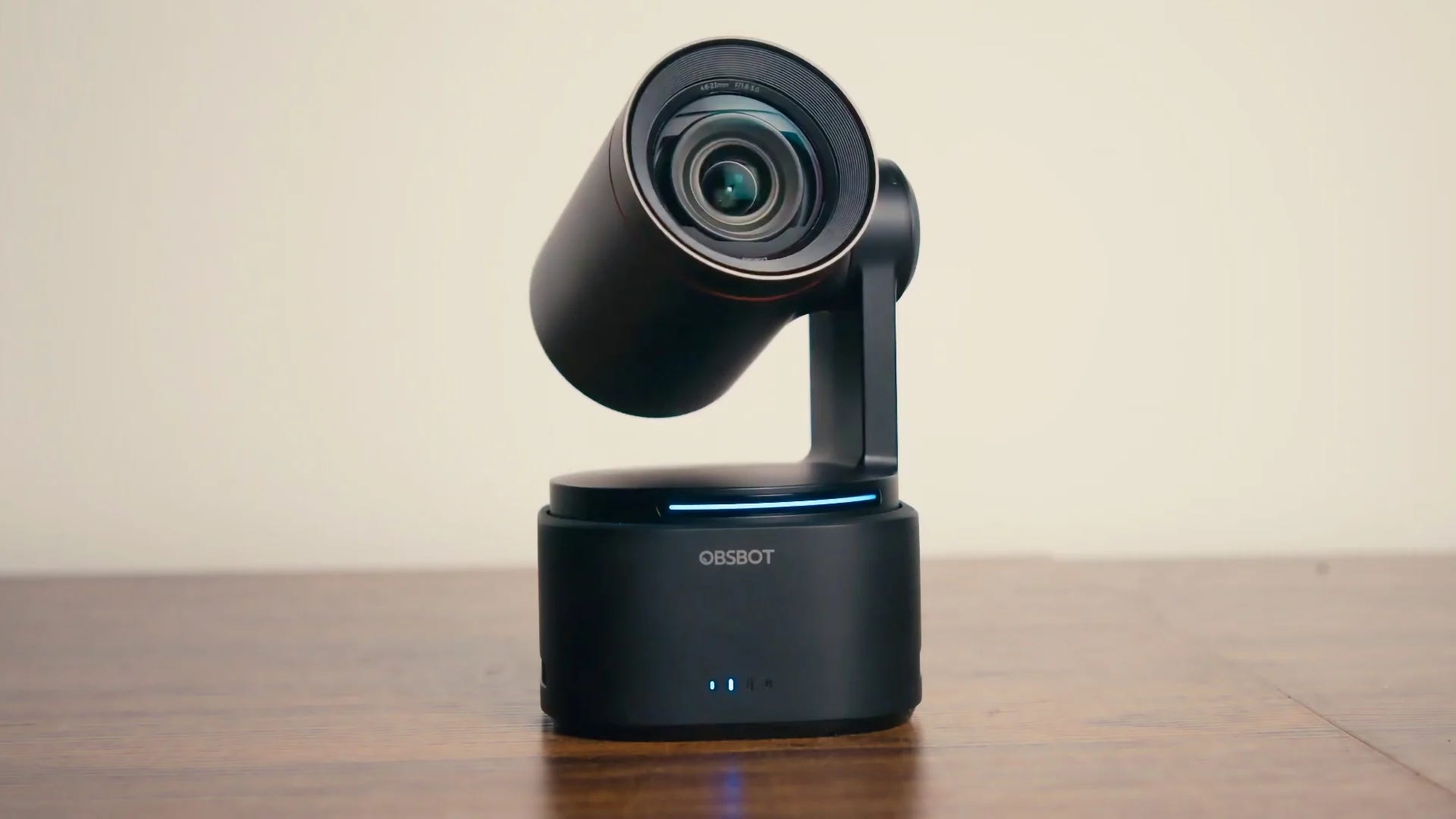
The 4K60 PTZR unit locks onto people, cars, props and keeps framing clean even if you close the app and walk away. 5× optical zoom, native 9:16, and a dead-simple setup make it a creator-friendly robo-operator. Normally $1,199, currently sitting at $999.
If you’re reading in the app, tap the little ❤️ so we know you’re out there.”