
Hi everyone —
Wanted to share something new here first: Review, from Eddie AI.
It’s long irked me that timestamped-comments on videos cost sooooooo much. Each time my inner voice would shout: WTF! It’s just text at specific moments. It’s not rocket science!
At some point I became the problem. You can’t complain about something over and over. Do something about it.
So that inner voice turned into action.
And we built it. It’s free. No limitations or catches. It’s built for teams. And has a novel feature that I think you’ll love.

If you’ve had that same inner voice, try Review. Let me know what you think.
—Shamir
Also this week:
PlayStation deletes 551 movies customers thought they owned, an LA camera rental house closed after 19 years citing everything from COVID to big tech CEOs, and Christopher Nolan told Universal to skip influencer screenings for The Odyssey entirely.
Render Reel
Adobe acquires Topaz Labs. The deal brings Topaz’s AI enhancement models into Firefly, Creative Cloud, and Premiere. A potential landmark for filmmakers as Topaz’s tech can now run large AI models locally on consumer hardware.
A thousand industry professionals pushed back on AI voice clauses for child actors on Peppa Pig, think UK’s Sesame Street, and got parent company Hasbro to respond publicly within days. New contracts would have let the studio clone children’s voices in perpetuity but the collective response was fast enough to set a norm.
Supergirl flopped. $38 million opening against Toy Story 5‘s $70 million, worse than The Flash, barely ahead of Joker: Folie à Deux. Poor reviews, a B- CinemaScore, and reportedly trimmed significantly after test screenings. The superhero genre is already down $3.5 billion annually from its 2017-2019 peak.
Nolan’s The Odyssey is skipping influencer screenings entirely. Universal goes straight to professional critics after the premiere. The move comes after influencer blurbs for Supergirl (”best blockbuster of the summer!”) were met with “no”.
PlayStation is deleting 551 purchased movies from customers’ accounts. StudioCanal titles including Terminator 2, Total Recall, and From Dusk Till Dawn will be removed on September 1. The message literally says “purchased content” will be “deleted” as if that’s normal. Blu-ray anyone?
Sony’s first LOFIC sensor promises nearly 17 stops of dynamic range in a smartphone. The Lytia L910 uses a lateral overflow capacitor to preserve excess photovoltaic charge instead of wasting it. The innovation is smartphone-only for now, but if LOFIC architecture migrates to larger sensors…and it will.
Shadowcast Pictures is shutting down after 19 years. The LA camera rental house cited COVID, strikes, fires, Paramount-Warner merger, and AI. Production in LA is up only 10.7% quarter-on-quarter. The founder’s closing statement: “The studios are no longer run by filmmakers, but instead by big tech CEOs.” More than 80 production service companies have closed in the last five years.
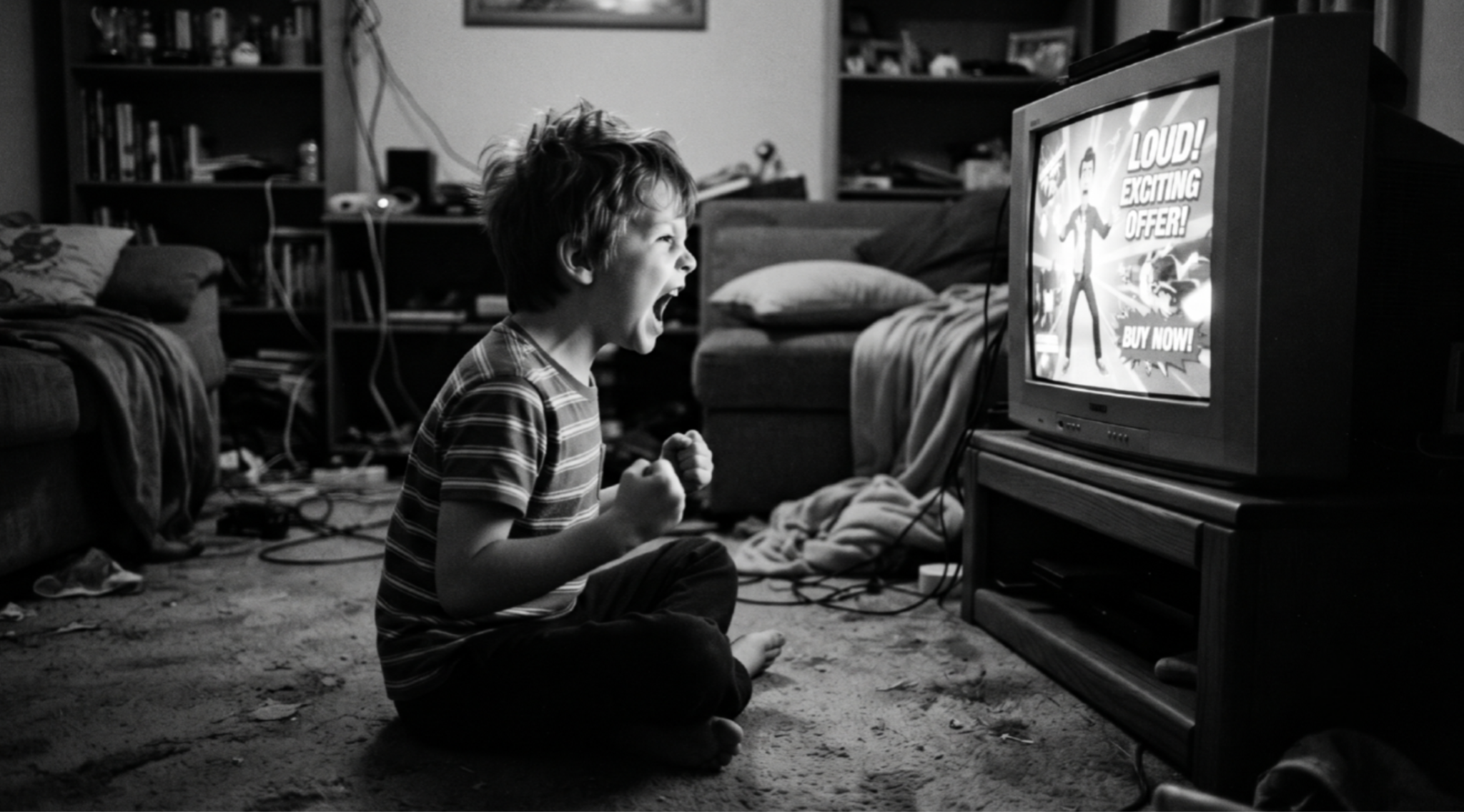
California banned loud streaming ads and it only took 16 years to close the loophole

A trick older than television.
Broadcasters have always cranked ad volume because louder grabs attention, even when viewers hate it. The ad doesn’t technically exceed the programme’s peak volume but it sustains that peak for the entire spot.
Imagine a scenario where your show ranges from a whisper to a gunshot but the ad sits at gunshot level the whole time.
We’ve all watched an ad like it, where you lunge for the remote at 11pm.
Congress fixed this for traditional TV in 2010 with the CALM Act which made ads noticeably quieter. But the law only covered broadcast, cable, and satellite well, because in 2010, streaming ads didn’t really exist.
By the time Netflix, Hulu, and YouTube built ad-supported tiers, they inherited the same incentive with none of the regulation.
California’s SB 576 closes that gap and starting July, streaming platforms must match ad volume to content levels. The bill was literally inspired by a state senator’s staffer whose newborn kept getting woken up by blaring ads.
A whole origin story born out of a tired parent and a screaming baby.
Given California’s leverage over the entertainment industry, this could set a de facto national standard the same way California emissions rules shaped the entire auto industry.
Netflix now requires every profile to have its own email address. The change rolled out June 15 and some users are annoyed because they used multiple profiles to organise genres. Others are concerned it’s a data play for advertisers as Netflix’s privacy policy does say it may share email addresses with marketing companies.
Apple says it wants “better and more” content on Apple TV. Eddy Cue confirmed an F1 sequel is in development, and that Apple will continue making films for both streaming and theatrical. The incoming CEO John Ternus is apparently “a huge supporter” of the content strategy.
Sunny Side of the Doc held its final La Rochelle edition. After 37 years, the documentary market is moving to Strasbourg with 1,500 attendees from 55 countries. The organisers framed it as a moment of reinvention but there’s something poignant about the international documentary community gathering one last time in the city where it started.
This week we’re watching:
A New Hope cost $11 million in 1977 but Secondhand Movie Co. have made their own version for $12.
Cardboard sets, duct tape props, and enough charm to make you forget you’re watching someone’s living room double as the Death Star.
Eight minutes that prove the only thing you actually need to make a film is the audacity to try.
Retail Therapy: Your front door now has Face ID

The SwitchBot Lock Vision Pro is a keyless deadbolt with 3D face recognition, palm vein scanning, and fingerprint reading because apparently three biometric methods is the minimum for getting into your own house in 2026.
Face unlock takes under a second and the palm vein works contactlessly from up to 10 inches away. It stores 90 fingerprints and all of it works in total darkness.
Whether palm vein recognition on your deadbolt is security or science fiction cosplay depends entirely on how you feel about your house scanning you before it lets you in.
Available at switch-bot.com for $199.99.