
This week’s letter includes: A deep dive on CES 2026 where AI was slapped on everything from robot butlers that can’t do laundry to cameras that actually work, Vimeo’s corporate team overriding its curators and why two filmmakers rejected their apology, and an AI service that lets you clone yourself to avoid meetings.
Render Reel
Aivanta buys Brand Storytelling The AI-first holding company acquired Brand Storytelling and Elevate, absorbing Sundance’s most influential brand-funded content forum into a year-round events platform.
Animation workers win big at DreamWorks, Netflix, and Ted Workers at DreamWorks Animation, Netflix, and the animated series Ted all voted to unionize. Rare triple win for animation labor in an industry that’s been fighting this hard.
IMAX had its biggest year ever, without Hollywood They closed 2025 with $1.28B at the global box office, up 40% from last year. The top performers were local-language films from China and Japan. Hollywood wasn’t carrying the load.
Warner Bros. Discovery tells shareholders to reject Paramount WBD urged shareholders to vote no on Paramount’s $30-per-share offer, calling it riskier than the agreed Netflix merger. Too much debt, too much exposure, and too much operational paralysis
Sundance 2026 goes big on discourse The Institute unveiled an expanded Beyond Film lineup featuring filmmakers, authors, and cultural figures, plus a new Story Forum on art and innovation. Olivia Wilde, Richard Linklater, Billie Jean King are all showing up.
Women directors hit a seven-year low USC’s Annenberg Inclusion Initiative found only nine women directed the top 100 grossing films of 2025. Sharp drop from recent years. The numbers keep getting worse.
CES 2026: AI Everything, Useful TBD
CES (the Consumer Electronics Show) happens every January in Vegas, where tech companies showcase their latest products and make their biggest bets on what we’ll all be buying next year.
And this year, as expected, AI was the main star.
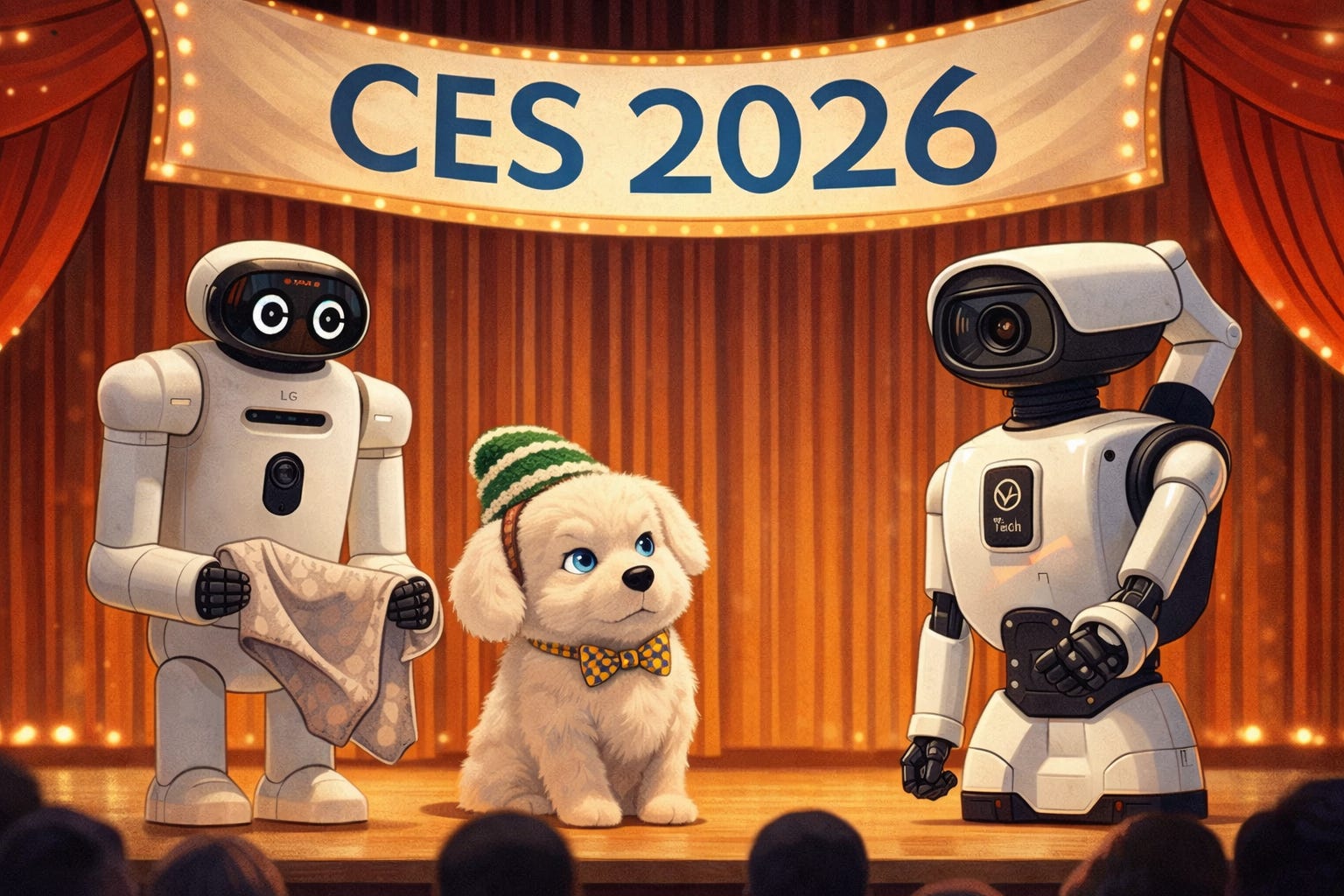
The show floor was packed with AI-powered everything, from Samsung’s 130-inch TV that can strip commentary from soccer broadcasts to LG’s robot butler that handles laundry and communicates with your appliances.
Some of it felt genuinely innovative.
Other announcements leaned heavily on buzzwords with vague promises about how their AI will transform daily life. Time will tell which of these were just tech demos that looked impressive on a showroom floor.
The humanoid robots were particularly telling. There was one sad bot that took what felt like several minutes to place a single towel into a washing machine, demonstrating that despite the hype, practical home robotics still has a ways to go.
Multiple companies showed AI-tracking cameras for sports and wildlife that solved real problems. The XbotGo Falcon automatically follows game action for $599 with no subscription, making it accessible for parents and youth coaches who previously couldn’t afford the $2,000-plus annual cost of professional systems like Veo.
The RocX from ex-DJI engineers tracks subjects at 50x zoom which is genuinely useful for long-distance recording.
These aren’t exactly revolutionary technologies though. AI tracking has existed for years. But they represent practical applications that work reliably and serve clear use cases for video creators.
CES also showcased plenty of bizarre products nobody asked for, though you have to admire the audacity it took to actually make them. More on those later.
Alamo Drafthouse introduces phone-based food ordering The cinema chain is replacing pen-and-paper ordering with a dark-screen mobile system. They’re betting controlled phone use reduces disruption rather than amplifying it. I’m not so sure.
Donut Lab claims the first production-ready solid-state battery The Finnish startup says its solid-state batteries are already shipping in Verge motorcycles, promising faster charging and longer life. If the claims hold, it’s only a matter of time before camera tech and mobile production feel the charge.
Talking Shorts’ Top 3 shorts 2025 The platform released its annual Top 3, crowdsourced from programmers and filmmakers across the global festival circuit.
Vimeo Corporate vs The Staff Pick
IndieWire broke this story in late December, and it’s worth paying attention to because it reveals how quickly corporate fear can override curatorial trust that took years to build.
Here’s what happened: Between October 1 and October 24, Vimeo’s Legal and Trust & Safety teams pulled six films from Staff Picks - the platform’s prestigious curation program that has launched careers for filmmakers like Kogonada, The Daniels, and David Lowery.
The films were rejected over political and sexual content concerns, completely bypassing the four-person curation team that’s spent years building Staff Picks into something that actually matters to the filmmaking community.
One pulled film was Phoebe Hart’s “Bug Diner,” a stop-motion short that won jury prizes at Sundance and SXSW. Another was Kara Grace Miller’s “My Neighbor’s Yard,” a documentary about divided Pennsylvania neighbors scheduled for Election Day.
The curators appealed to their corporate overlord unsuccessfully and sent apologetic emails to filmmakers, writing:
We’ve been fighting with them over sexual content but this escalation to censor political content is an unsettling development that we find unacceptable.
Timing matters here as on September 10, Vimeo entered an agreement to be acquired for $1.38 billion by Milan-based Bending Spoons.
Is it a coincidence that the videos got pulled just a month later?
Vimeo CEO Phillip Moyer said no, telling IndieWire neither the acquisition nor politics played a role. He apparently only learned about the problem when IndieWire reached out.
“My Neighbor’s Yard” was originally pulled over two images of Halloween skeletons restaging Trump’s Butler assassination attempt. “Bug Diner” was flagged because of..well, no one actually knows why.
Moyer personally apologized, inviting the films back as Staff Picks but Hart and Miller both declined.
Hart said:
Vimeo’s corporate side took my film down for the same exact reason they want to put it back up, risk management.
Vimeo’s reputation as the internet homebase for filmmakers dwindled dramatically in the past decade thanks to a hard pivot toward B2B corporate video hosting. They gutted their free tier, raised prices, and prioritized enterprise clients over the creative community that built them.
Staff Picks was one of the last things keeping filmmakers around, which makes this corporate interference even worse.
OWC launches the first Thunderbolt 5 portable SSD The Envoy Ultra promises 6000MB/s speeds in a rugged, bus-powered form. Thunderbolt 5 finally makes mobile 8K and VFX workflows actually plausible. The gap between studio and laptop editing just got even tighter.
Fujifilm’s instax camera prints video as QR codes The mini Evo Cinema prints QR-linked video clips onto instant photos. Pure novelty. It’s reframing video as a tactile, shareable artifact instead of another thing lost in the feed.
Cut of the Week: AI digital twin that promises to ease your workload on show at CES
A look into our immediate future.
MyPersona is a service that captures your voice, mannerisms, and expertise so colleagues can ask your digital twin basic questions instead of interrupting you with “What’s the policy on this?” for the hundredth time.
People will likely resist uploading their likeness to AI, but they’d probably resist another bullshit meeting even more, so this might actually work.
Retail Therapy - CES edition
GLYDE’s AI hair clipper does your fades for you
The smart clipper uses built-in sensors to track motion and angle, automatically adjusting the blade to keep fades smooth and consistent. It promises barbershop results at home without the skill level typically required.
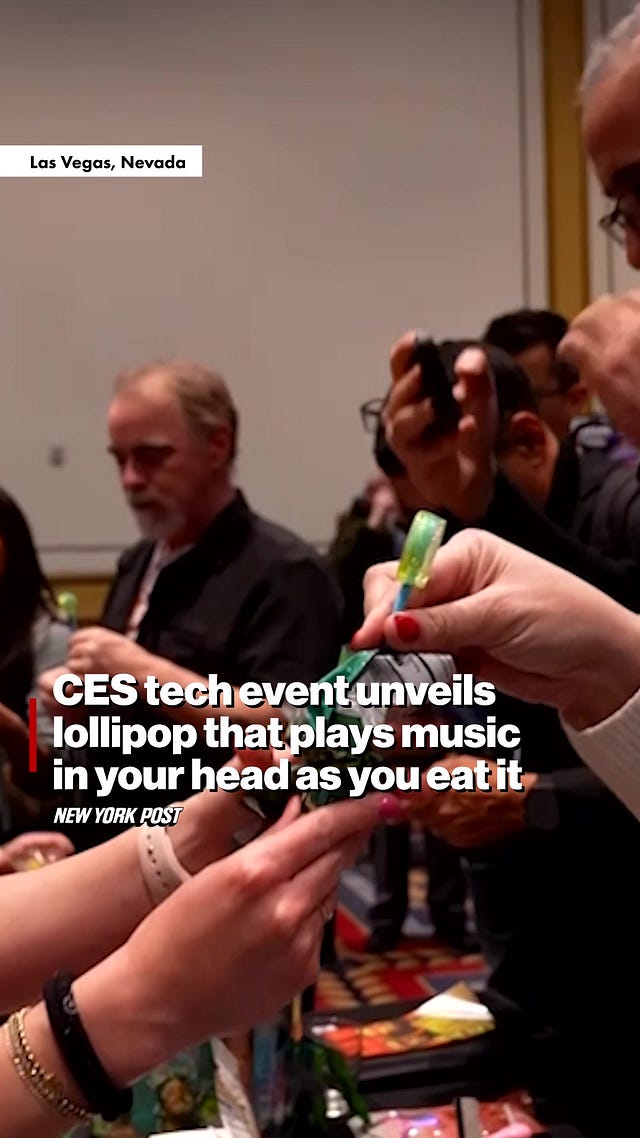
Lollipop Star plays music through…a lollipop
 Tiktok failed to load.
Enable 3rd party cookies or use another browser
The $8.99 candy uses electronics hidden in the stick to send vibrations through your jaw to your inner ear as you eat it, with each flavor tied to a different artist…because apparently someone looked at lollipops and thought they needed a soundtrack.
If you’re reading in the app, tap the little ❤️ so we know you’re out there
If the lollipop played hip hop, I’ll start including them in my daily intake
everything haha. like, it reminds me of the IoT revolution. just a new version now.