
This week:
Two half-trillion dollar AI companies are in a very public diss war over Super Bowl ads, AI featured in nearly 25% of all spots showing just how embedded it's become, Grok put $1 million behind an AI video competition, and an ode to post-prod tech we’ve (thankfully) lost along the way.
Render Reel
AI earned its own line item at Berlinale, researcher Stephen Follows reported from the EFM floor that one company pitched "hybrid actors" whose faces buyers can swap for local celebs using AI, producers are now actively embracing AI-generated visuals at pitch meetings, and what could make history as the first AI-generated movie to qualify for the Oscars was being shopped on the sales floor.

Doug Liman’s Bitcoin biopic casting call says AI may be used to “adjust” performances, which is a very polite way to say your acting might get notes from a machine.
Film Screener Studio replaces the Vimeo-link-plus-Google-Form combo every indie filmmaker has cobbled together at least once. Upload your film, invite private reviewers, collect structured feedback. Built by a filmmaker, currently free, and probably an upgrade on whatever you’re doing now.
Ode to the tech that broke us

Shane Woods over at Out of Sync has written a piece that functions both nostalgia and accidental history lesson. A top 10 of the tech he’s glad we’ve left behind, and reading it is a genuinely useful reminder of just how much invisible friction has been engineered out of the craft over the last two decades.
For anyone who came up in post-production recently, or works adjacent to it now, some of what Woods describes will read almost like fiction.
Waiting an entire day for the editor to leave before you could get access to Avid. Getting down on your hands and knees behind a machine to daisy-chain massive specialist hard drives together with fat inflexible SCSI cables, cursed with bent pins, just to unlock an extra 500MB of storage.
Competing with the entire facility for one of the two HD decks, watching the clock, knowing that two minutes of idleness meant losing your place in the queue.
The sound effects CD section is particularly vivid.
The image of an assistant editor moving computer to computer through a building, ejecting CD-ROMs one by one searching for a single car door slam, is the kind of detail that makes you genuinely grateful for a world where you can find almost any sound literally thirty seconds from now.
What ties all of it together is a point Woods doesn’t quite make explicitly.
So much of what assistant editors once spent their days doing was essentially managing scarcity. Scarcity of machines. Of storage. Decks, access, information. The job carried a huge administrative and logistical tax that had nothing to do with the actual craft of editing.
The person who got the cut finished wasn’t necessarily the most talented, but often the one who was best at navigating the infrastructure around them.
That friction is largely gone now.
Grok held a Super Bowl ad contest with a $1 million grand prize and got 4,000 submissions in 48 hours. The winner reimagines Galileo's inquisition as a modern query to Grok. Second place ($500K) follows a boy dreaming of space. Third ($250K) takes a journey through the cosmos. Entries were judged on creativity and timeline impressions, so virality was baked into the scoring.
The results are here.
Belgium’s oldest film distributor just went under. Belga Films, founded in 1937, has been liquidated after cinema attendance in Brussels dropped 40% over the past decade. The company’s CEO blamed a city traffic scheme that made their cinema harder to reach.
From Flat Tires to LLMs
The first Super Bowl ads in 1967 cost $37,500 for 30 seconds and sold you exactly what they sound like.
Goodyear ran a spot about a woman getting a flat tire that opened with “this flat tire needs a man” and when no man showed up, the tire saved her instead.
McDonald’s pitched itself as “the closest thing to home” then reminded you there were 900 locations now. Yawn.
Everything changed in ‘84 when Ridley Scott directed Apple’s Macintosh ad. A dystopian, Orwellian 60-second film that never once showed the product’s specs. It’s now considered one of the greatest commercials ever made, but at the time Apple tried to kill it because it copy-tested at a 5 against a norm of 29.
It only aired because the agency couldn’t sell back the slot in time but it ended up driving $155 million in Mac sales in three months.
It was the moment Super Bowl ads stopped being commercials and started being events.
The Super Bowl has been where tech goes to announce it’s mainstream ever since. And historically, that announcement comes right before the correction.
In 2000, fourteen dot-com companies bought 20% of the ad inventory. Pets.com, Epidemic.com, OurBeginning.com: most were dead within a year. In 2022, FTX, Coinbase, and Crypto.com spent $54 million on spots while Bitcoin sat at $42K. Within months, the market crashed, FTX collapsed into fraud, and the industry entered a winter it still hasn’t fully left.
By 2026, crypto was down to a single, cautious Coinbase ad.
By the time a category can afford an $8 million Super Bowl spot, the trust problem has already replaced the adoption problem.
This year, AI took that stage.
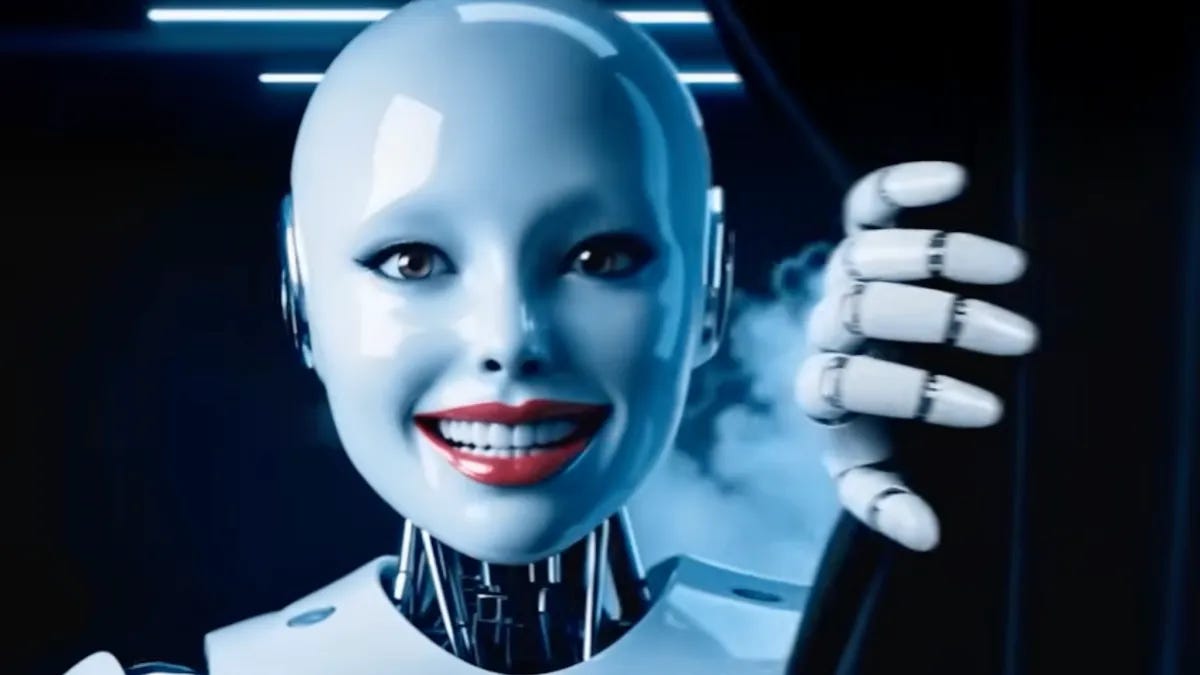
Fifteen out of 66 ads featured AI in some form. OpenAI, Anthropic, Google, Amazon, Meta, even Svedka’s resurrected 2005 fembot.
The strangest result belonged to Anthropic. Their Super Bowl debut featured darkly comic scenarios of chatbots steering users toward cougar dating sites and height-boosting insoles.
Four years and billions deep, the AI industry’s Super Bowl message boiled down to “trust us, this matters”.
Only Anthropic had the nerve to say what it wouldn’t do and that turned out to be the thing people actually wanted to hear.
But there’s an uncomfortable follow-up: how do you expect this to scale without ads?
Google is free because of ads. YouTube is free because of ads. Gmail, Instagram, and the entire modern internet are free because of…..you get the point.
The most important tech of the last two decades reached everyone on earth precisely because nobody had to pay for it.
If the choice is between a $250/month subscription and an ad before your chatbot answers, most people aren’t choosing the subscription.
Nothing sustainable is completely without cost.
South Australia’s Film Lab: New Voices is back for round four, offering $600K to make a feature and their track record (a Teddy winner, an AACTA sweep, a horror already generating buzz) is making a strong case that the best film pipeline in the country runs through Adelaide.
Tarantino turns his theater back into a porn cinema for February because nothing says Valentine’s Day like a midnight screening of “The Opening of Misty Beethoven.”
Fred Grinstein of Machine Cinema released a new report tracking every notable use of genAI in documentaries. From the first AI-driven recreations at Sundance to the first broadcast series using AI on Sky History. Outputs are getting better and the legal questions are moving toward actual precedent.

The full report is worth a read if you’re in nonfiction.
This week we watched:
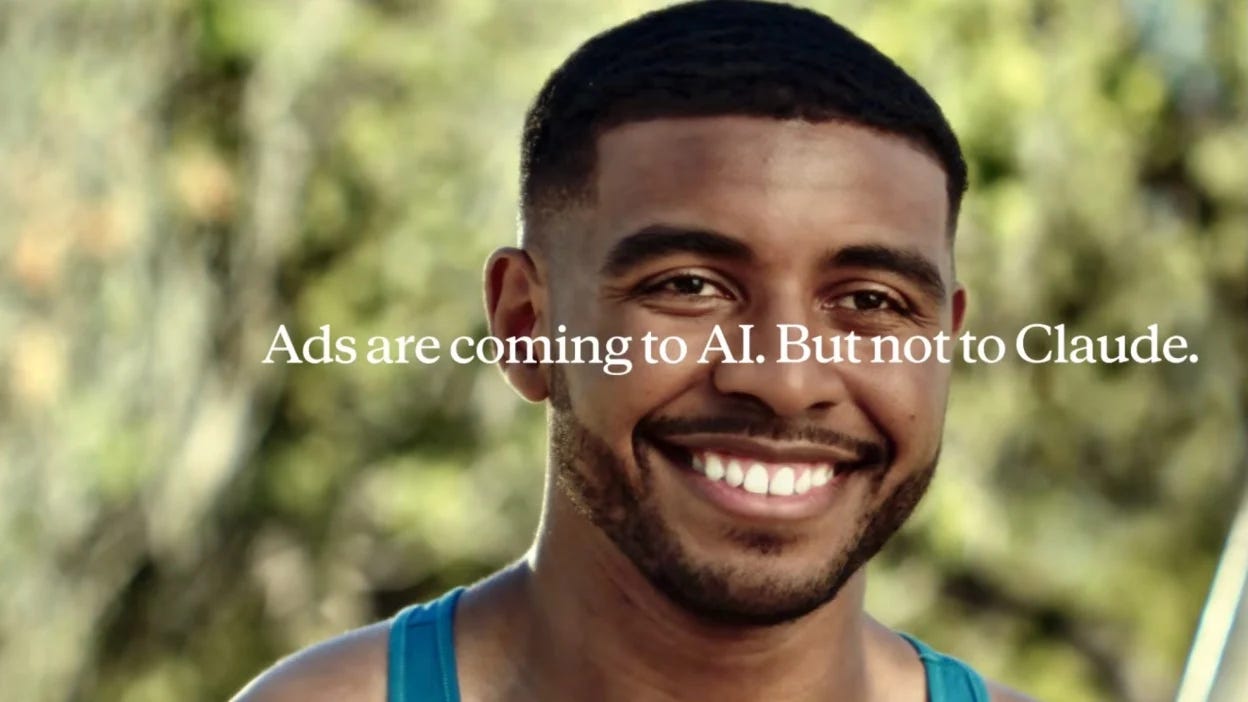
A scrawny dude asks how to get a six-pack and the chatbot pivots to short king solutions.
The tone is exactly right. That slightly too-eager, slightly too-helpful cadence that anyone who’s used an LLM immediately recognizes.
It’s a genuinely funny ad, which is rarer than it should be, but as we mentioned earlier, the ad-free utopia it’s selling will likely remain exactly that.
Sam Altman called it “clearly dishonest” but not before admitting it made him laugh, which tells you everything.
Claude shot from No. 41 to No. 7 on the App Store, its highest rank ever, with downloads jumping 32% in the days after.
Retail Therapy
The 30W speaker you can wear around your neck like a boombox
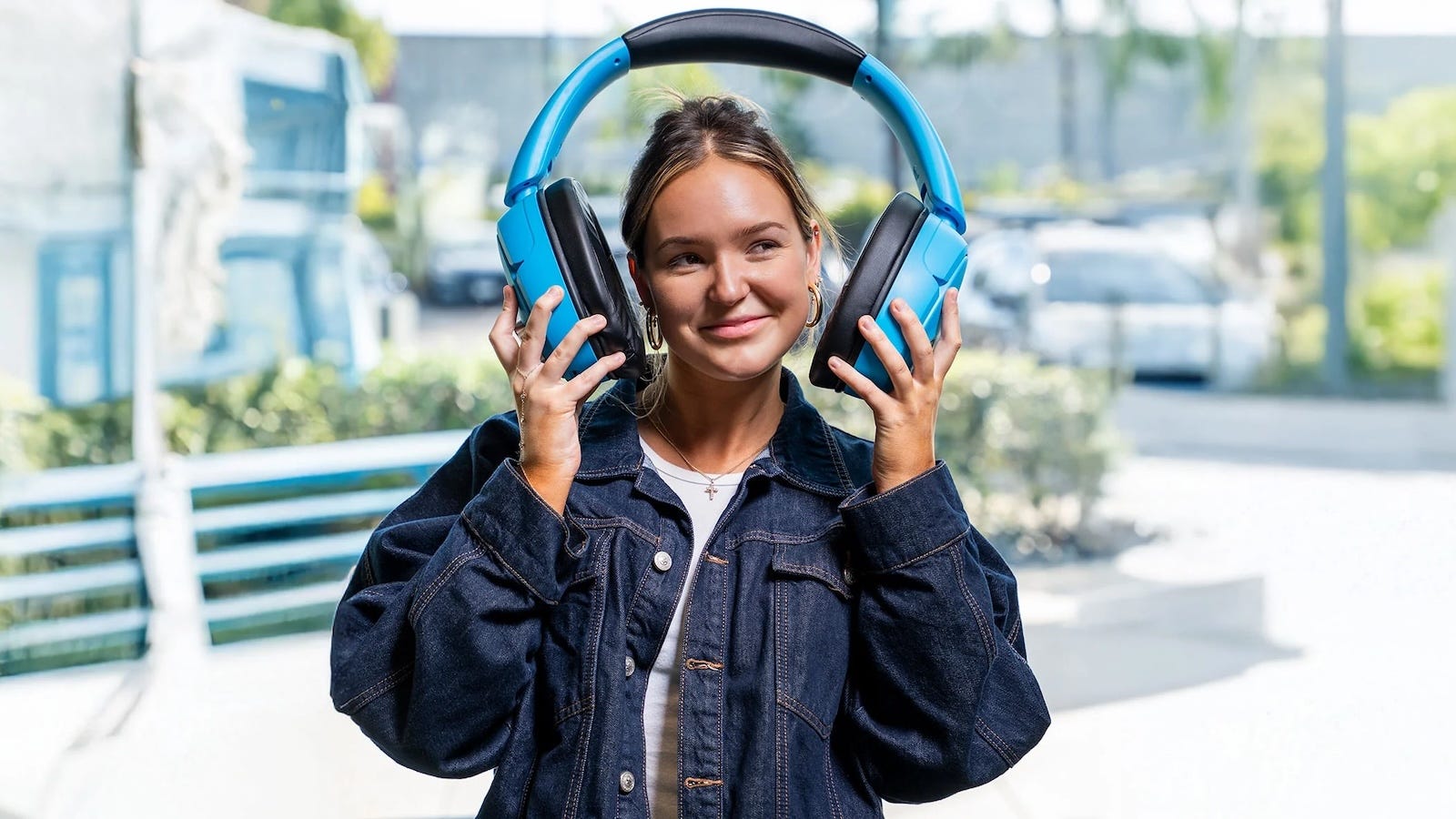
The JLab Blue XL is a 30W speaker you wear around your neck like a boombox that gave up on being carried. Dual drivers, 20 hours of battery, and it doubles as a tabletop speaker.
It’s marketed for “watch parties and team moments,” which is corporate for playing your phone too loud in a group setting but making it a lifestyle choice. USB-C fast charging gets it back to full in three hours.
The real question is whether the world needed a wearable speaker or whether someone in a product meeting just really wanted to walk around Target with their own theme music.
Either way, it exists now.