
Hi Friends—
I’m in New York next week for NAB NYC Oct 21-22.

The night before: we’re co-hosting a meetup with r/editors on Tuesday, Oct 20, near the Javits Center. It’s two hours of drinks with 50–75 editors, colorists and production people. Reply if you’d like to join :)
We’ll be demoing Eddie v4, particularly for enterprises. Enterprises can now use their own Claude/ChatGPT API keys, run Eddie on-premises, and setup team workspaces and pooled credit. As a reminder: we do not train on your data/the outputs and you own all the IP. We’re SOC2 Types I and II, GDPR and HIPAA compliant.
Book a time, let’s meet!
—Shamir
Also this week:
Nikon disqualifies a microscopy competition winner for using AI, and nobody is measuring baseball’s home runs. Elsewhere, a Hasselblad plays Doom and a German cinema keeps 70mm projection alive.
Render reel
Nikon disqualified its own video competition winner for using AI. Dr Ning Xu won Small World in Motion with microscopic footage of moving cilia, until scientists spotted biological structures appearing and disappearing between frames. Xu acknowledged using AI-assisted post-processing but Nikon still withdrew the prize for rule violation.
Nobody actually measures a baseball home run. Because the ball lands in the crowd before it finishes its flight. So every MLB stadium has twelve Sony Hawk-Eye cameras tracking the ball through the air, and software works out where it would have come down. It’s precise enough that last year’s Home Run Derby tiebreak was settled by less than a tenth of an inch.
Someone got Doom running on a Hasselblad. Computer programmers have spent decades getting the 1993 shooter game to run on machines that were never meant to play games, including printers and tractors. Developer Radium Wang has added a medium-format camera that costs several thousand dollars. It’s a very expensive way to play a 33-year-old game, but the image quality is probably excellent.
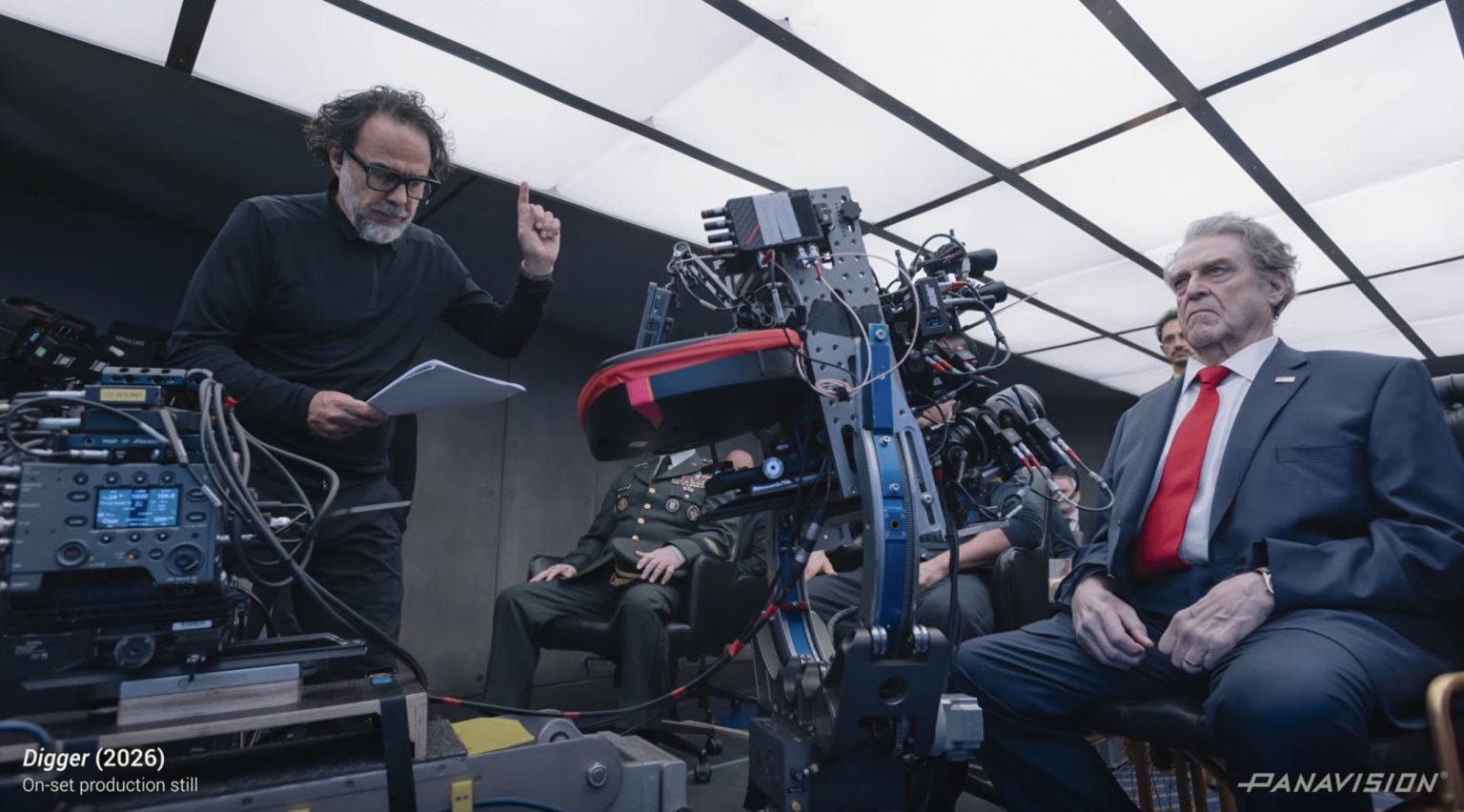
Digger: shot on film, watched on digital
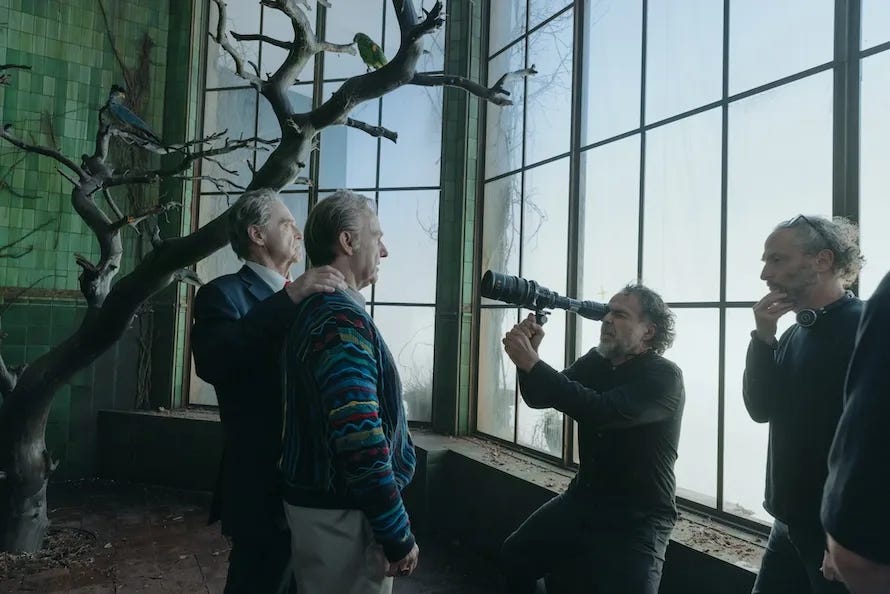
Alejandro G. Iñárritu’s new film Digger stars Tom Cruise and was shot by Emmanuel Lubezki. According to Warner Bros., it was shot entirely in VistaVision.
That’s the 1950s format where 35mm film runs sideways through the camera, making the frame twice the size. Paramount launched it in 1954 and Hitchcock used it for Vertigo, and then the industry pretty much abandoned it for cheaper formats.
In modern times it’s returned, with The Brutalist and Bugonia among the recent films shot on it.
Behind-the-scenes footage showed a Sony Venice 2 sitting beside the film camera, and DOPs noticed. A thread on r/cinematography asked the obvious question.
What’s a high-end digital camera for if they’re proudly shooting the entire film on film?
Commenters who say they know the production claim the Venice was there to preview an image matched to the VistaVision footage. The reporting since suggests something plainer.
The answer is that “shot entirely in VistaVision” is Warner Bros.’ phrase, and nobody who actually worked on the film is using it. Cinelab, which processed the negative, says the film was shot principally on VistaVision with some standard 35mm.
Newsshooter has since reported that the Venice 2 and an ARRI Alexa Mini LF were B cameras.
This is how the whole revival works. About 80% of One Battle After Another was VistaVision and the rest was Super 35, and nobody calls it anything but a VistaVision film.
The format on the poster is the main one but not the only one.
Archive watch
A German cinema is keeping six-track magnetic sound alive. That’s the old system where the soundtrack runs on magnetic strips along the film print, so only a projector that can still read them will play it. Karlsruhe’s Schauburg held its 19th Todd-AO festival this weekend and screened vintage 70mm prints, including Terminator 2. It also ran Nolan’s The Odyssey on standard 70mm, reduced from its IMAX negative.
Ava DuVernay used AI to make 19th-century photographs move in her new documentary. 14th, which premiered at the New York Film Festival, has subjects in Civil War-era portraits blinking and shifting. DuVernay says the idea came from the stereoscopic photos people collected at the time.
Ian McKellen is starring in a play without being onstage. An Ark was filmed in one take by 52 cameras in Grenoble. When it opens in Manchester, England next March, the audience will wear smart glasses that drop a life-sized McKellen into the room with them. It’s somewhere between a film, a hologram and a play.
Cut of the Week: Seán Doran, River of Light
A flight over the aurora, made from time-lapse photographs that four astronauts took on the International Space Station.
None of this was shot as video. The astronauts took stills a few seconds apart and Doran cleaned up each still, even down to the dust on the lens then used software to generate tens of thousands of extra frames to fill the gaps.
Watch it on the biggest screen you have.
Retail Therapy: The $749 camera robot that follows you

Beni is a four-wheeled camera rover from Mondo Robotics that follows you over rough ground and shoots 4K as it goes.
For the people whose friends have stopped agreeing to film them.
It can trail behind or circle you, and even steers around rocks on its own.
Costs $749 here