
Hi friends —
I hope you’re getting to enjoy a little of the World Cup fever.
I went to the Algeria–Jordan game this week, and it was far more fun than I expected. I had forgotten how joyful the World Cup can be: people from everywhere, wearing their colors, singing for their teams, and letting themselves get completely swept up in it.
It was a good reminder that when you’re deep in the work — building, creating, grinding through the next hard thing — it’s worth coming up for air. Have some fun. Bring your teammates. Remember why any of this is worth doing in the first place.
We’ve been deep in building at Eddie AI too, and I hope to show you one or two or maybe even three new cool things next week.
Have a great rest of your week.
— Shamir
Also this week:
Nolan sold £750,000 worth of IMAX tickets at a single screen in 24 hours for Odyssey, Jordan Peele’s fourth film has a finished script, Empire made the case that Speed Racer invented the next 20 years of cinema, and Bologna’s 40-year-old festival of forgotten films is somehow capturing the streaming generation.
Render Reel
Amazon dropped Luca Guadagnino’s Sam Altman film and now nobody wants it either. Artificial, starring Andrew Garfield as the OpenAI CEO, was nearly finished when Amazon walked away, months after investing $50 billion in OpenAI. Netflix, A24, and Focus have now all passed. Mubi is circling.
Jurassic World: Dominion is officially the most expensive film ever made. UK financial filings reveal Universal spent $658.8 million on the 2022 dinosaur sequel, surpassing The Force Awakens at $638.9 million. Pandemic protocols, five-month quarantines at a $600-a-night English manor, and Jeff Goldblum playing jazz piano in the lobby all contributed.
A UK film producer had 50 companies struck off, leaving crew unable to chase unpaid fees. Alan Latham’s production companies were compulsorily dissolved by Companies House after failing to file accounts which means there’s no longer an entity for creditors to claim against.
Google enters A24’s realm
This is interesting.
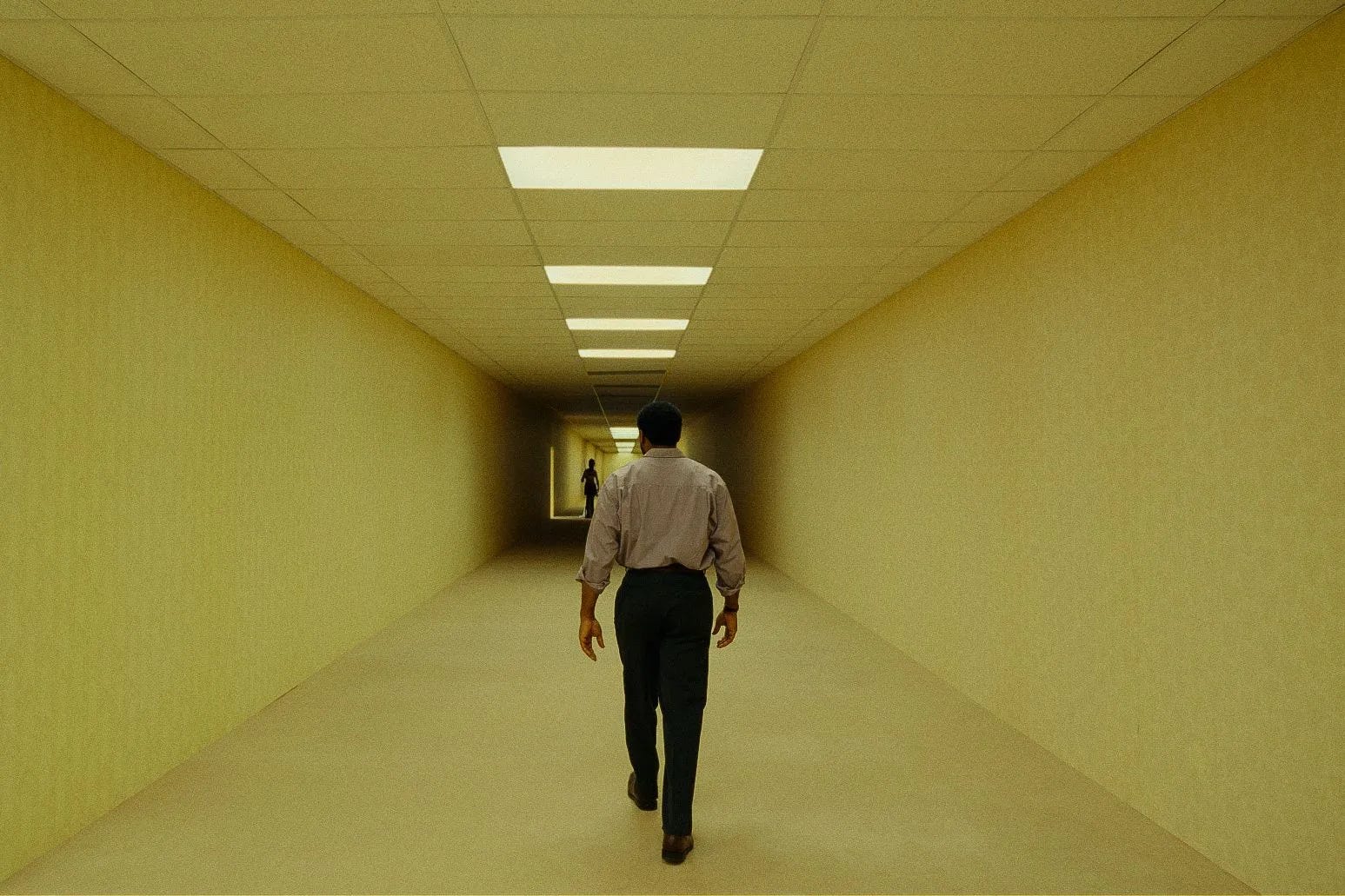
It’s a $75 million investment, which includes an AI research partnership and lands weeks after Backrooms. A film directed by 20-year-old YouTube creator Kane Parsons and became A24’s biggest opening ever at $118 million worldwide.
Google owns YouTube and A24 is now the studio turning YouTube creators into theatrical filmmakers.
Google gets a creative partner in A24 with actual taste to develop AI tools that don’t look like tech demos. What A24 gets beyond the benjis is unclear.
Scott Belsky, previously Chief Product Office at Adobe and now head of A24 Labs, said to the WSJ about AI in the context with their in-house tool development: “We think there are better uses that preserve creative control and support risk-taking.”
Amen.
Jordan Peele’s fourth film has a finished script and Universal is on board. No casting yet, no title or further details but after five years since Nope, two rounds of Monkeypaw layoffs, and multiple pulled release dates, at least it’s moving.
Nolan’s The Odyssey sold 28,000 tickets at BFI IMAX in 24 hours. That’s £750,000 in a single day at a single screen, doubling Dune: Part Two‘s first-day record and tripling Oppenheimer‘s. The first feature shot entirely on IMAX 70mm opens July 17. Tickets for the midnight screening sold out in under an hour.
Speed Racer raced ahead of its time and cinema is still catching up.
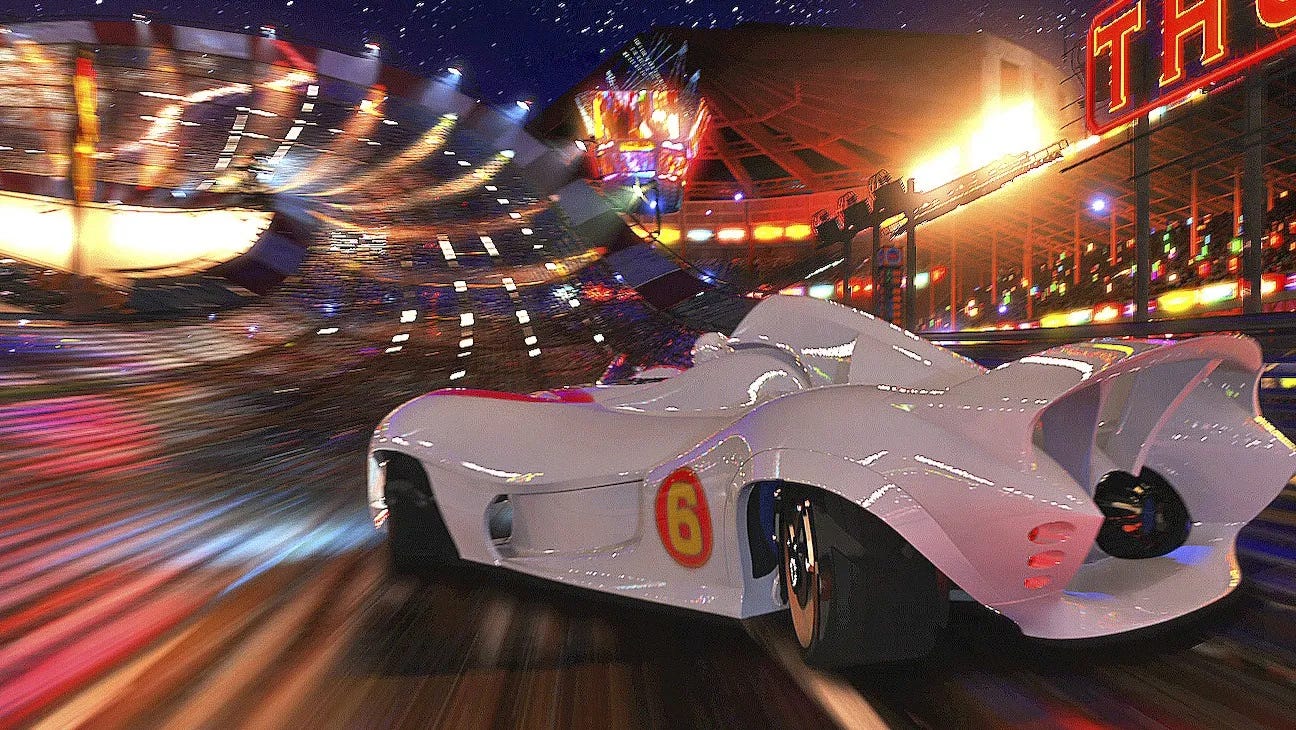
Empire published a gorgeous reappraisal of the Wachowskis’ 2008 flop, and the argument is hard to dismiss.
The film grossed under $100 million in the summer of Iron Man and The Dark Knight, but nearly 20 years later, now available in 4K, it still looks like nothing else.
What makes Speed Racer rare isn’t just that it’s visually ambitious. It’s that it’s a formalist film operating at blockbuster scale.
Hollywood produces plenty of movies that push storytelling boundaries. We’ve had nonlinear structure, unreliable narrators, genre subversion etc. But almost none of them challenge what a motion picture actually looks and feels like at the level of the frame itself.
Speed Racer does.
The Wachowskis treated human performances as digital assets and really created what they called Cubist cinema. The racing sequences play like animated paintings dissolving into pure colour. Transitions wipe through characters instead of cutting. Warping perspective and collapse time.
It’s a completely different idea of what a movie is allowed to be.
It’s also the kind of risk that almost never happens at $120 million.
Studios fund light narrative experimentation occasionally. Think of a Memento, or an Inception but formal experimentation at tentpole budget level is essentially extinct.
Speed Racer is one of the only examples of a major studio film that asks whether the medium itself can be reinvented, not just the plot.
Without it, we probably don’t get Scott Pilgrim, the Spider-Verse films, or Everything Everywhere All At Once.
Bologna’s festival of forgotten films is capturing the streaming generation. Il Cinema Ritrovato, now 40 years old, drew 140,000 people last year to watch restored classics in a Renaissance square. The surprise is that young audiences are the fastest-growing segment.
Christopher Nolan describing, step by step, how The Odyssey gets from camera to screen
The IMAX film goes straight from set to lab. Through the processor, the developer, the fixer and drying process. The edit happens digitally, but when the cut is locked, a list of numbers goes back to the lab where the negative is physically cut and glued together by hand.
Forty-one prints made directly from the original negative, shipped to IMAX theatres around the world.
There’s something quite grounding about watching a filmmaker who cares this much about how audiences watch his films.
Retail Therapy: The UN translator that fits in your bag
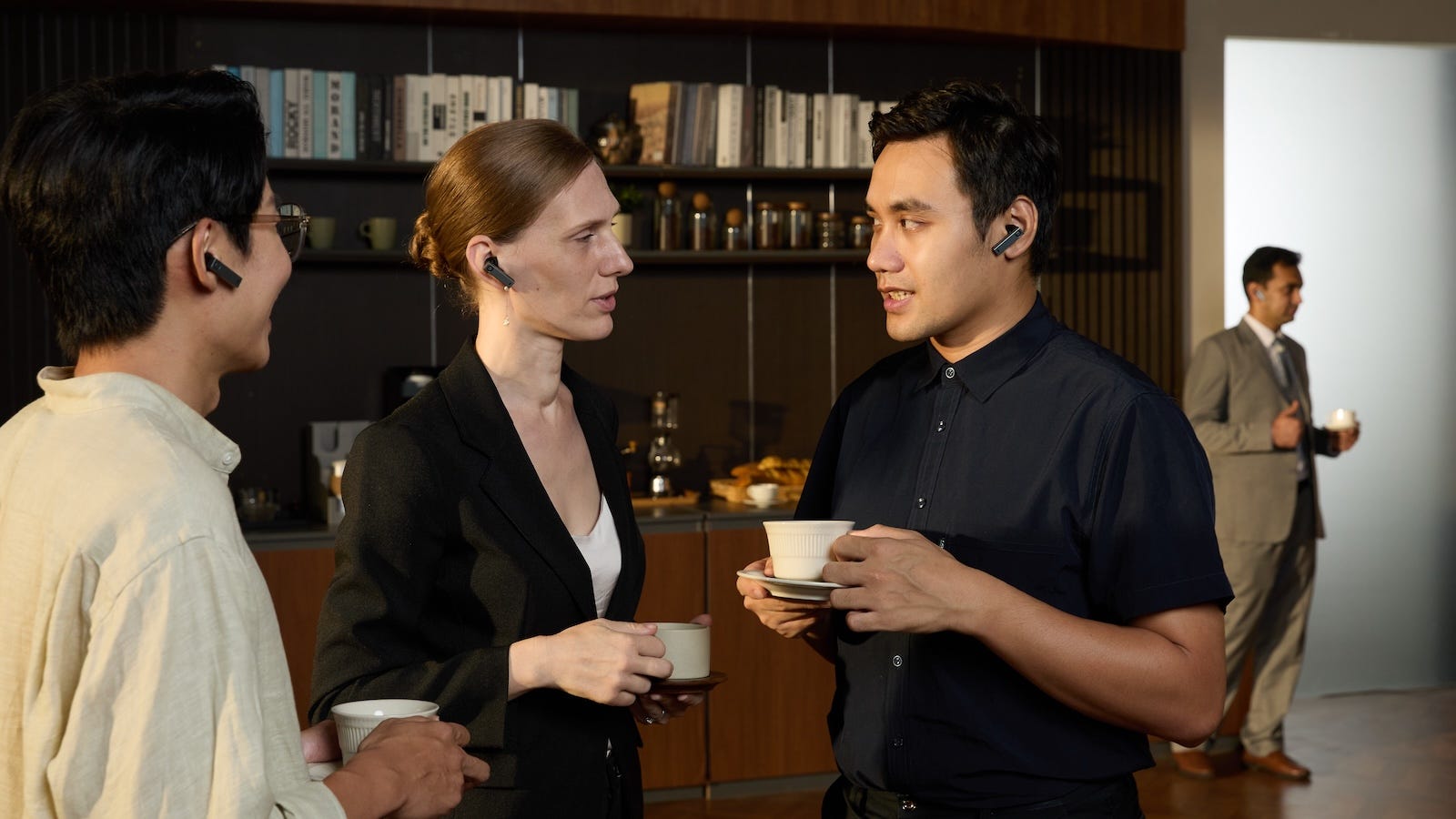
The Timekettle X1 is a standalone translation device that connects up to 20 people across 5 languages simultaneously with no app required.
In presentation mode, one device serves 50 audience members via QR code with real-time subtitles on their phones.
It processes words as they’re spoken rather than waiting for the full sentence, which makes it 60% faster than the usual pause-translate-apologise cycle.
Forty-three languages, 96 accents, offline packs for locations without Wi-Fi, and bank-grade encryption for anyone who doesn’t want their calls leaking.
Available at timekettle.co for $699.