
Hi everyone,
I’ve loved IMAX since I was a kid going to museums on field trips. And it’s been cool to see their evolution over the years, including into Hollywood films.
I hope you, too, enjoy the feature.
—Shamir
Also this week:
Backrooms’ director stops A24 from copyright striking Backrooms’ fanboys, Luke Skywalker’s lightsaber sells for record $3.75 million, Musicbed’s 30-day film challenge went live with $65K , and Netflix reveals 300 of its titles are using generative AI.
Render Reel
Netflix deliberately made Stranger Things look worse. For the show’s 10th anniversary, Netflix released a “VHS Special Edition” of Season 1 in 4:3 aspect ratio which reimagines the show in VHS quality. “Rewatch Season 1 like it’s 1983”
300 Netflix titles using generative AI. Ted Sarandos announced that most of AI usage is in post, including a Tom Hanks documentary with 17 mins of AI-augmented footage. This news comes after Ben Affleck’s InterPositive was bought by Netflix for $587 million.
The History of IMAX
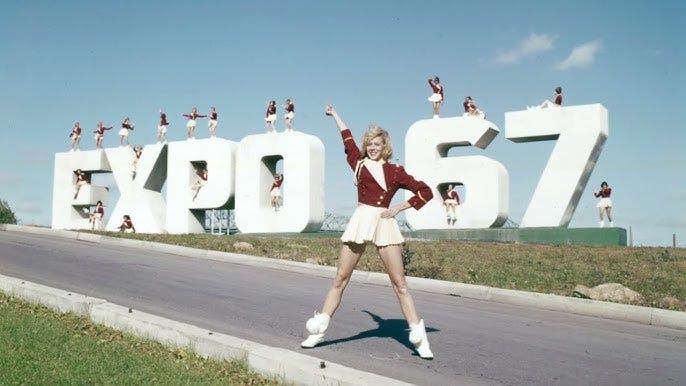
At Expo 67 in Montreal, a group of Canadian filmmakers wowed audiences with multi-screen spectacles that required banks of synched projectors but they failed constantly.
Graeme Ferguson, Roman Kroitor, and Robert Kerr decided the answer to their problems was one enormous image from one enormous machine.
They decided to turn 70mm film sideways, running it horizontally through the projector so each frame spanned 15 perforations instead of five. It was three times the negative area of standard 70mm and nine times bigger than 35mm.
The result was the largest moving image ever put in front of our eyes.
For its first three decades, IMAX lived almost entirely in museum exhibits and science centres. A prime example of this is a film we covered a few weeks back. To Fly!, the 1976 aerial documentary that flew a camera through the St. Louis Gateway Arch and has played daily at the Smithsonian for fifty years.
Hollywood always had practical problems with IMAX.
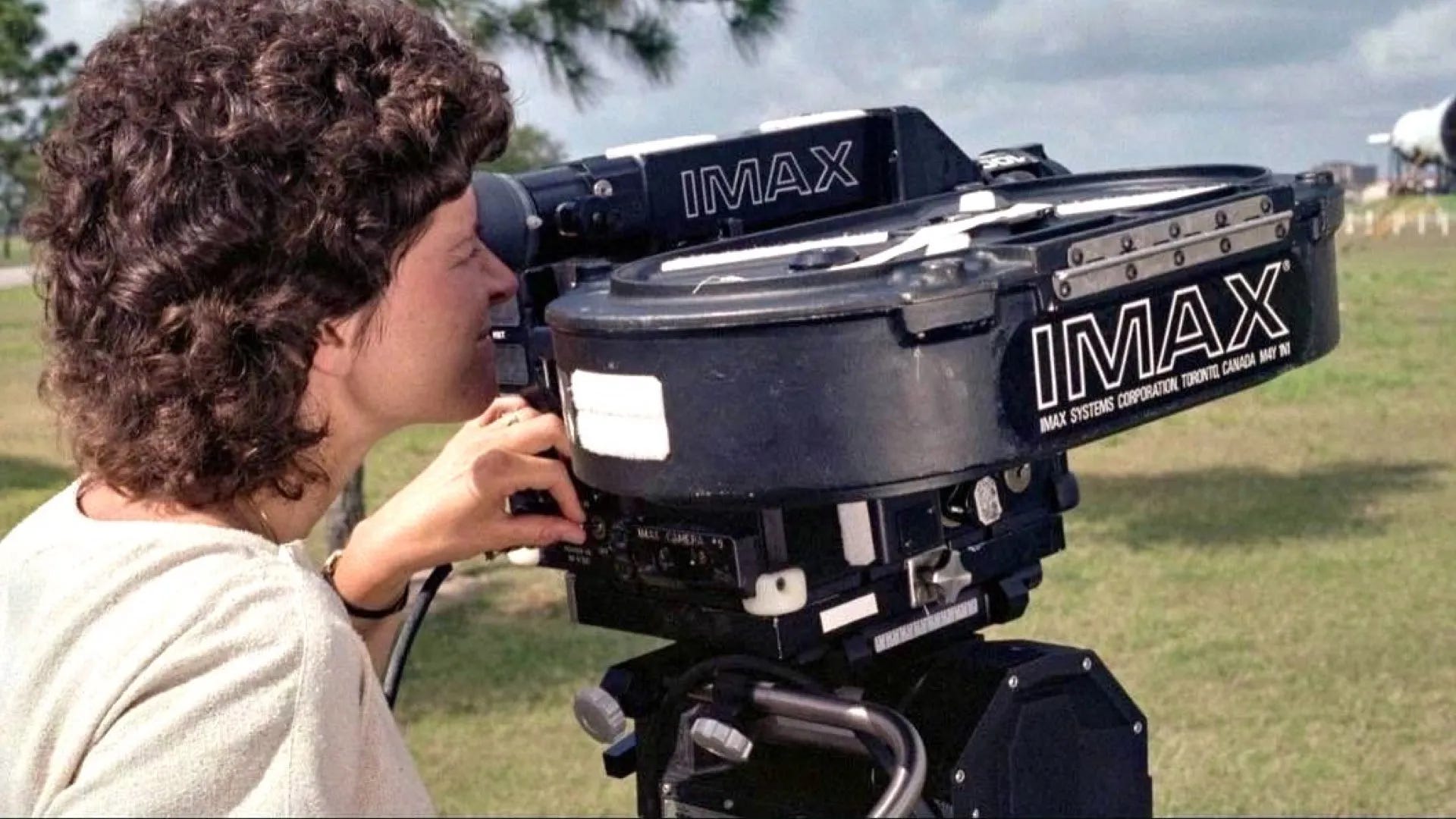
The cameras were enormous.
They were LOUD.
They only held three minutes of film.
But things changed in 2002 when IMAX began its DMR process which involved remastering conventional features onto giant screens, and slowly the brand migrated from museums to the multiplex.
Then Christopher Nolan started treating the limitations as a challenge and became the first filmmaker to use IMAX cameras on a major feature film with The Dark Knight in ’08. He would go on to use IMAX cameras for sections of every feature film he’s shot ever since.
But with The Odyssey’s premiere last week, he’s taken his love for IMAX even further.
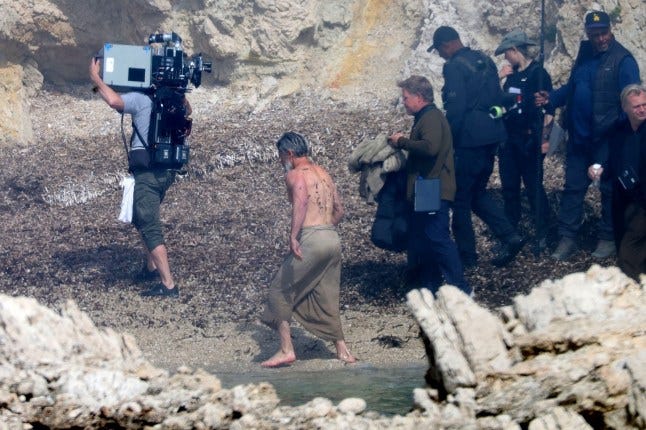
The Odyssey is the first feature in history shot entirely with IMAX film cameras and was only possible because IMAX built an entirely new camera.
Enter Keighley.
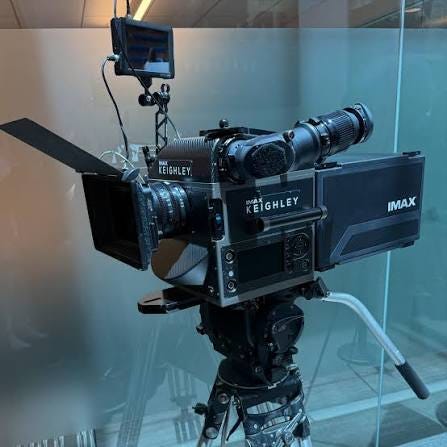
Named after David Keighley, the IMAX executive who died three weeks after finishing his work on the film.
The camera is roughly 30% quieter than its predecessor which means capturing crisp dialogue whilst shooting is a genuine possibility.
“You can be shooting a foot from an actor’s face while they’re whispering and get usable sound,” Nolan says. “What that opens up are intimate moments of performance on the world’s most beautiful format.”
The machine itself is a beautiful contradiction.
It’s a fully mechanical film camera with 5.6 feet of celluloid moving per second with 360 perforations every second at 24 frames. All monitored through a modern LCD interface that would look at home on an ARRI ALEXA.
Each Odyssey print was reported to cost $80,000 playing in the only theaters on earth still equipped for 15-perf projection. Twenty-five of them are in America and even one Las Vegas theater spent $32,000 on humidifiers just to keep its print in check.
The BFI IMAX in London sold £750,000 of tickets in 24 hours, tripling its Oppenheimer record.
Somewhere in this story is the whole argument about cinema’s future. IMAX spent sixty years as the format too impractical for movies but it is now being survived by being the thing screens at home could never replicate.
Kane Parsons stopped A24 from copyright striking Backrooms community. A24 issued takedowns of yellow-wallpaper fan art predating the movie, until Parsons told them to hold fire. The studio blamed an outsourced anti-piracy error and confirmed it makes no ownership claim over the wallpaper or community works.
Luke Skywalker’s lightsaber sells for a record $3.75 million. The biggest auction haul for an on-screen Star Wars prop.
Musicbed’s 30-day film challenge goes live with $65K+ up for grabs. Filmmakers, you’ve got until August 14th to pick a track and make a short visual. The winners will take $15K cash grants plus gear and subscriptions.
This week we’re watching:
Before Her or the Fatboy Slim video or Jackass, Spike Jonze was that guy blowing things up in skate videos with no money.
The doc traces how low-tech FX and a total disregard for how skate videos were “supposed” to look ended up reshaping the entire genre.
Retail Therapy: A motion control rig that fits in carry-on
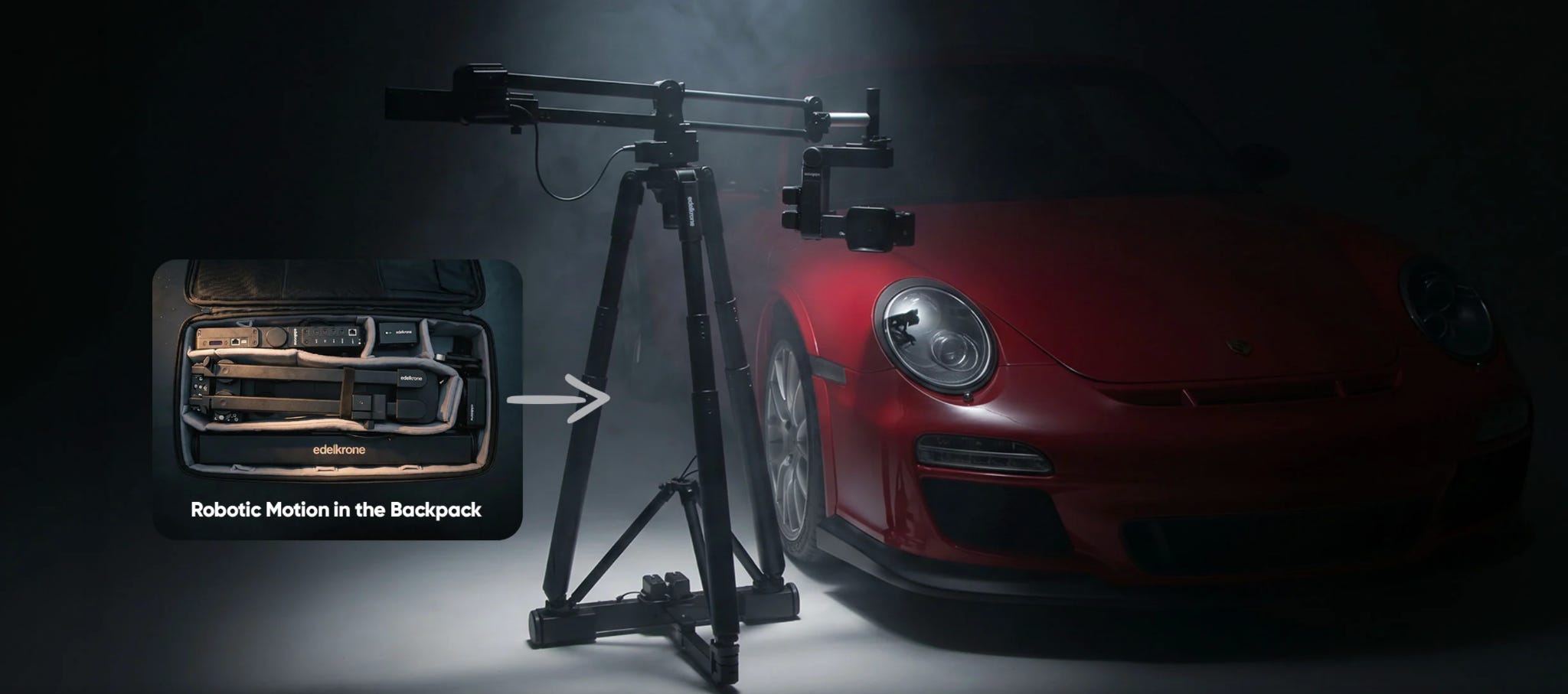
The Krone X Compact packs floor movement, and precise camera control into a single travel-sized system.
You can programme a path and it’ll repeat the move exactly, whether that’s a slow push through a product shot or an orbit around a subject that would otherwise need a second operator.
Available at edelkrone.com.