
Hi everyone!
We had a blast at Adobe MAX. It was nice to meet so many of you in real life and hear your reactions to our new motion graphics features.
One of the comments we receive a lot of is can you add demo videos for Eddie AI? We haven’t done a good job of that but as of late, we’ve started to and you can check them out: Eddie AI tutorials on YouTube.
Have a great weekend.
Elsewhere this week:
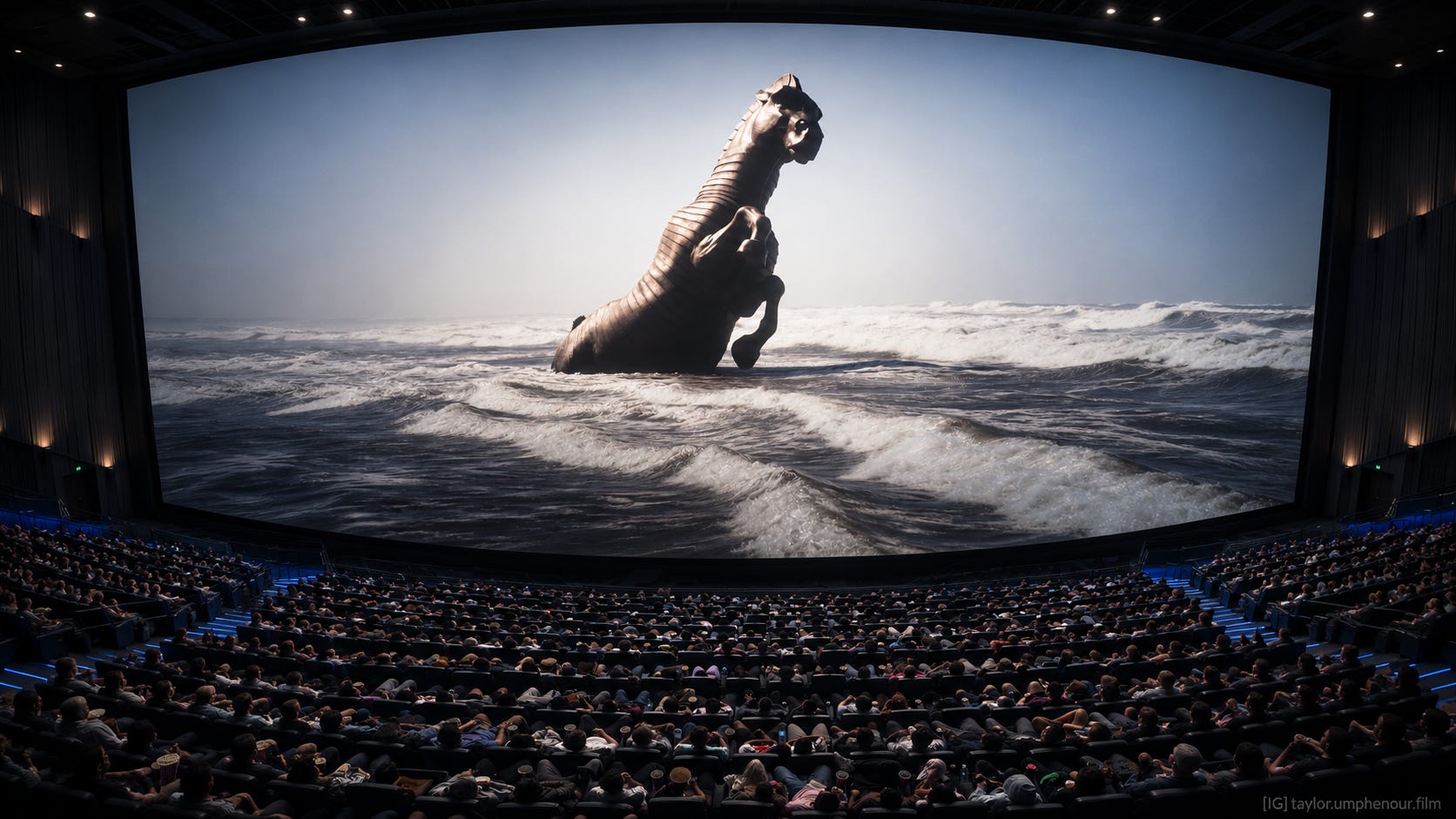
A Dior cartoon causes an argument about hand-drawn animation, and DJ makes a feature film with 0 dialogue. An iPhone app controls four cameras at once and a weather camera turns twenty years of sky into a film.
Render reel
Adobe hands $1 million to 10 filmmakers. It’s part of their Film & TV Fund and the cash is split across features, docs, shorts and student films. Recipients also get Adobe tools. They’ve also set up an advisory board that includes Lena Waithe and Reggie Hudlin. This round was invite-only, but you’ll want to watch for the next one.
Nathan Fielder’s 3 hour Elizabeth Holmes docu has made $80 million in North America. You Can See Everything, co-directed with Lance Oppenheim, was shot mostly inside Holmes’s house before she went to prison. It runs nearly three hours, and most of that is very uncomfortable conversation. It’s now the second-highest-grossing non-music doc ever at the domestic box office.
Your iPhone can now control four cameras at once. Thanks to filmmaker Claudio Ripalti’s app, Director Mode, which connects to both Canon and Sony bodies. You get live monitoring and recording controls, plus waveforms and LUTs. Lifetime Pro costs $29.99.
CineStill built a working film lab at the Emmys. Photographers Ashley Osborn and Brian Wright shot the ceremony on CineStill 800T in 35mm and 120, from the red carpet to backstage. The rolls were developed and scanned on site, and Vanity Fair ran the pictures the next day.
A digital camera has raised $270K by pretending to be 50 years old. Fotorgear’s Campix copies the waist-level viewfinder of the East German Exakta Varex. It shoots RAW, takes interchangeable lenses and even simulates 36-shot rolls. The sensor is only 13MP, and early Kickstarter packages start at $109.
The 70mm problem
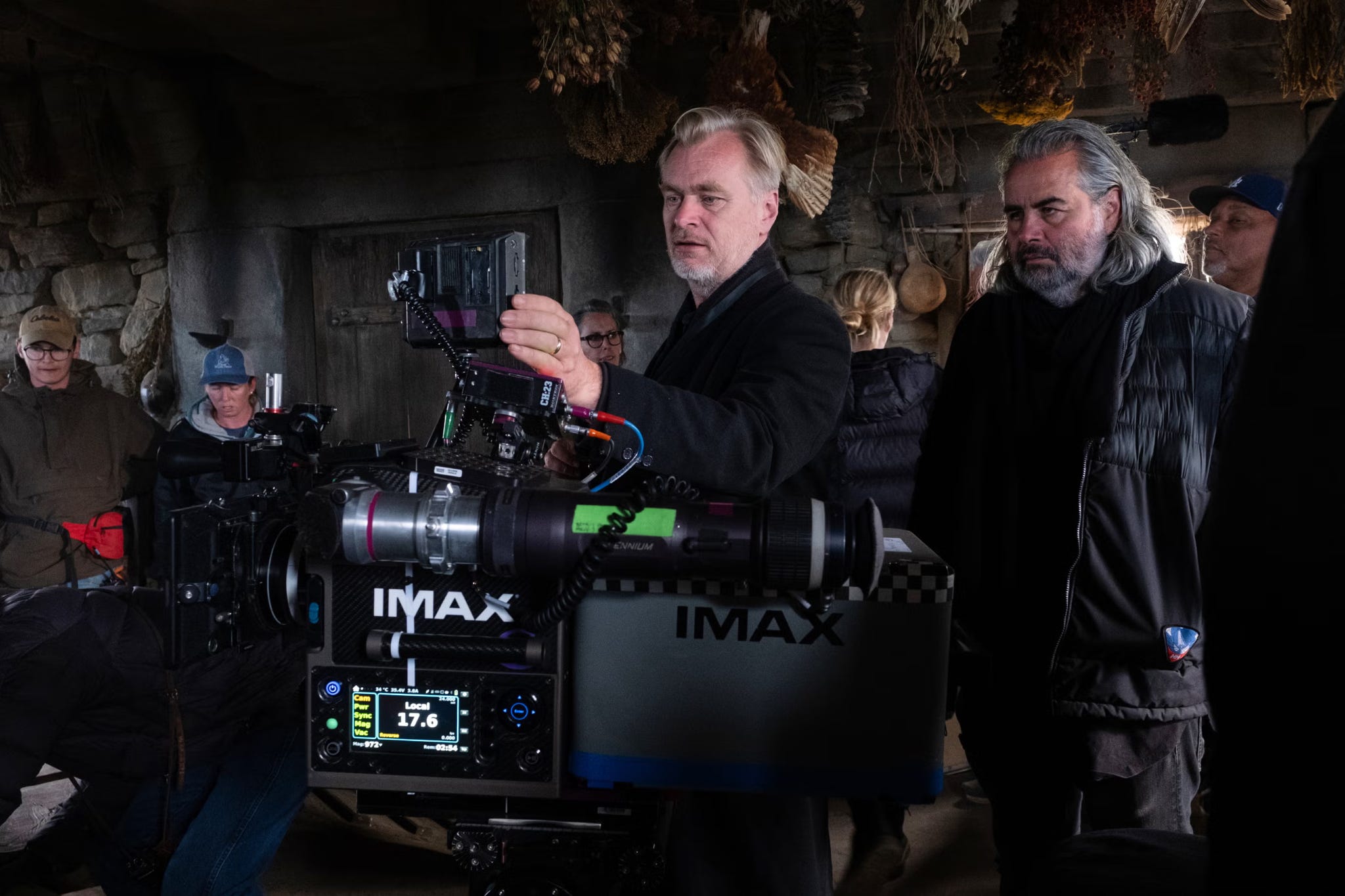
IMAX just had the biggest quarter in its history, taking $712 million at the global box office. That’s almost double its previous record, and The Odyssey brought in $538 million of it.
It’s now the highest-grossing IMAX release ever.
Nolan shot it entirely on IMAX 70mm, a format which runs 65mm negative sideways through the camera.
The frame is ten times the size of standard 35 and only 45 cinemas in the world can show it the way it was shot.
Those projectors are huge and nobody actually makes them anymore. Parts are scarce, and so are the projectionists who know how to use them.
Some IMAX projection booths still run on software written for PalmPilots. In 2023, IMAX showed off a Windows tablet pretending to be the 2002 handheld, which it was using to run the huge reels for Oppenheimer.
IMAX CEO Richard Gelfond admits demand for film is outstripping supply.
A digital IMAX screen is easy to install but a 70mm one can be an odyssey (sorry). You have to find an old projector, then refurbish it and then train someone to thread it.
Gelfond really wasn’t lying about the IMAX demand either.
In its first month, The Odyssey sold more than 101,000 tickets at London’s BFI IMAX, taking over £2.6 million from a single screen at 95% occupancy.
Universal are bringing The Odyssey back on December 11, in around 1,000 cinemas across the US and Canada, IMAX 70mm included.
Dior’s hand-drawn ad has an awkward question to answer
Sylvain Chomet, the director of The Triplets of Belleville, made Dior’s Christmas film as a celebration of traditional craft but it started an argument about whether it was actually drawn by hand.
Christian Dior’s Night in Colour follows the designer through a dreamlike 1940s Paris, in Chomet’s caricature style.
Dior promoted it as hand-illustrated but viewers started spotting a few rogue fingers between frames and cried “AI slop”.
Chomet and producer Aton Soumache deny it, saying about 20 artists worked on it for seven months BUT they did admit that software generated some of the in-between frames.
That’s the interesting part.
Animation has split key drawings from in-betweens for 100 years, and computers have helped with the in-betweens for at least 10.
But newer interpolation tools do go further, though, and can invent movement where there previously wasn’t. None of the Dior team named the software, so nobody knows where the line was drawn.
Until Dior says otherwise, people will keep counting fingers.
Creator watch
An animator is printing film frames the size of postage stamps. For Busy Bodies, Kate Renshaw-Lewis hand-draws each frame, then inkjet and screen prints it just 1.5 inches wide before it’s enlarged for cinema.
A DJ directed an animated feature. Kid Koala, the turntablist, adapted his own graphic novel Space Cadet, about a young astronaut and the robot that raised her. There’s no dialogue, so the relationship plays out entirely in movement and music. If you ever wondered what a film made by a DJ would feel like (you didn’t), here’s your answer.
Cut of the Week: Twenty years of sky
A weather camera in Lower Hutt, New Zealand, has been pointed at the same patch of sky since 2006.
Peter McGavin took one noon frame a day and turned 20 years of them into a timelapse, so every second covers 25 days.
Watch the colour, too.
The camera’s ageing sensor slowly loses its ability to see blue, so the skies fade to grey as the machine gets older.
Retail Therapy: The E-Reader That Sticks to Your Phone
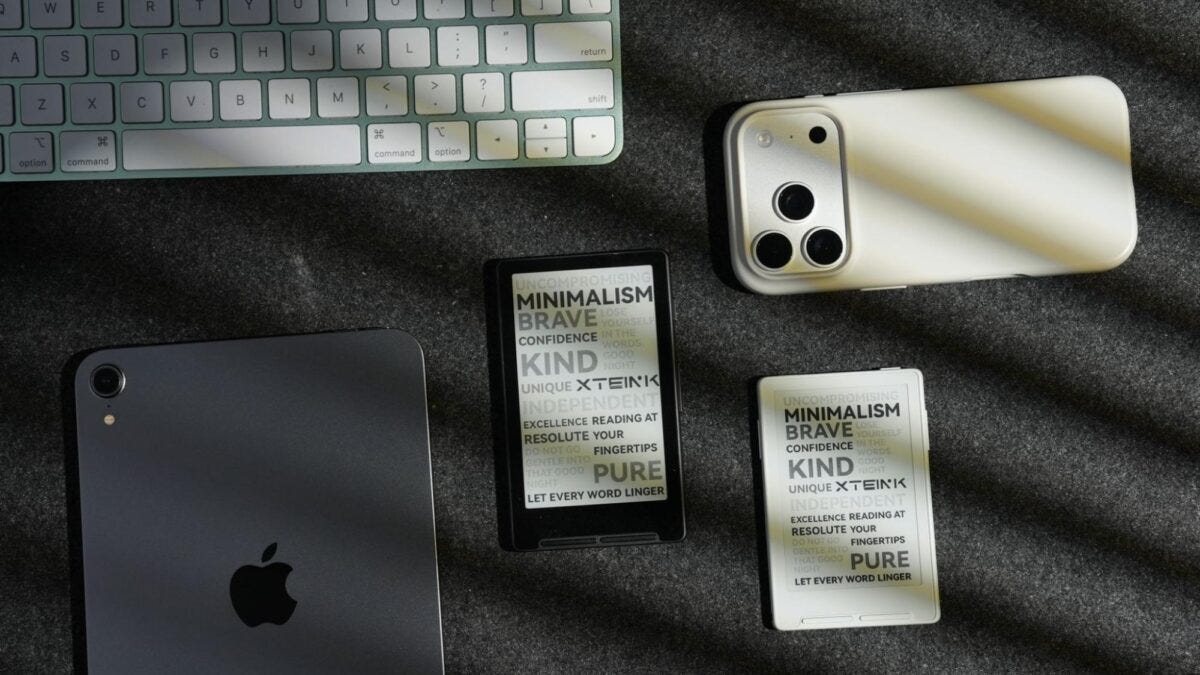
The XTEINK X3 is a 58-gram E Ink reader that snaps magnetically onto the back of your phone, so you never leave the house without a book.
The screen is just 3.7 inches, which means you’ll be turning a lot of pages.
Costs $55, which is less than most hardbacks.