
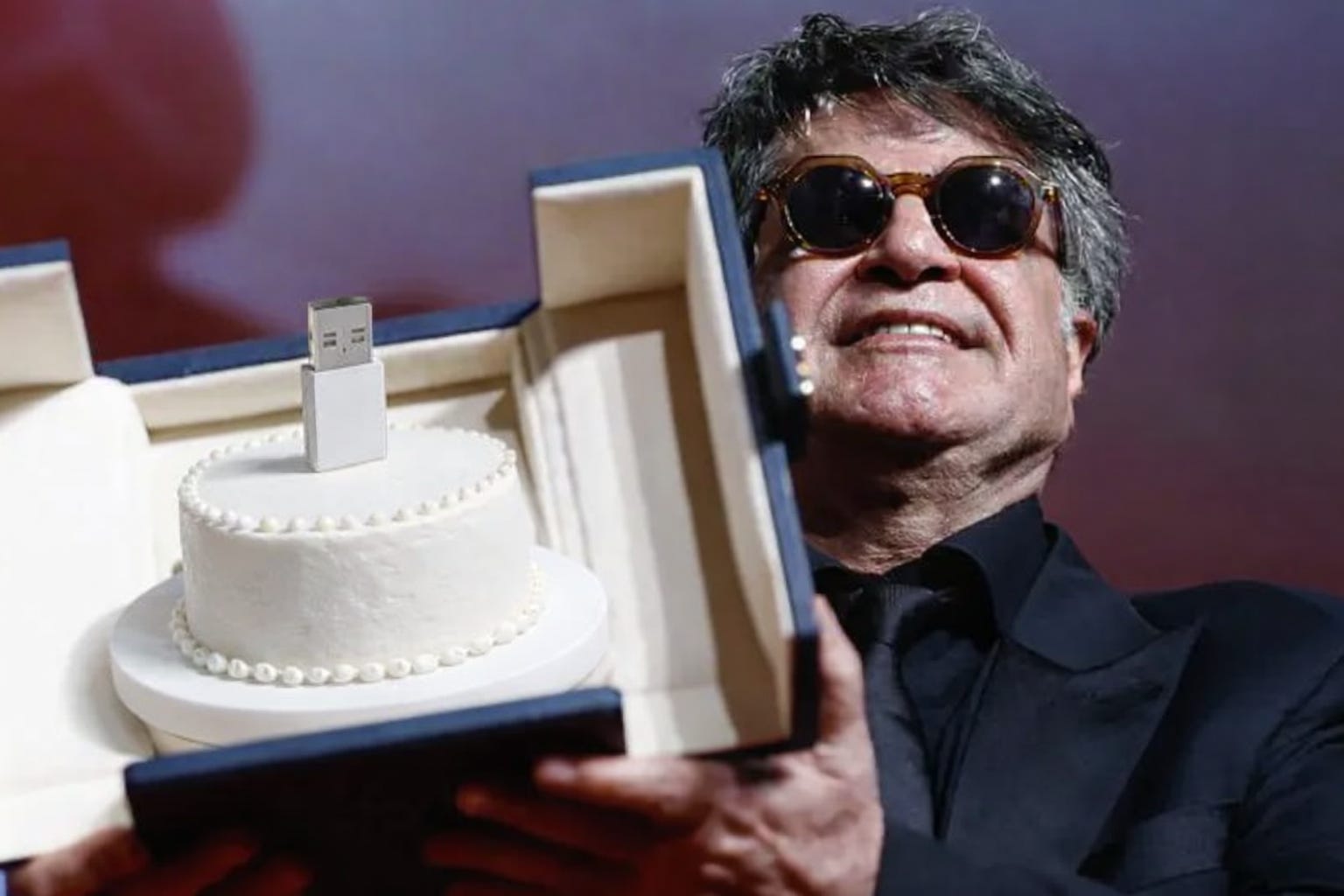
For fourteen years, we’ve been told that Jafar Panahi’s 2011 documentary This Is Not a Film was smuggled out of Iran inside a birthday cake via a USB drive hidden in buttercream frosting, shipped to the Cannes Film Festival like something out of a spy thriller.
It’s a perfect story: whimsical, daring, the kind of magical realism that makes Western audiences feel good about supporting dissident art.
However in 2025, Panahi confirmed it was complete hoax.
I have no idea who invented the story of the cake. And for what purpose.
Before we dive into the cake, you need to understand something more important: how a filmmaker legally erased from cinema has spent fifteen years refusing to disappear.
Architecture of Erasure
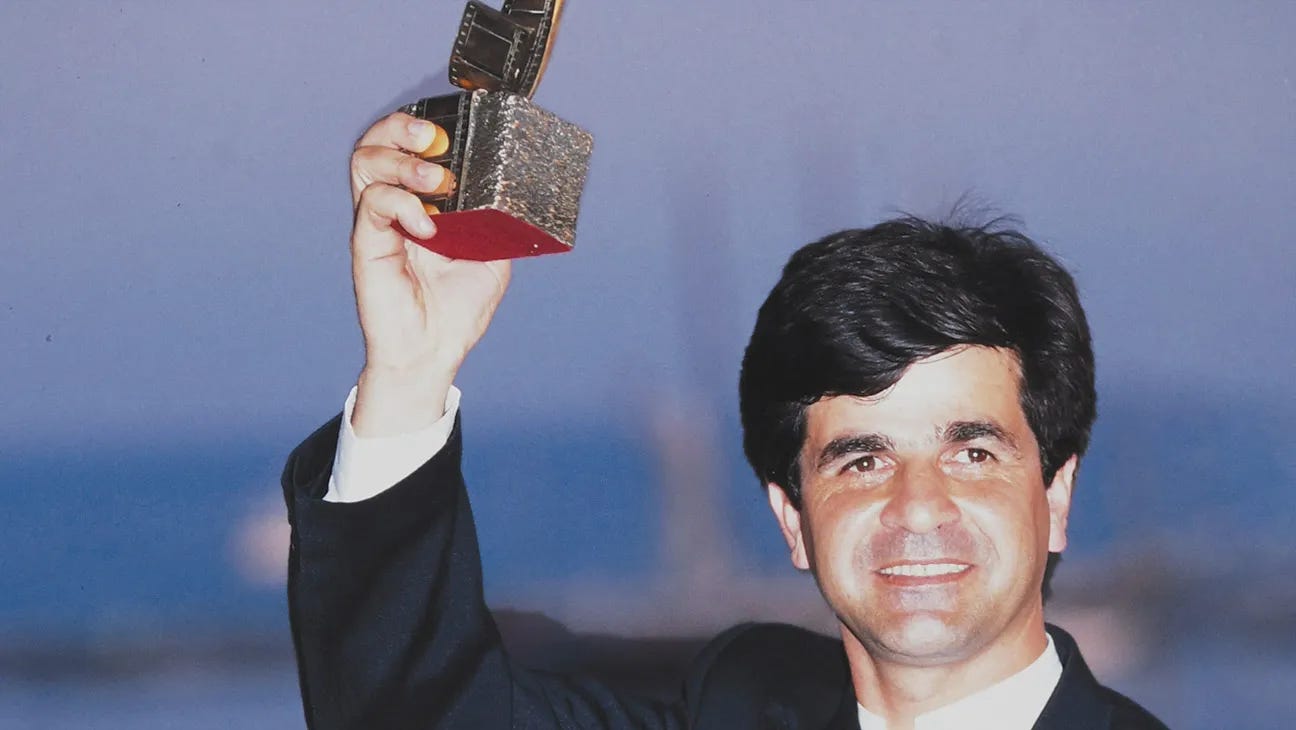
Jafar Panahi emerged in the ‘90s as part of the Iranian New Wave, mentored by the legendary Abbas Kiarostami.
His 1995 debut The White Balloon was a simple story about a young girl trying to buy a goldfish. It won the Caméra d’Or at Cannes and announced him as a major voice in humanist, neorealist cinema.
But where Kiarostami’s work was philosophical and often apolitical, Panahi weaponized the same formal techniques for explicit social critique. His films focused on the marginalized: children, women navigating Iran’s restrictive gender laws, working-class families trapped in bureaucratic systems.
By 2010, he had won major prizes at Berlin and Cannes, becoming one of Iran’s most internationally celebrated directors.
Then he made a mistake: he supported the wrong political movement.
After the disputed 2009 re-election of Mahmoud Ahmadinejad sparked massive protests, Panahi attended the funeral of Neda Agha-Soltan, a young protester killed by security forces. In March 2010, he was arrested.
By December, the Islamic Revolutionary Court handed down a sentence designed to erase him: six years in prison and a twenty-year filmmaking ban. This meant no writing screenplays. No interviews.
He couldn’t even leave the country.
Panahi’s response was to redefine what “filmmaking” meant .If the state defined film as industrial production, with crews, permits, and theatrical releases, then he’d make “non-films.”
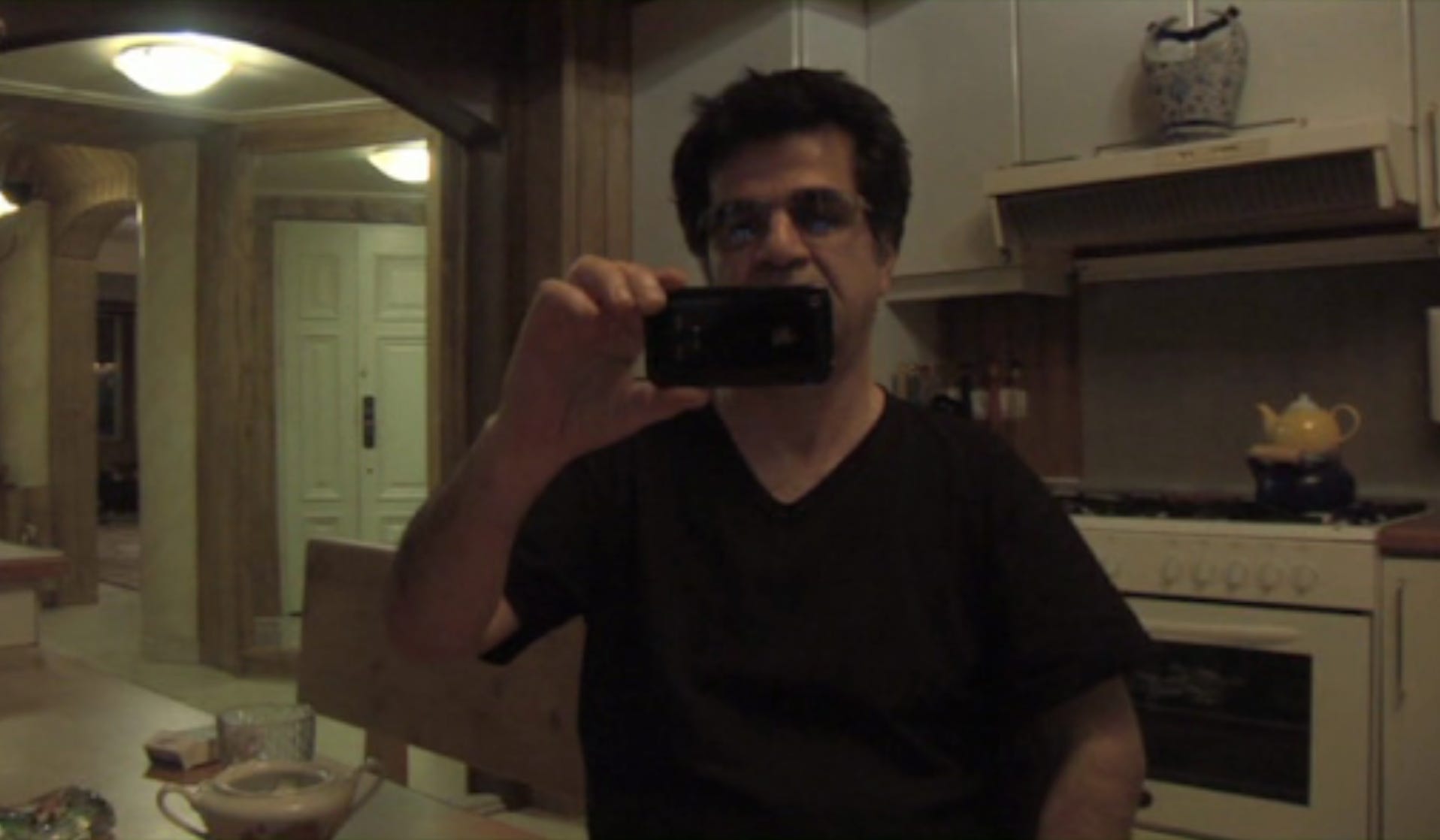
He made This Is Not a Film in his apartment on an iPhone. He then made Taxi (2015) with cameras mounted on the dashboard, filming the streets of Tehran through the car interior.
Each project exploited grey zones in what “filmmaking” really meant: Is it really “directing” if you’re just recording your living room?
Is it a “crew” if it’s just you and a friend?
But It Was Just an Accident, his 2025 magnum opus, wasn’t shot in a living room.
It’s a full-scale narrative feature with multiple locations, a cast, and the visual polish of any international production. Making it required not just courage but a sophisticated hidden infrastructure.
Winning the Palme d’Or at Cannes is the second most visible achievement in world cinema, behind only the Oscars. But Panahi reached that global stage by making himself completely invisible.
Editing in Thin Air

The other unsung hero of this story is his editor, Amir Etminan, and the decision to edit It Was Just An Accident on a 2020 MacBook Air with 128GB of storage.
When police raided the filming location, they saw Etminan’s laptop and dismissed it. They couldn’t conceive that a professional feature generating terabytes of high-res footage could possibly be edited on what looked like a college student’s personal computer.
The actual RAW footage (nearly two TBs worth) was never kept in one place. Hard drives were distributed across safe houses in Tehran, ensuring that if one location was compromised, the entire film wouldn’t be lost.
But Etminan was more than an editor in post.
He was on set, editing scenes minutes after they wrapped. In a normal film, you can always reshoot, but when you’re making an illegal film in public spaces under constant threat of arrest, every take has to work the first time.
Amateur Hour
So what did all this risk produce?
It Was Just an Accident is a revenge thriller disguised as a dark comedy, and it’s as much about the impossibility of justice as it is about seeking it.
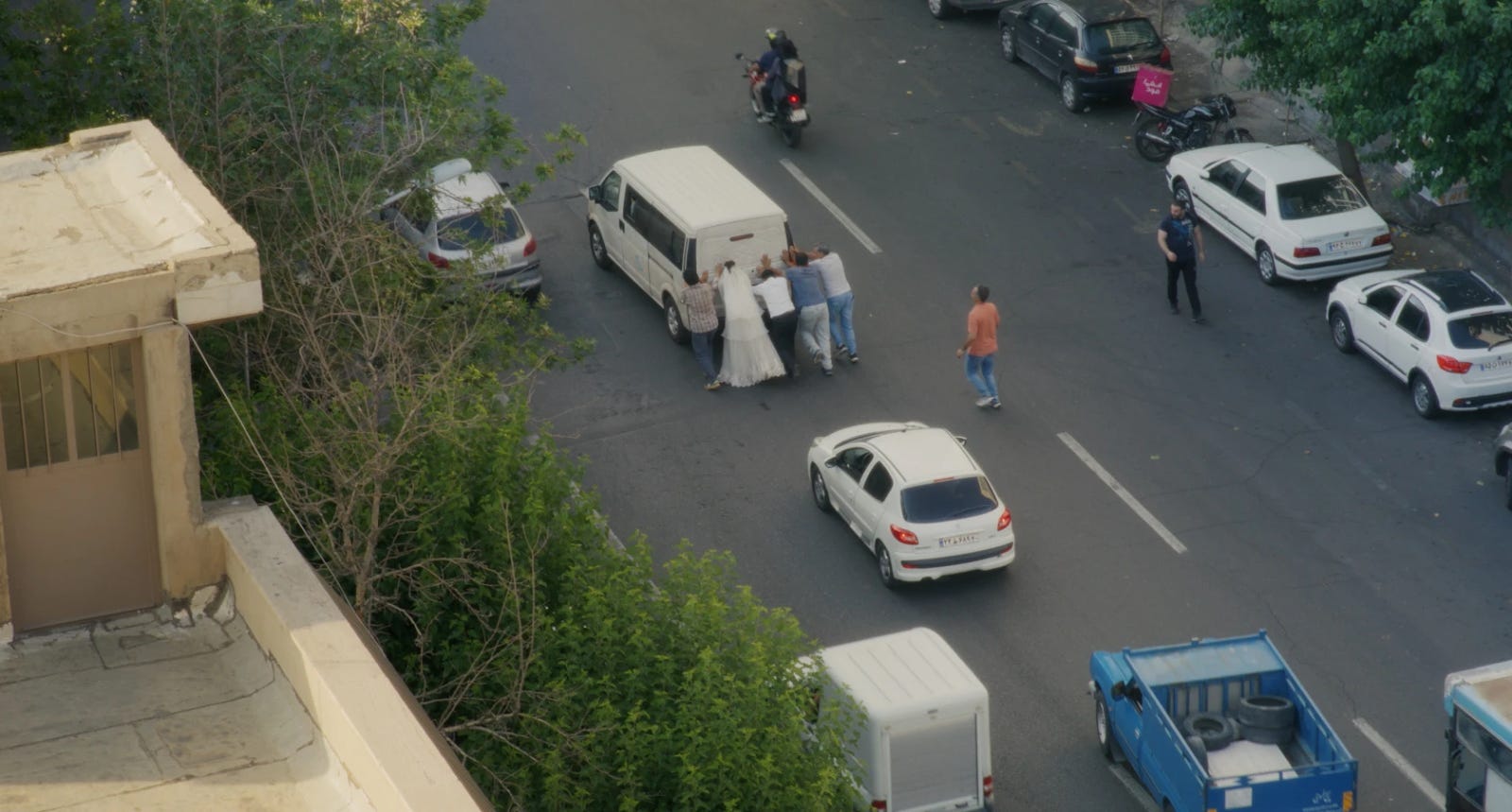
The plot is deceptively simple: a mechanic’s assistant named Vahid recognizes a man called “Peg Leg” (named for his squeaking prosthetic limb) as a former prison guard who tortured him. Vahid recruits a motley crew of ex-prisoners, including a pregnant woman and a bride-to-be, to kidnap the man.
But the kidnapping is so amateurish it borders on farce.
They run out of gas. Forget zip ties. At every turn, the mundane logistics of Iranian daily life undercut the gravity of their mission.
The genius is in what Panahi refuses to give us. We never get confirmation that Peg Leg is actually the torturer. Vahid’s identification is auditory, triggered by the sound of the prosthetic leg, rooted in trauma rather than evidence.
Are we watching justice or simply another act of arbitrary violence? By the end, the kidnappers risk becoming the monsters they’re trying to punish, using the oppressor’s methods to achieve their revenge.
The title works on multiple levels. Yes, there’s a literal accident (a hit dog that strands Peg Leg on the roadside). But “accident” also describes how power operates in authoritarian systems and who becomes guard and who becomes prisoner is often a matter of fate, not moral choice.
In Absentia
Which brings us now to December 2025, and the trap the regime set for him.
While Panahi was in the United States attending the Gotham Awards, Iran sentenced him in absentia to another year in prison plus a two-year travel ban.
The message was clear: stay where you are, join the long list of Iranian artists in exile, and lose your power as a domestic symbol of resistance.
Exile would solve a problem for both sides.
The regime would be rid of a troublesome dissident. Panahi would be safe, able to work freely (if disconnected from his source material).
Many Iranian filmmakers have chosen this path. Mohsen Makhmalbaf makes films in Europe now. Bahman Ghobadi hasn’t been back in over a decade.
Panahi’s answer, delivered at the Marrakech Film Festival shortly after the sentence was announced, was unequivocal: “I don’t have the ability to live outside Iran. My country is where I can breathe, where I can find a reason to live and where I can find the strength to create.”
This isn’t just patriotic rhetoric. Panahi’s cinema is Iran. The traffic jams, the checkpoints, the specific textures of daily life under theocracy. His films work because of the friction between what he wants to show and what he’s forbidden to film.
Take away that friction, and you take away the art itself.
Icing on the Fake
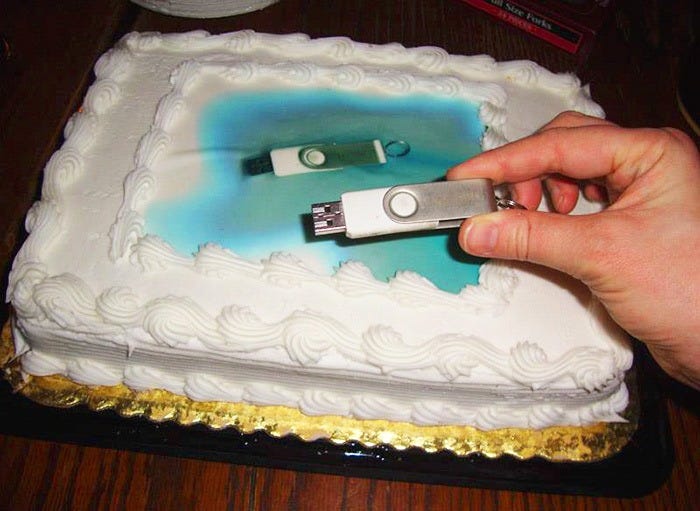
So why did the fake cake story persist for so long? And why did Panahi wait until 2025 to correct it?
Well, as he was banned from giving interviews, he literally couldn’t debunk the myth without violating his sentence. But the myth may have served another function. If Iranian intelligence was searching for USB drives hidden in birthday cakes, they weren’t finding the actual human networks carrying data across borders.
The cake myth also reveals something else about how the West consumes dissidence. We want to hear about magical resistance but not technical pragmatism.
The cake story turned Panahi into folklore. Clever, whimsical, safely exotic.
Instead, the reality was more impressive: Adobe Premiere Pro proxy workflows, RED Komodo cameras disguised as amateur gear, and a decentralized data storage strategy any cybersecurity expert would respect.
As he prepares to return to Iran to face his sentence, Panahi has secured something the regime can never confiscate: proof that a camera, a story, and the will to keep recording are all you need.
If you’re reading in the app, tap the little ❤️ so we know you’re out there.