
Hi friends!
We’re back from Cine Gear LA. It was a blast.
It was two packed days at Universal Studios talking about what we’re really building…between you and I, we’re not building another NLE. We’re building your AI teammate. One that syncs multicams, logs and assembles so you’re liberated to focus on the creative.
We also demoed what’s new in Eddie AI, including Logging v2, Feedback v2, Night Shift, and our Premiere Pro, DaVinci Resolve, and Final Cut Pro workflows.
We continue to be inspired by all of you indomitable filmmakers. Keep making, keep creating, keep fighting to put forth your ideas into the world for how it should be better.
—Shamir
CEO & Co-Founder, Eddie AI
Also this week:
Spielberg refused to release ET on VHS for six years, Brazil launched government streaming service with 555 titles dating back to 1910, TikTok and Sundance launched free micro-series scriptwriting programme.
The 27 year old assistant that found A24 record-breaker Backrooms. The film opened to $118 million worldwide on a $10 million budget yet the film was discovered by a 27-year-old assistant at Shawn Levy’s company who messaged Kane Parsons on YouTube when the first video had barely any views..
Brazil launched a free government streaming service with 555 titles. Tela Brasil offers 139 features, 85 TV movies, 267 shorts, and 64 series spanning 1910 to 2025. All Brazilian productions, available to anyone with a government digital account. The catalogue includes Glauber Rocha, Hector Babenco, and two Oscar nominees.
Spielberg refused to release ET on VHS for six years. The film played in cinemas for 363 consecutive days and when he finally relented in 1988, it sold 15 million copies. MCA spent over $1 million colouring the tape guards green and adding holographic stickers to combat piracy.
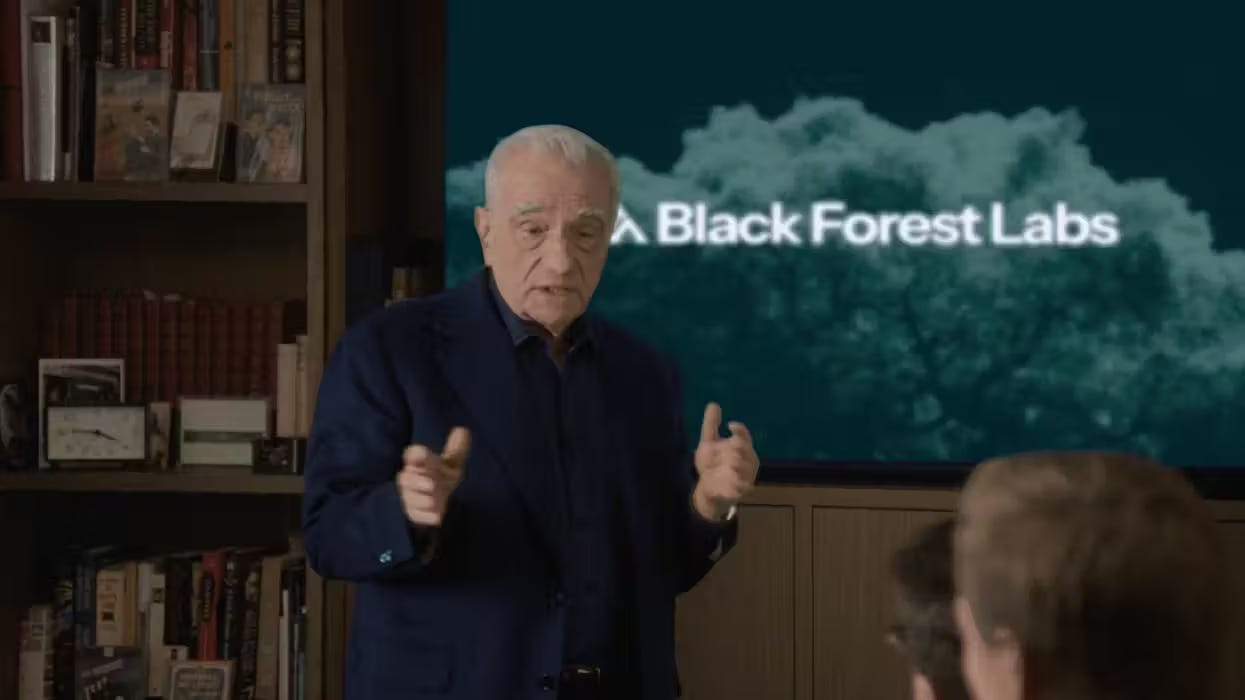
The 83-year-old filmmaker signed on as a partner and adviser to Black Forest Labs, the German company behind the FLUX image generation models.
His use case is specifically only for storyboarding.
For 70 years, I’ve been creating my own storyboards. There’s always been this problem of how do you communicate what you see in your head to your cast and crew. - Martin Scorsese
Scorsese isn’t necessarily endorsing AI filmmaking outright as he’s using AI the way he used 3D on Hugo and de-aging on The Irishman.
He’s using it as a pre-production tool that keeps human judgment at the center but the symbolic weight is hard to overstate.
TikTok and Sundance launched free micro-series scriptwriting programme. A four-week online course through Sundance Collab focused on serialized short-form storytelling for digital audiences. They want creators to treat micro-series as its own craft, not a lesser version of film or TV. Applications open globally through July 1.
Obsession art director made $6,741 on a film projected to gross $250 million
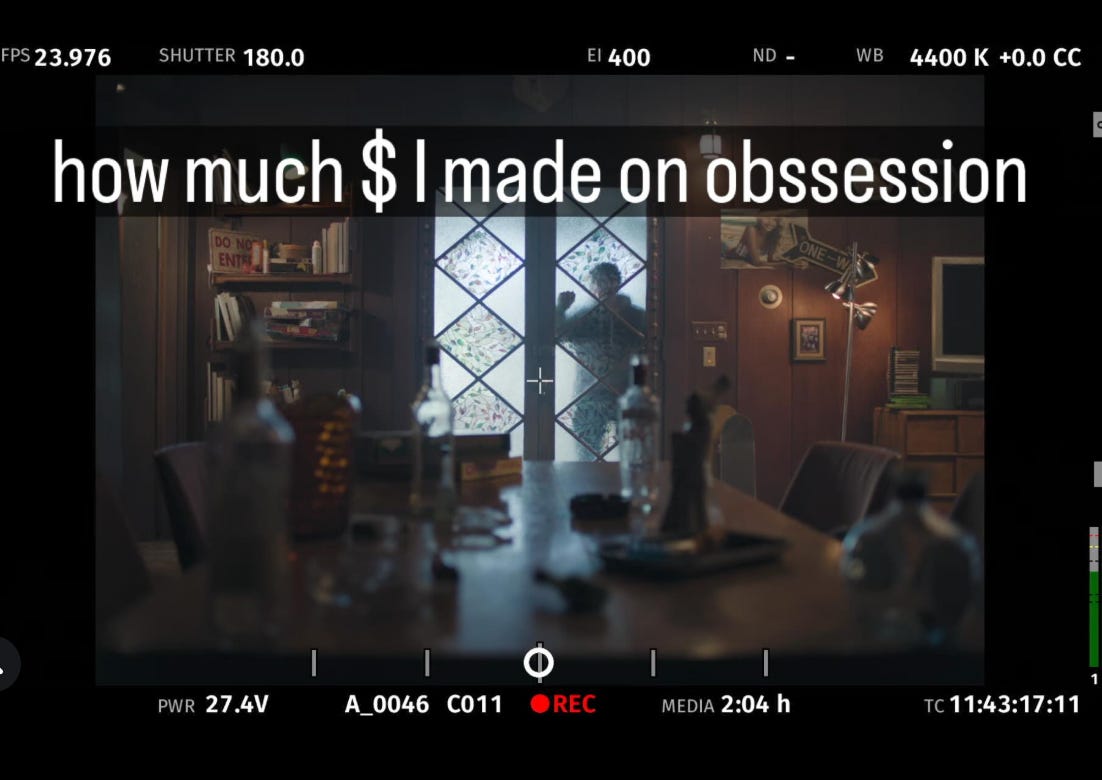
Sally Choi posted her rate $300/day with no mileage or backend and the internet did what the internet does.
But the discourse that followed mostly missed the point.
The calls for every crew member to receive backend on low-budget shoots sound righteous until you look at the actual numbers and producer Mynette Louie broke down what those potential numbers might be.
After exhibitors take 50%, the distributor takes their 30% fee, marketing costs, the minimum guarantee, agent fees, investor recoupment, and deferrals are paid out, the producer’s net receipts on $126M in US box office land at roughly $12.8 million.
Now you have to split across producers, the writer/director, cast, and some department heads.
Giving backend to every crew member on a low-budget shoot is like giving equity to every contractor who touched the product at a startup.
What is fair and what the industry should normalise is backend for heads of department on low-budget indies. If you’re the art director, the DP, the editor, and the budget is under a million, points should be part of the conversation.
In my experience these conversations were always being had on indies.
The question is why didn’t Choi push for backend upfront and the answer is obvious as you realize it was her first major gig.
She had no representation, and was also living paycheck to paycheck so taking this gig was a no brainer.
But it’s also a case of inexperience meeting an industry that doesn’t volunteer information about what you should be asking for.
The viral post with 1.2 million views from actor Luke Barnett landed the practical advice cleanly.
Use the credit, get a BTL agent and leverage the three hardest weeks of your career into the next ten years of it. Most importantly, don’t torch the relationships that got you there.
He’s right.
But the fact that a crew member can art direct a $250 million hit and walk away with less than seven grand is still worth sitting with.
Would love to hear everyone’s thoughts on this in the comments.
This week we’re watching:
Nike's six-minute World Cup film Rip the Script, directed by Dan Streit via Somesuch for Wieden+Kennedy.
Ronaldo, Mbappé, Haaland, Vini Jr., LeBron, Kim Kardashian, Travis Scott and Channing Tatum all appear because apparently the brief was "everyone".
The scale is undeniable as the spot opens on a commercial set and detonates into a genre-hopping sprint through action films, arthouse, talk shows, and pyrotechnics.
There are historically few bigger ads on the calendar than a Nike World Cup spot and this one made sure you knew it.
But for all the craft on display, it left me a little cold.
Six minutes of everything somehow adds up to not quite enough of anything. Like the cinematic equivalent of a restaurant menu with 100 items.
What exactly are we supposed to be looking at here?
Six minutes of everything somehow adds up to not quite enough of anything. Worth watching for the production alone and if you’re interested the BTS, read this deep dive with the director.
Retail Therapy: Your new doubles partner doesn’t complain about the heat
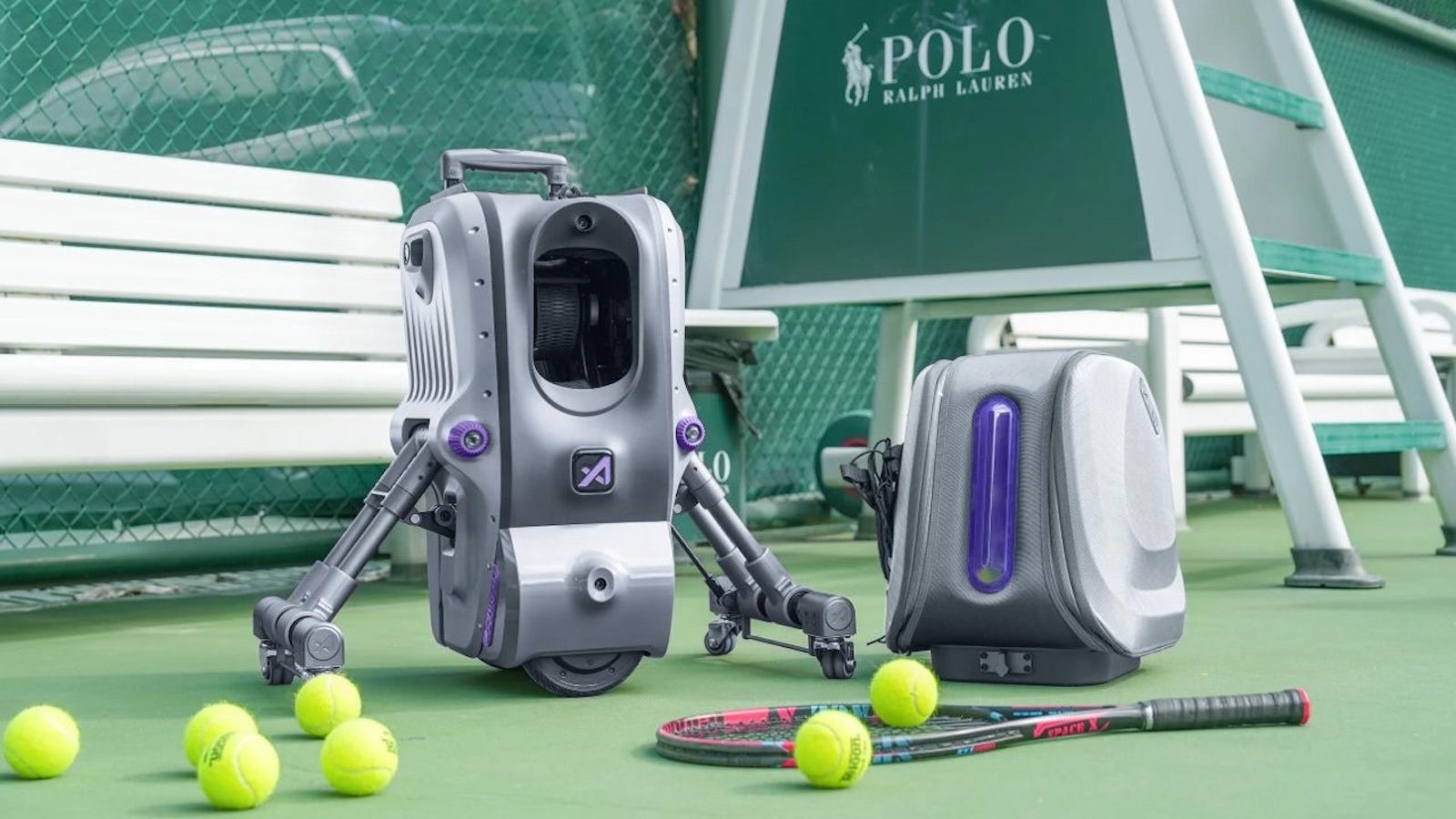
The Aceii One is a tennis robot that moves around the court, tracks your position with dual cameras, and fires balls at up to 80 mph with a half-second feed interval.
It folds into a carry-on suitcase with room for 120 balls, your racket, and whatever’s left of your dignity after losing a rally to something on wheels.
Works on hard, grass, and clay courts, and also does pickleball and padel if you’re going through a phase.
Available at aceii.com for $1500.