
This week’s letter includes: Sundance’s final year in Park City after 43 years and $13 million in losses, Netflix asking filmmakers to repeat the plot “three or four times” because they know you’re on your phone, an AI anxiety documentary premiering at a festival having its own identity crisis, and a $9,000 handbag that requires charging.
Render Reel
Over half of Indian moviegoers now routinely skip theatres: With theatrical windows shrinking to 4–8 weeks, over half of Indian moviegoers now routinely skip theatres and wait for streaming, hollowing out an ₹18,000 crore industry already struggling with screen shortages and falling per-screen revenue.
Kathleen Kennedy leaves Lucasfilm after 14 years: She hands over day-to-day control to Dave Filoni and Lynwen Brennan while returning to producing, framing AI as the next Jurassic Park–scale inflection point rather than an existential threat.
Apple Creator Studio rolls Final Cut Pro, Logic, Pixelmator, Motion, and Compressor into a $12.99/month subscription, signaling Apple’s intent to own the end-to-end creator workflow rather than just the hardware.
Anthropic targets Hollywood’s invisible workforce: As reported by The Ankler, Claude doesn’t need to replace writers or stars to upend the industry; by automating development analysis, and internal decision-making, it hollow-outs the assistant and junior executive layer that studios actually run on.
TikTok launches PineDrama as a standalone app: The company is betting that cliffhanger-driven, one-minute microdramas can succeed where Quibi failed, pushing short-form serialized storytelling toward a projected $26B market by 2030.
Netflix asks filmmakers to make movies for people who aren’t watching movies.
Matt Damon appeared on the “Joe Rogan Experience” podcast revealing Netflix executives are asking filmmakers to restate the plot “three or four times in the dialogue” because they know viewers are on their phones.
Damon explains: traditional filmmaking builds to a big set piece in act three. But now Netflix wants the big action scene in the first five minutes “to make people stay.” And they want characters to repeat the plot constantly because they assume people are scrolling Instagram.
Which, we probably are.
But playing devil’s advocate here: if you create lazy, formulaic storytelling that treats viewers like idiots, aren’t you giving them a reason to check their phones?
Just a thought.
The HPA awards normalize AI in the pipeline: The 2026 Innovation & Technology nominees read less like a future forecast and more like a workflow diagram, with AI fully embedded across pre-production, post, and distribution rather than isolated as a novelty or side bet.
Dreame enters the action-cam race with an 8K modular camera: The Leaptic Cube pushes headline specs and long-range wireless monitoring, but the real play is ecosystem control. Rings, and control surfaces point toward ambient capture rather than incremental GoPro upgrades.
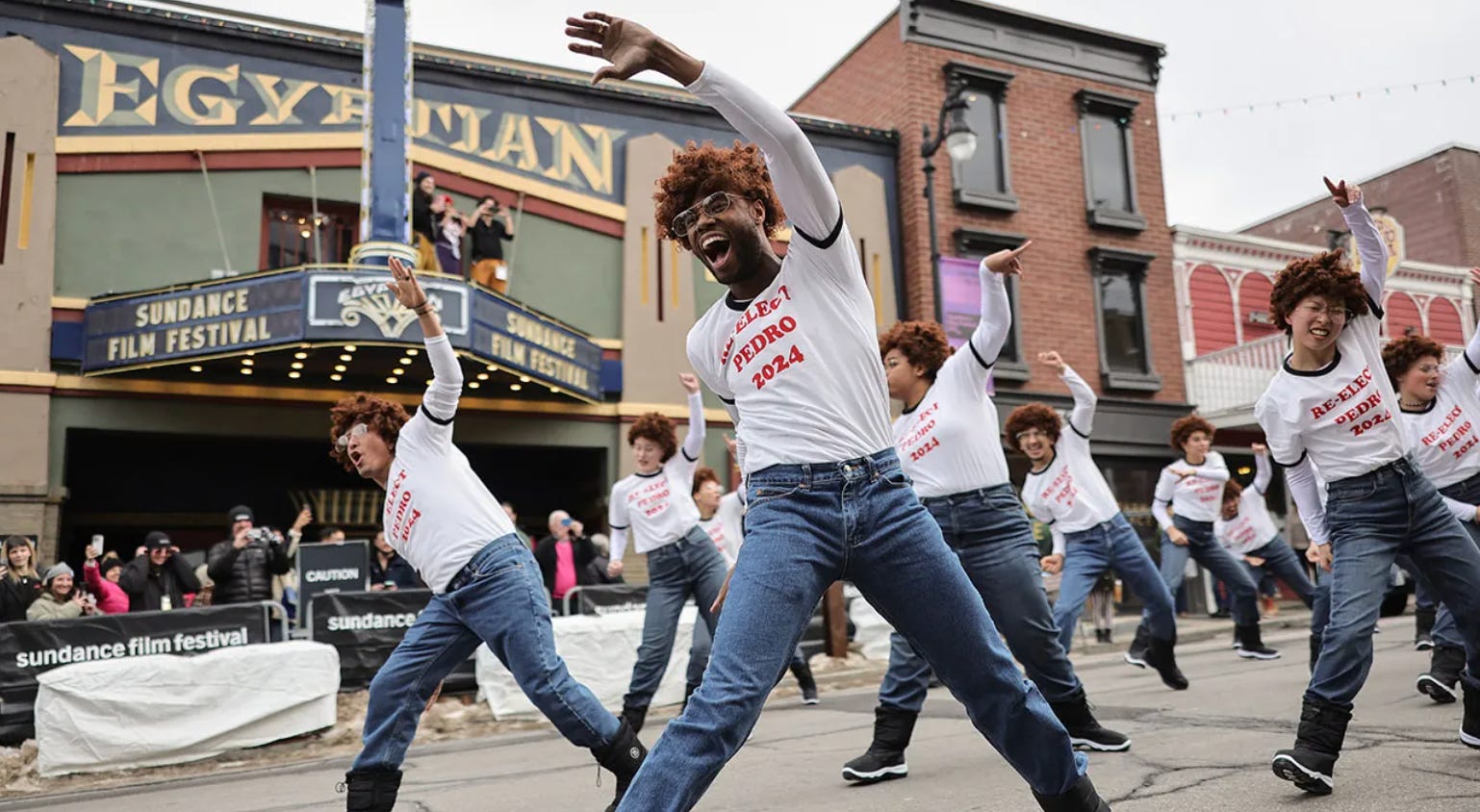
Final Park City Sundance
Sundance officially begins on Thursday and it used to be where scrappy filmmakers with maxed-out credit cards premiered movies shot on borrowed cameras. Now it’s Burning Man for people whose Amazon Studios deals fell through.
So here we are. The last dance.
The festival is relocating to Boulder, Colorado for 2027, which means this is Park City’s final hurrah. Forty-three years in Park City ending, and everyone’s showing up to either mourn the loss or celebrate the escape; depending on whether you’re a nostalgic cinephile or a local sick of fighting tourists for a table every January.
Park City’s isolation was supposed to be the point. Like Burning Man, the difficulty of getting there created exclusivity and community. And like Burning Man, it outgrew its humble origins the moment someone realized it could scale.
Despite this, Sundance has lost over $13 million in the last five years.
Sundance Institute CEO Amanda Kelso recently said:
hosting a film festival in a mountain town is extremely expensive.
Which, yeah it is when your festival location requires attendees to:
Book cabins up to a year in advance
Or don’t book a year in advance but stay 1 hour away from the actual festival
Pay Park City prices (read: tech bro ski weekend prices)
Navigate a town built for 8,000 people suddenly hosting 80,000
Rent cars to get anywhere
I’m part of a few WhatsApp group chats where you can find a sofa in a cabin at Sundance being offered for $150 a night. No joke.
It’s not a surprise that a change needed to be made.
Before Robert Redford died in September 2025, he’d already started advocating for the move to Boulder. Which feels significant, considering Redford was Sundance for most people.
But what many don’t realize is that before Sundance, there was something else.
The Utah/US Film Festival started in 1978, founded by John Earl (the Utah film commissioner), Sterling Van Wagenen, and Cirina Hampton Catania as a scrappy celebration of American indie cinema.
Redford took it over in 1984, moved it to Park City (his Sundance Resort was nearby), and completely transformed it; rebranding it as the Sundance Film Festival and building the infrastructure that made it legendary. The Sundance Institute, the labs, the grants, the year-round support system, that was all Redford’s vision.
So while he didn’t create the original festival, he created Sundance as we know it.
So why Boulder?
As a city it has a few things going for it that Park City doesn’t.
Bigger than Park City but still has the “artsy mountain town” vibe
More infrastructure (hotels, venues, actual space for tens of thousands of people)
Direct flights to a major airport
More affordable for emerging filmmakers
Colorado’s creative scene is booming
Basically, it’s Park City without the problems that made Park City untenable.
This AI Doc
One of the most buzzed-about films this year is a documentary about AI anxiety.
The AI Doc: Or How I Became an Apocaloptimist comes from Daniel Roher (Oscar winner for Navalny). The setup: Roher’s about to become a father and is spiraling about AI. Will his child grow up in a world where humans are obsolete or will AI solve all our problems?
What’s interesting is the title: “Apocaloptimist.” I felt that. That exhausting state of being simultaneously terrified and hopeful about the future.
We’re all apocaloptimists now, doom-scrolling while also believing things might work out.
The timing is perfect. Sundance’s final year in Park City; a festival struggling with its own identity crisis about what “indie” even means, is premiering a film about a guy having an existential crisis about whether humans will remain relevant.
CryptoMondays
Nothing says “indie film festival’s final year” quite like a CryptoMondays event discussing Film3 and “on-chain systems.”
CryptoMondays, heralded as “the largest in-real-life Web3 community in the world” is hosting an event about how blockchain and AI are “reshaping the future of creative industries.” The organizer, Alizah Whitney Johnson, pitches it as: “Many of the challenges we’re experiencing around trust, ownership, and value creation are directly related to how our systems are structured.”
But is the solution blockchain?
Viltrox brings AI autofocus to PL cinema lenses: The NexusFocus F1 uses Sony bodies to add autofocus, and zoom control to manual cinema glass, narrowing the gap between solo operators and traditional focus-pulling setups without altering optical character.
ARRI dominates the 2026 Golden Globes: Winning films overwhelmingly leaned on the Alexa 35 and Mini LF, reinforcing that despite constant camera churn, high-end narrative production remains conservative where it matters most.
Ricoh launches a black-and-white-only GR camera: The GR IV Monochrome rejects color entirely, betting that creative constraint itself is the feature and positioning single-purpose image making as a deliberate counterpoint to all-in-one hybrid cameras.
Insta360 upgrades its webcam into a utility camera: The Link 2 Pro won’t replace cinema rigs, but its 1/1.3” sensor, and gimbal tracking show how “webcams” are absorbing features once reserved for mirrorless cameras.
Cut of the Week: 17 Months of Editing Frankenstein
Evan Schiff (editor of Frankenstein) posted a time-lapse showing every timeline iteration from March 2024 through final delivery in August 2025.
Seventeen months compressed into 90 seconds.
The timeline slowly accumulates into layers: production footage from Toronto, London miniatures, Scottish location shoots. 51 audio stems. Then 51 music tracks. Orange VFX temps stacking on top. Alexander Desplat’s score demos getting replaced by Abbey Road final mixes.
Mesmerizing and exhausting in equal measure.
Retail Therapy
TDM Neo headphones twist into a Bluetooth speaker with one motion
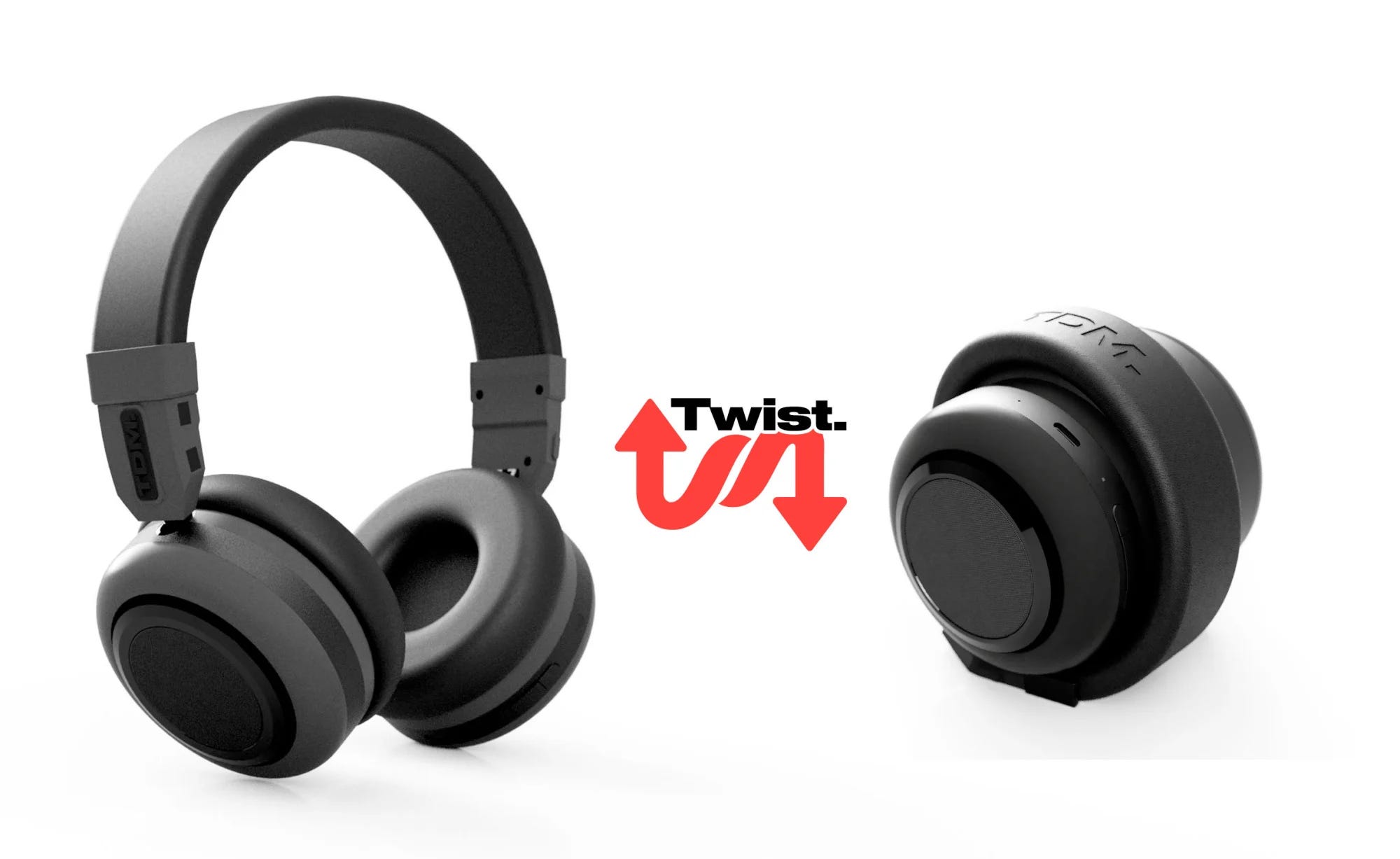
A new audio brand called TDM is selling $249 headphones that physically twist into a Bluetooth speaker with a flick of your wrist; engineering a modular design that eliminates the need to own both headphones and a portable speaker. You can now turn personal listening into a group jam session by literally transforming the device in your hands.
French brand PEUTY launches $9,000 handbag with built-in OLED display

French brand PEUTY is selling a $9,000 handbag with an OLED screen embedded in the leather. A luxury purse that turns into a glowing, phone-controlled display, transforming a simple accessory into a Bluetooth-enabled fashion statement that requires charging.
Who’s going to Sundance this year? Let us know in the comments
X-cellent post