
Hi everyone!
I had a great week.
Startups are hard, but at their core, they’re simple: build something people want.
The difficulty isn’t understanding that objective. It’s figuring out what people actually want, distinguishing polite encouragement from genuine demand, and building something valuable enough that they change their behavior to use it.
You can surround that work with complexity—fundraising, strategy, hiring, positioning. Those things matter, but none can substitute for making something people want. An impressive team, a compelling pitch, and enormous effort don’t absolve you of that requirement.
That’s what I mean by simple. Not that there are few things to do, or that success is guaranteed if you get the product right. But that there’s a clear organizing principle against which to judge the work: are we making something people genuinely want, and getting better at delivering it to them?
And this week it was a resounding yes.
PS - To celebrate our IBC win (best of show, baby!), we have a promotion running until next Sunday, Oct 4.
Every Eddie credit pack from $45 and up comes with 5% extra credits!
The bonus is added automatically at checkout.
Buy credits →
Also this week:
Adobe swallows Topaz Labs, James Gray talks about returning to shooting film because he thinks digital changes acting, Canon patented a camera designed to prove its pictures are real, and someone compiled 35 years of Hollywood spec sales into a 517-page PDF.
Render Reel
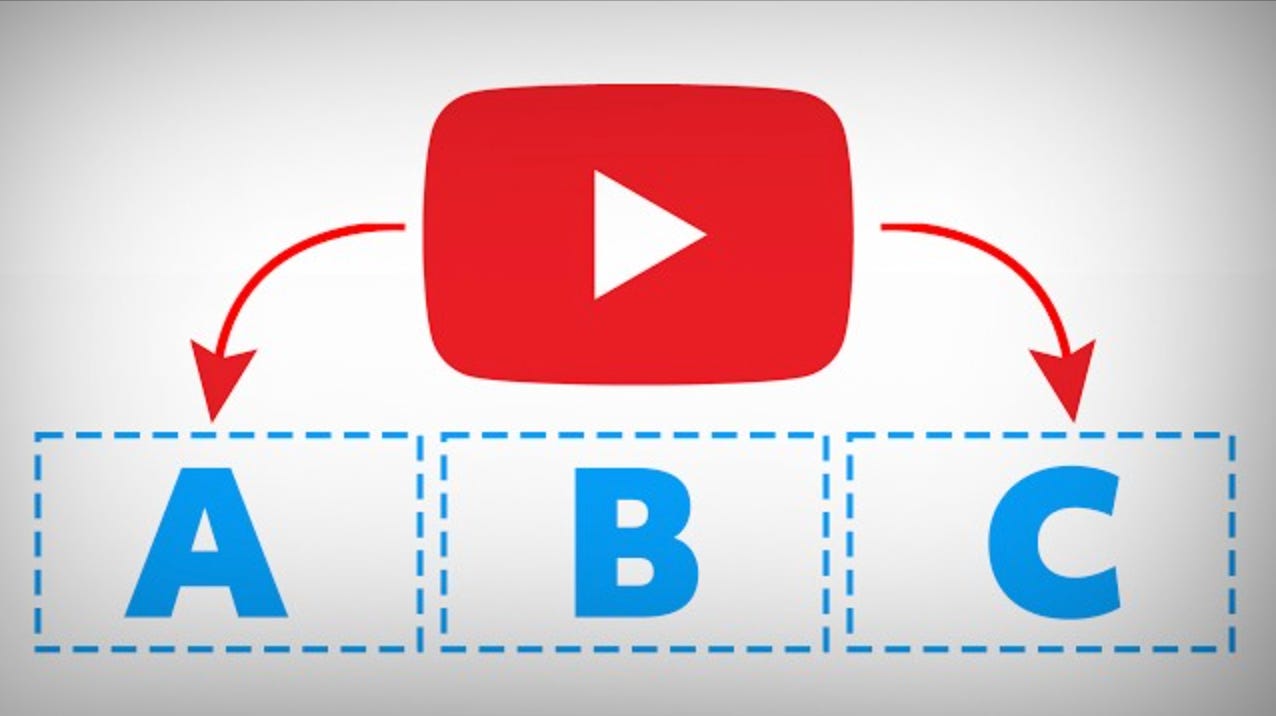
YouTube wants to A/B test the actual edit. Creators can soon upload up to three cuts of the same video and see which opening holds attention best. Titles and thumbnails have been rumored to be optimised this way for years but this goes a step further.
Adobe officially owns Topaz Labs. It’s a deal worth around $340 million and brings Topaz’s video upscaling and restoration models deeper into Creative Cloud. Topaz stays as a standalone brand for now (literally just for now), which is normally the reassuring sentence you hear immediately after a software company gets bought.
Vimeo On Demand stopped taking money. New purchases ended September 21 and the service will shut completely on November 20. Any films you “bought” will disappear with it unless the filmmaker enabled downloads.
James Gray went back to film because digital changed the acting. After shooting Armageddon Time digitally, Gray returned to film for Paper Tiger. He argues that film stock puts an actual cost on every second and everybody on set can feel it. This is nothing new but interesting to see an established filmmaker return to film instead of the other way around.
Scott Myers catalogued 35 years of Hollywood spec deals for free. Screenwriter Scott Myers has released a free 517-page archive of 2,560 verified spec sales and options from 1991 to 2025, complete with buyers, genres, representation, reported prices and more than 2,400 loglines.
One indie film is travelling around America on a single DVD. After Handle With Care struggled on the festival circuit, filmmaker Matthew James Thompson is sending a DVD copy of the film around America inside a peli-case. Inside the case viewers can find a portable player and handwritten notes from previous watchers Only 90 people signed up so far.
Who gets the screen?
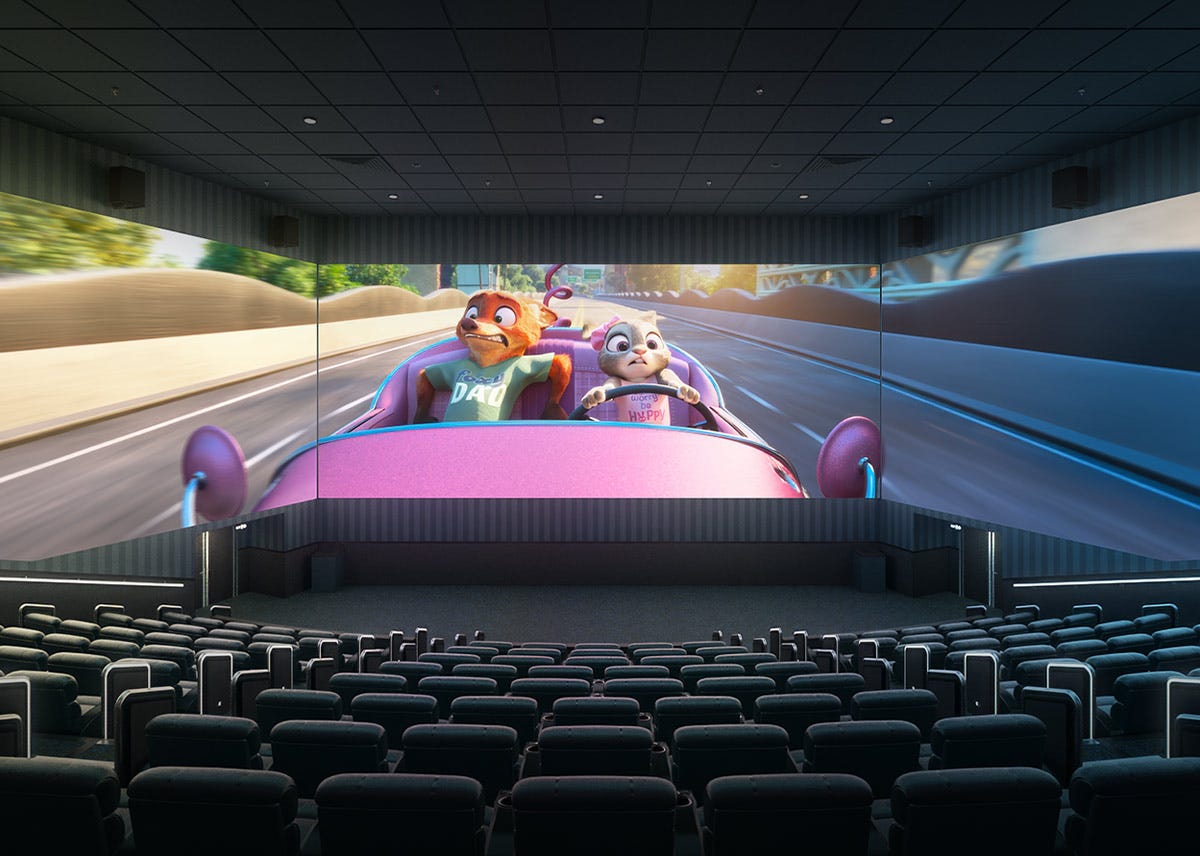
Most indie films never get real distribution.
Which makes two theatrical experiments announced earlier this month more interesting now that Vimeo’s direct-distribution experiment is effectively dead.
AMC, the world’s largest cinema chain, just created its own distribution company in Leawood Films and the model is deliberately low risk. AMC will not finance your movie or develop your script.
They’re only taking on financed and completed films, then they’ll use their marketing muscle and a cinema footprint of nearly 9,500 screens to actually get them in front of people.
The first releases won’t be till 2027 or even 2028, but it’s worth tracking this. AMC becoming the distributor itself could kickstart a future where the exhibitor and distributor are the same thing.
Saying that, Regal Cinemas are testing almost the opposite idea.
Its Future of Distribution pilot with IFTA and France’s CNC will give otherwise-unused screens and showtimes to a neutral programmer whose sole job is to fill seats.
That means zero loyalty to studio relationships and no requirement to favour the normal release slate. The programmer can choose a range of different types of films such as wide releases, docs, repertory films or special events.
The trial starts in selected markets later this year, with results expected in 2027.
Then there’s Vimeo.
When Vimeo On Demand launched in 2013, the vision was a present where you’d be able to upload your film and sell directly to viewers with no meddling distributors involved.
I think we’ve all come to find that removing the gatekeeper doesn’t magically create an audience.
Meanwhile, in cameras
Canon patented a camera that can prove its pictures are real. The design uses two sensors shooting simultaneously, creating a second reference image that helps verify just how much a photograph has been altered.
Canon also wants your fingerprint on the camera. Another patent puts biometric sensors into the grip or thumb rest, potentially unlocking personalised settings or securing shared bodies. Face ID for cameras next?
A hacker built a digital camera specifically to behave more like film. Camera hacker Malcom Jay built the WLV-01 which is 3D-printed camera with lens mounts and even a waist-level finder.
This week we’re watching
Wingsuit world champion Espen Fadnes flying down Norway’s Trollstigen Road at more than 200 km per hour, bombing past a cyclist and a bus on the way down.
The branded stunt for Zing Toothpaste used 15 camera angles, including GoPro Hero13s, Mission1 Pros and Max2s.
Not quite sure how this promotes a toothpaste but it’s a cool watch :)
Retail Therapy: the $260 telescope for your phone
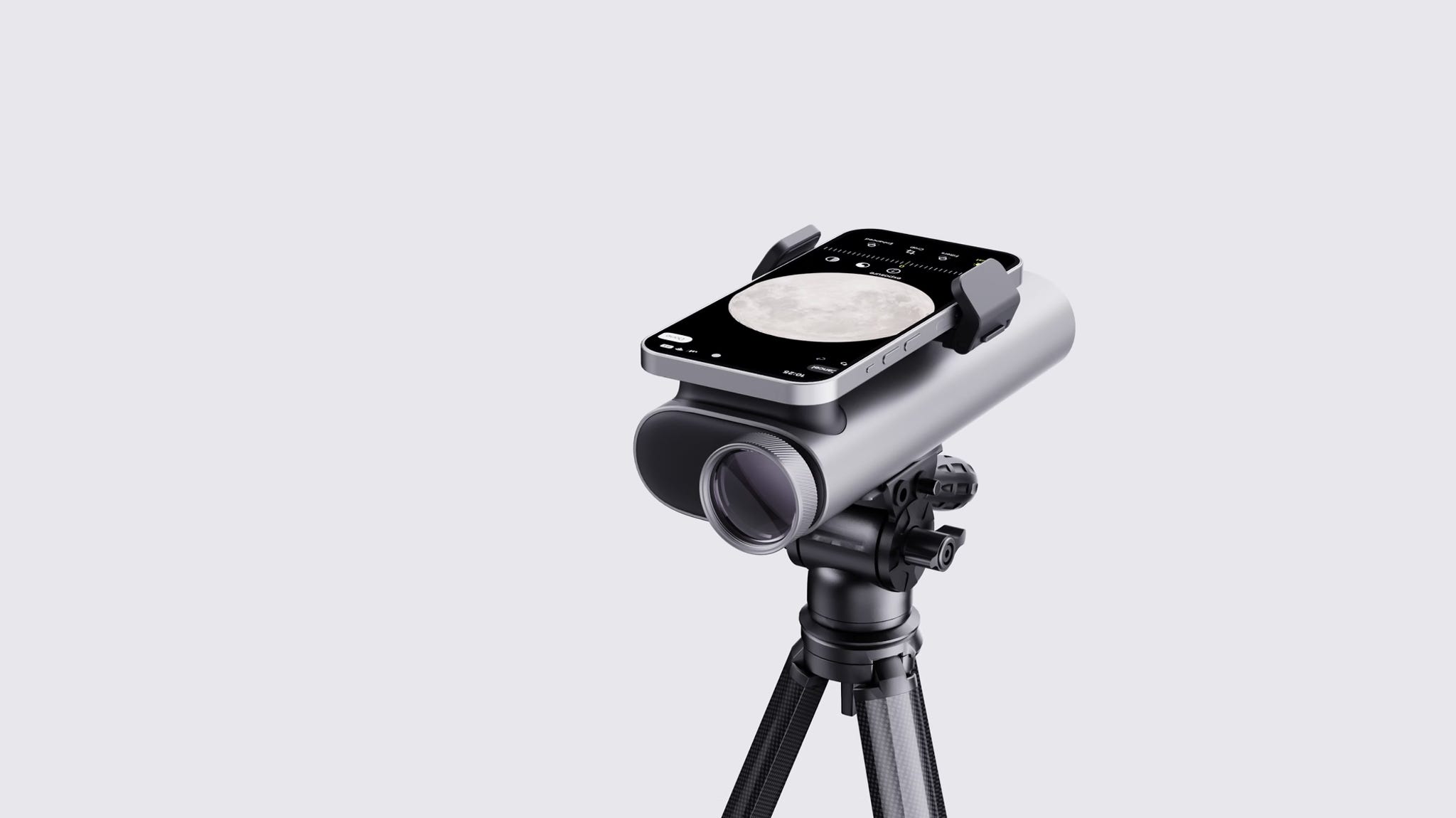
Qivika is a 300g smart telescope that can clip to your phone and gives it 24× optical magnification. They claim up to a 3,000mm-equivalent view, with an app that can identify birds and guide you around the night sky.
Currently on Kickstarter for under $260.
Probably not replacing your 600mm wildlife lens but much easier to put in your coat pocket.