
Hi everyone —
Eddie v4 launched yesterday and in time for IBC 2026 where we will have a booth (7.A38) and be speaking (learn more).
My favorite three big updates:
cloud-synced projects, accessible anywhere with anyone on your team. Hi iphone app | web | Mac | Windows | API
support for editing many more video types like b-roll based, montages, weddings, etc.
pay as you go. Buy credits as you need. No subscription lock-in.
My picks for the coolest new features:
Eddie can join your Blackmagic Cloud or Adobe Premiere Productions projects as another teammate and edit together with them concurrently
You can export an edit from Eddie to Frame.io. Feedback notes left in Frame.io are accessible to Eddie who can then implement them.
Eddie can search stock libraries, generate b-roll sequences, and generate music cutting shots to the beat.
All the updates are here. Sign up and receive free credit.
—Shamir
This week:
IBC 2026 starts tomorrow, sending around 45,000 people to Amsterdam to obsess over the unsexy machinery behind video. Reuters turns 70 years of footage into an AI-searchable archive and TIFF’s first real film market.
Render Reel
Adobe puts AI generators inside the timeline. Premiere 26.5 can now generate video without ever leaving the timeline, using Firefly and models like Veo and Runway.
Reuters and ITN put 70 years of broadcast history through AI search. Reuters will make ITN’s archive available through Reuters Connect from January 2027 and digitise another 12,000 hours of footage.
TIFF finally has a real market, and sellers are already asking why. The market opens with a C$23 million federal funding injection and nearly 1000 buyers. You’re probably thinking, “Didn’t TIFF already have a market?” . Well, it did. Unofficially. Hiding in hotel bars and restaurants but this time they’re formalising it six weeks before AFM.
Destination IBC
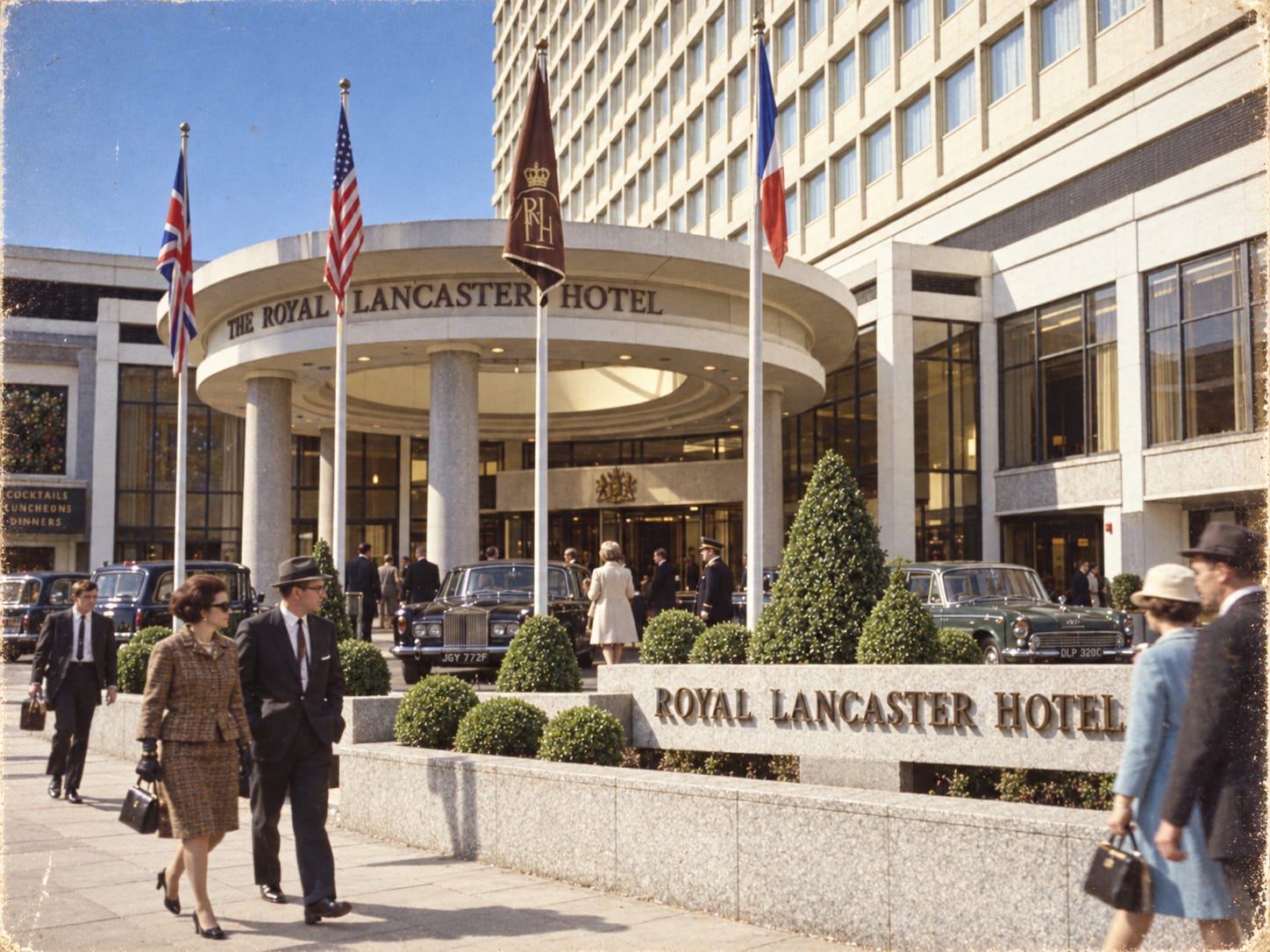
The show began at the Royal Lancaster Hotel, London in 1967, just as European TV turned to color and live satellite broadcasting made television feel planetary.
Its founders from EMI, Marconi and Rank wanted something more useful than a gear exhibition so they created a tech conference owned by the people actually building the tech.
That dynamic remains today as IBC is still owned by six industry bodies which include the Royal Television Society and the IET.
If NAB sells scale and CES sells whatever consumer tech wants us to believe in next, then IBC sells plumbing behind all of that.
That’s the boring stuff like signal transport or codecs. And asset management. And captioning. Camera control. Metadata. Ok, I won’t bore you further.
None of it is sexy but that’s precisely the point.
Most viewers will never know which bit of IBC tech made a broadcast work.But they will notice the second their stream buffers or their video doesn’t load. That’s what IBC’s really about.
That invisible plumbing is what made the show indispensable, and eventually too big for its original home.
IBC left London for Amsterdam in ‘92 and this year it expects roughly 45,000 attendees and 1,300 exhibitors across 14 halls.
Arguably the most interesting hall this year is Hall 14. “Future Tech”.
It’s the fastest-growing part of the show, and its Accelerator projects offer a pretty clean view of where video tech could be heading next.
One project brings together some of the big boys such as BBC, Vodafone and RAI to test open 5G APIs that can prioritise professional video feeds when networks get crowded.
Another, FRAMES, is working with companies including AMD and Eddie AI to make footage archives searchable by AI agents.
Another builds production-accurate digital twins of studios using LiDAR. Another uses AI agents to turn one live feed into multiple versions.
The logical endpoint here seems to be “one source, hundreds of edits”.
That same logic is already reaching post-production. Adobe now generates video and sound inside Premiere. Blackmagic is letting AI assistants act on Resolve projects. Avid is adding governed agentic workflows while pulling Baselight colour closer to Media Composer.
If you were worried about AI fusing with post workflows, it is far too late :)
Irish cinema screens The Odyssey at 5:20am because tickets were €4. ODEON Blanchardstown stayed open continuously for National Cinema Weekend, adding 24 overnight shows and running 109 screenings across the weekend. Options included The Odyssey in IMAX at 1:20am and 5:20am and the €4 promotion ultimately generated 281,140 admissions across Ireland.
A film that auditioned 392,000 people finally premiered. Ilya Khrzhanovsky’s DAU finally reached Venice after nearly 20 years. The production originally built a 12,000 sq meter Soviet institute, cast 10,000 non-actors and shot 700+ hours without a conventional script.
This week we’re watching
More than 1,700 artists submitted no-AI trading card visuals, with the results collected into one long showcase and a physical card game alongside it.
Apparently the most radical creative constraint in 2026 is “please make it yourself.”
Also watching:
The Gamers Nexus 135-minute investigation into LG smart TVs.
They found the TV could keep listening even when the screen looked off. The investigation also found it poking around the home network and identifying other connected devices.
Long watch, but suddenly dumb TVs look underrated.
Retail Therapy: The search tool for drives you forgot you owned
Hedge are previewing Canopy at IBC, an offline-first app that indexes footage across drives and keeps it searchable even when the storage is disconnected.
Search “spoon,” and in theory it can show you every spoon you’ve ever filmed on your drive.
Not for sale yet, but probably more useful than just another SSD.
If you’re at IBC, it’s worth checking out. Hall 7, booth 7.A36.