
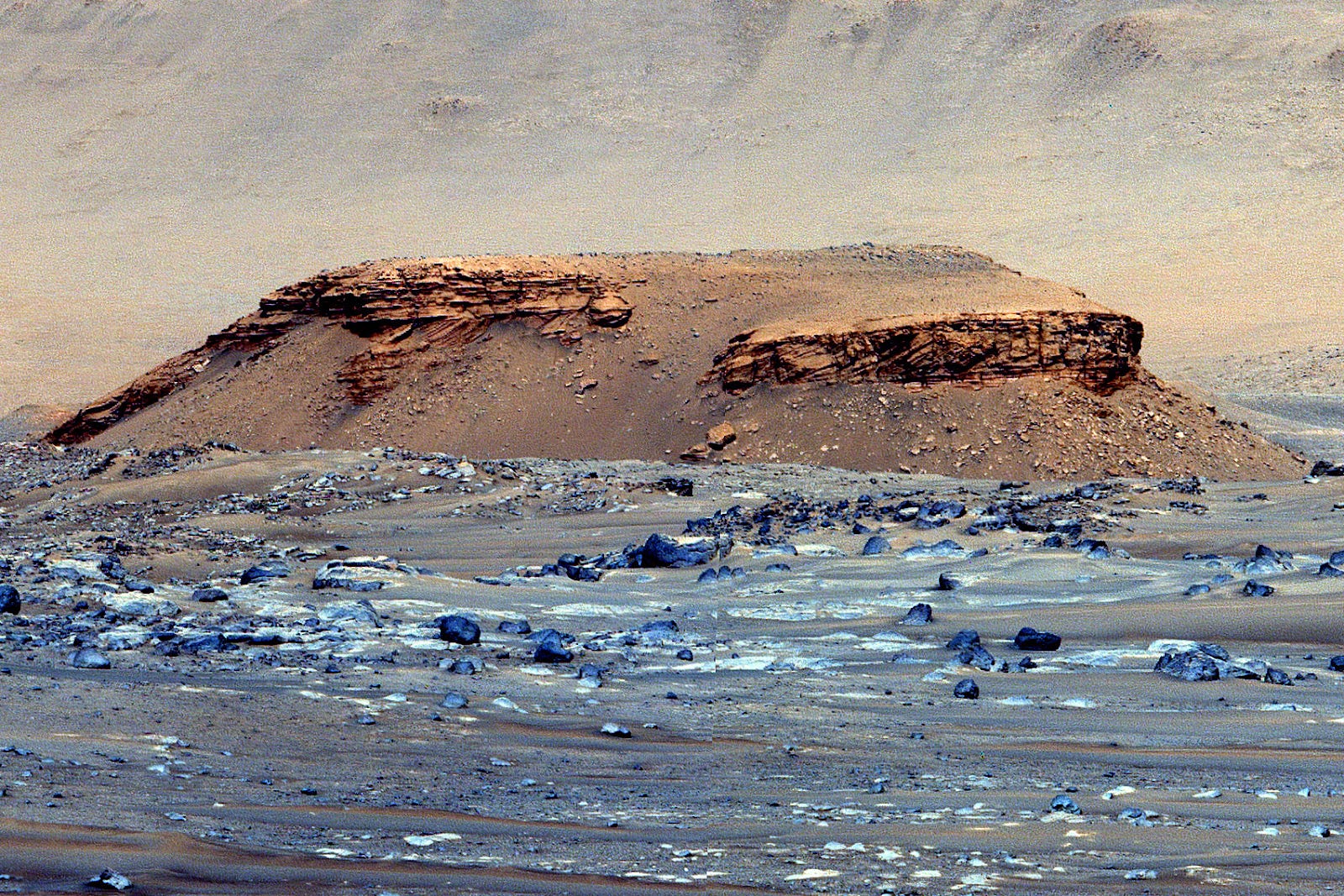
Jezero Crater, Mars. February 18, 2021.
The Perseverance rover is seven minutes into the most terrifying descent in NASA’s history. Twenty-one miles above Martian terrain, cutting through atmos at Mach 15, wrapped in a heat shield glowing at 2,370°F.
Engineers hold their breath inside mission control.
They won’t know if the rover survived for another eleven minutes (the time it takes radio signals to crawl 128 million miles back to Earth).
Then, signal arrives.
Video starts arriving. It’s high-def footage of the descent and we can see the parachute deployment with the sky crane lowering the rover on cables.
The bandwidth between Mars and Earth is around 32 kilobits per second - slower than 1998 dial-up. One minute of raw HD video would take at least a month to transmit. Yet within days, the world was watching cinema-quality footage of one of humanity’s greatest engineering achievements.
So how did NASA do it?
The same way YouTube does. And Netflix. Processing 500 hours of HD video every minute straight to your phone. The same way TikTok compresses a billion dance videos. Or the way your Ring doorbell records intruders and your PlayStation streams gameplay to Twitch.
FFmpeg.
A single piece of software written by a reclusive French genius who once held the world record for calculating digits of Pi, maintained by a loose confederation of volunteers who spend their free time arguing on online forums about video codecs, and funded by… well, that’s the problem.
Almost nobody knows they or it exists.
This is the story of the code powering the internet: created by a genius who vanished, split apart by civil war, and kept alive by developers who could be making $500K at Google but choose not to.
THE FRENCH CONNECTION

Born in Grenoble, France in 1972, Fabrice Bellard attended École Polytechnique and Télécom Paris. French institutions known for churning out mathematicians who think in algorithms the way poets think in metaphors.
At nine years old, he was already programming on a calculator. At 17, he wrote a compression tool that became standard on MS-DOS. In 1997, at 25, he discovered a new formula for calculating Pi which was 43% faster than the previous. At 28, he calculated the largest-known prime number using source code only 438 bytes long.
By 2000, Bellard had already shipped more software than most programmers dream of in a lifetime.
But the state of the digital world annoyed him so he decided to fix it.
WINDOWS ‘00
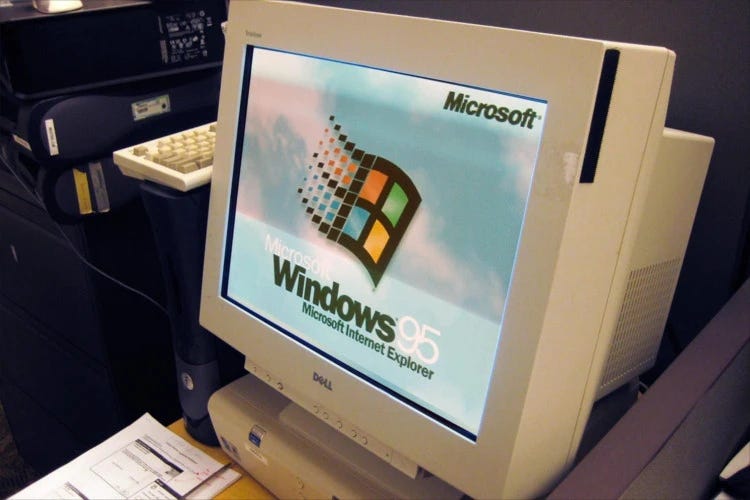
Picture the internet in ‘99. You download a video and double-click it but nothing happens.
You need RealPlayer. Or QuickTime. Or Windows Media Player. But each player only handled its own formats and a video encoded on Windows wouldn’t play on Mac or Linux.
On December 20, 2000, Bellard pushed the first commit of FFmpeg under the pseudonym “Gérard Lantau” to shield against patent lawsuits. “FF” for “Fast Forward.” “mpeg” for the Moving Picture Experts Group.
Where other projects wrapped closed-source binaries, Bellard wrote his own decoders from scratch in brutally optimized C. FFmpeg was completely self-contained.
He drew a hard line between the “container” (the file format: AVI, MP4, MKV) and the “stream” (the actual video and audio data). That separation meant you could remux without re-encoding, saving hours of processing time.
To this day, the entire architecture rests on the logic of pulling videos apart and putting them back together.
Twenty-five years of software. One idea.
FFmpeg is a mere black terminal window and a blinking cursor. You type a command like ffmpeg -i input.mp4 output.avi and a single line executes millions of lines of code. YouTube runs a fancier version of that exact command to transcode 500 hours of video every minute.
The documentation runs thousands of pages with maybe only three people on Earth fully understanding it.
By 2004, Bellard had built the foundation for the most important media software in history. Then he left and handed the project to a developer named Michael Niedermayer and moved on to his next obsession. His problem was solved and the rest of the world was left to figure out the rest.
But we all know that’s not how this ends.
C++OUP D’ETAT
From 2004 to 2011, Michael Niedermayer was FFmpeg’s engine, making the software technically unstoppable.
He was a perfectionist with an intuitive understanding of video compression, personally writing or optimizing many of the decoders that gave FFmpeg its speed. He cared about making FFmpeg handle every video format, no matter how obscure. And on that metric, he delivered.
But the project’s culture became a point of friction.
FFmpeg was fast-moving and unstructured, with Niedermayer as the final word on what got merged. Some developers thrived in that environment whilst others found it impenetrable. A growing faction wanted clean code and predictability but FFmpeg was running a circus.
And in early 2011, key developers decided to stage a coup.
They seized control of the servers.
Mailing lists.
Issue trackers.
The documentation.
Their plan was to oust Niedermayer and drag FFmpeg back to modernity.
Just one problem.
They didn’t control the domain name: ffmpeg.org.
Fabrice did.
The rebels sent him emails, making their case.
Bellard: “No.”
On March 13, 2011, the rebels retreated and announced a fork: Libav and took a chunk of developers with them. Major Linux. Debian, Ubuntu, all switched from FFmpeg to Libav. This created a situation where millions of users typing “ffmpeg” in their terminal were actually running Libav’s avconv tool, which would print a deprecation warning for the command they thought they were using.
Niedermayer and the remaining FFmpeg developers monitored Libav’s repository making sure any bug fix or improvement Libav committed was ported back into FFmpeg. This was feasible because the codebases were still structurally similar.
A one-way street formed: contribute to Libav, and your code ended up in FFmpeg within hours.
FFmpeg had now absorbed every improvement while maintaining its broader format support but the civil war had taken its toll on the person holding it all together:
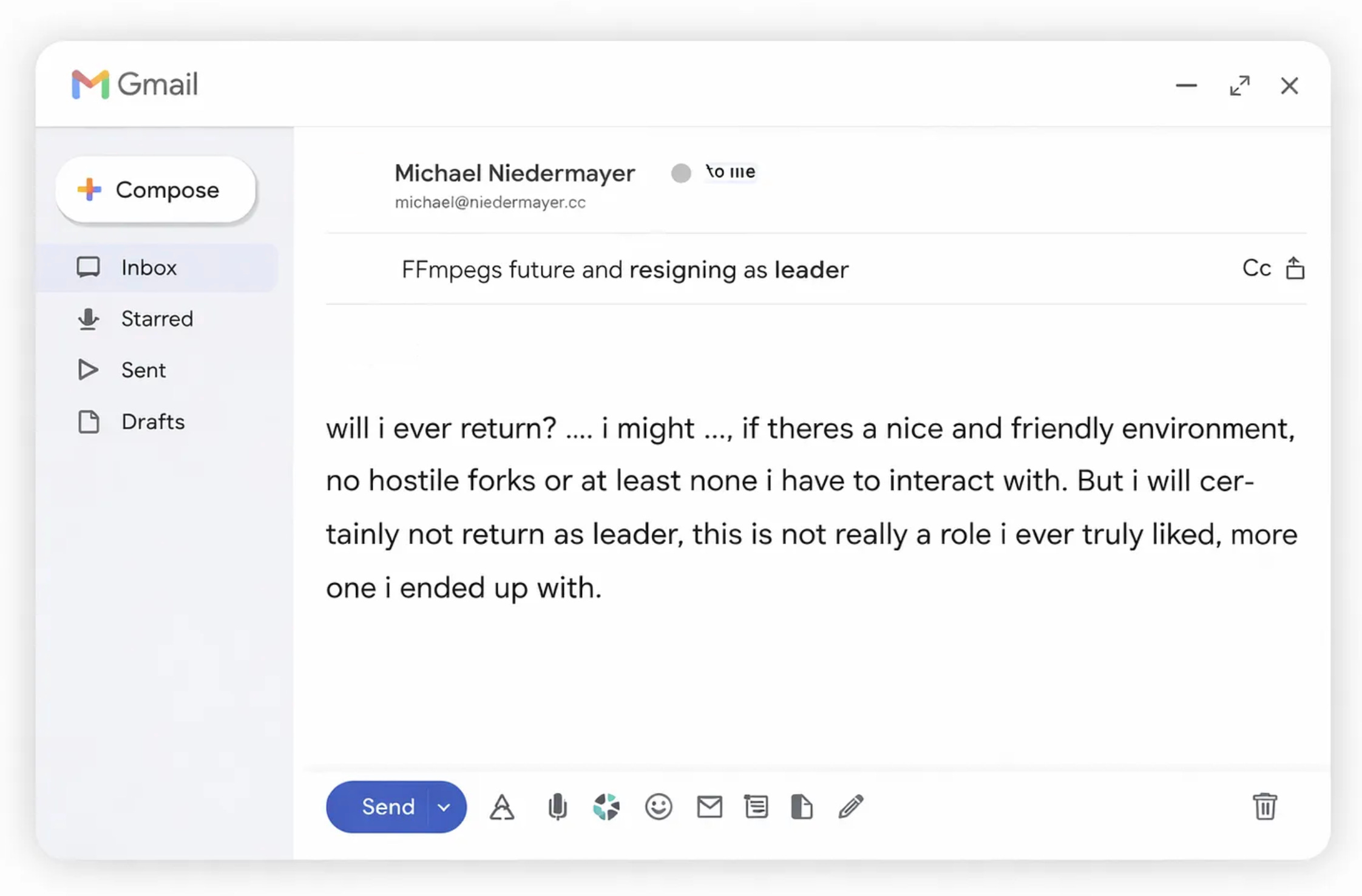
Full email here.
FFmpeg now had everything Libav had, plus its own features, plus support for obscure formats Libav had dropped in the name of cleanliness. Users didn’t care about governance philosophy over whether their video played.
By 2015, the war was over and FFmpeg had won.
A TRILLION-DOLLAR HOBBY
FFmpeg powers YouTube, Netflix, Instagram, and just about half the internet so you’d assume it’s run like a big corp. It’s not.
It’s less a company and more a loosely federated hobby project held together by email lists and IRC channels.
Most contributors drift in and out. Some treat it as a hobby whilst others are paid indirectly via consulting. Bursts of activity follow new codecs or client-driven fires and it’s generally only Michael who commits to the codebase constantly.
In person meetings are as rare as you’d expect.
And when they do meet, it’s at industry events like IBC or NAB and weekly Jitsi calls exist for small subsets of contributors.
Many core developers have never even met or spoken to Michael.
The FFMPEG WEB
YOUTUBE
YouTube processes 500 hours of video every minute.
Every sixty seconds, users upload 30,000 minutes of footage.
Each one arrives in whatever format the user happens to export, and each one needs to be converted into six different resolutions. Then encoded with three different codecs for compatibility and efficiency. Then…. segmented for adaptive streaming so your video doesn’t buffer when you’re watching on the toilet.
Google built custom hardware to handle the load but the software orchestrating those chips was always FFmpeg.
Well, a heavily modified version Google will never open-source because it contains their coding secrets but the foundation is Bellard’s code.
And that code now processes more video in one day than existed in the entire world when he wrote it.
NETFLIX
Netflix’s relationship with FFmpeg is even more complex.
When you press play on Stranger Things, your device doesn’t receive a single video file. It receives a stream that dynamically switches between dozens of versions of the same episode, each one optimized for different network conditions and screen sizes.
Netflix pioneered what they call “per-title encoding,” where the compression parameters are tuned specifically for the content itself.
An MCU film with rapid motion needs a higher bitrate than a dialogue-heavy period drama like The Crown.
This optimization saves the company millions of dollars in bandwidth costs every year while maintaining the visual quality that keeps subscribers from canceling.
And FFmpeg executes every one of those encodes. Billions of them.
SOCIAL
Instagram, TikTok, Twitter.
Here’s where it gets interesting because they also use FFmpeg to make your video look worse.
Upload a 4K video to Instagram and watch what happens. Instagram transcodes it to 1080p, applies aggressive compression, and serves back a file roughly one-tenth the size you uploaded.
TikTok is worse.
Their compression algorithm is powered by FFmpeg but optimized for mobile screens and doomscrolling. It’s an entire system built on the truth you’ll probably watch the video once and scroll past it within 5 seconds.
Twitter famously had the worst video quality of any major platform, with compression so bad that text sometimes became unreadable. Under Elon Musk, the platform allegedly improved encoding settings but still uses FFmpeg.
The point is this: your video never stays your video.
The moment you upload it, FFmpeg transforms it into whatever form the platform deems acceptable.
You’re just a user providing content and they’re the infrastructure deciding what that content becomes.
A genius built the backbone of video—then vanished - Part 2

In Part 1, we explored how Fabrice Bellard created FFmpeg in 2000, walked away in 2004, and left it in Michael Niedermayer's hands, who then survived a civil war that nearly tore the project apart.
Part 2 is here, where we look at the security exploits that have already worked. The "bus factor" calculation that keeps engineers awake at night. And the zero-day scenario where the web goes dark because ffmpeg contributors finally had enough of 3 AM emails.