
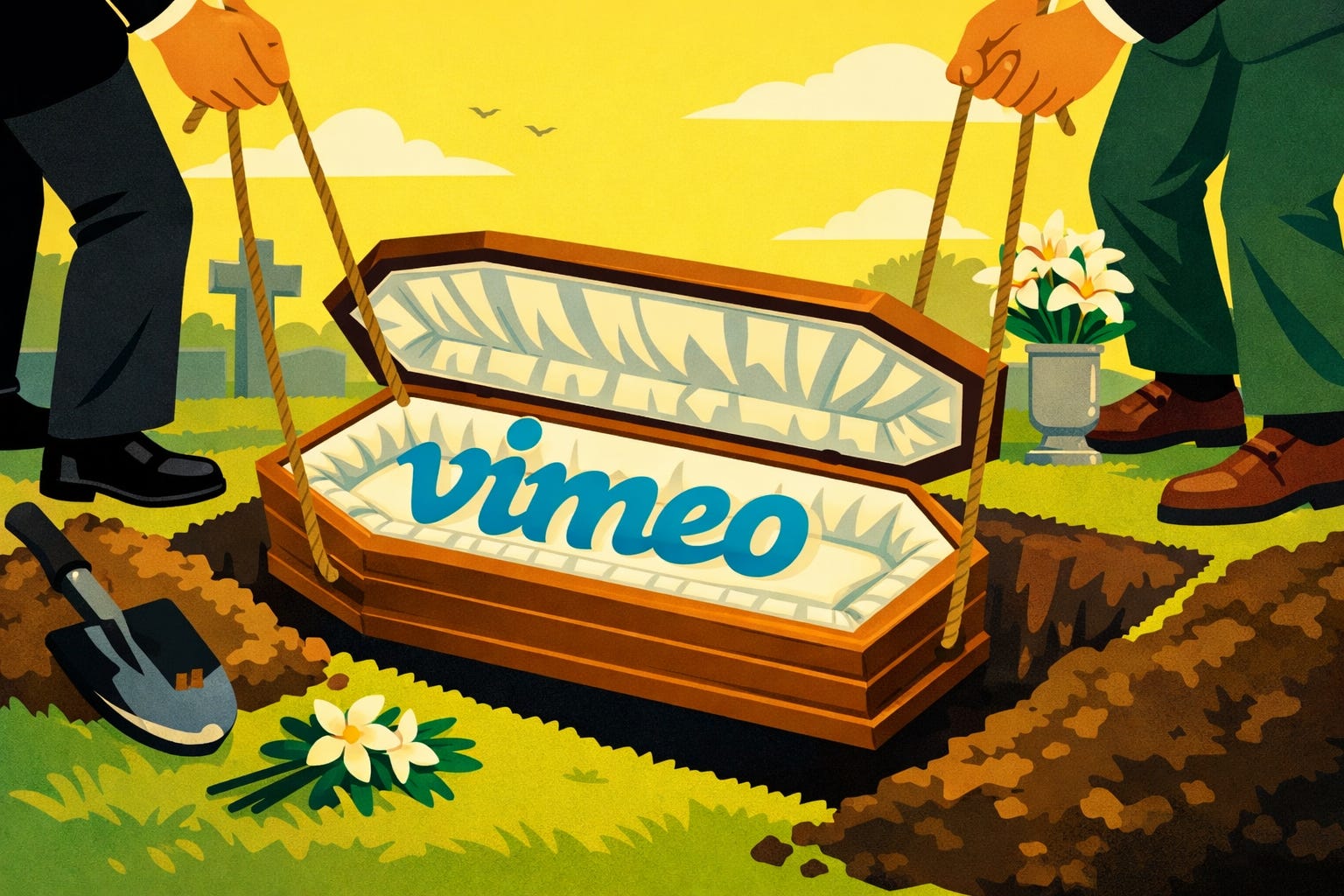
This week’s letter includes: Vimeo laying off its entire video team because private equity thinks a video platform doesn’t need people who understand video, Ryan Coogler’s vampire horror breaking a 75-year Oscar record, Christopher Nolan casting Travis Scott in The Odyssey, and a camera company worth $1.2 billion that might get bought by investors who want faster returns from a brand built on moving slowly.
Render Reel
TikTok announced a new joint venture last week that acquires its U.S. assets and technically ends the ban saga that’s been dragging on for years. The immediate legal drama is over, but we now see a blueprint for how the government plans to handle other Chinese apps that get too popular too fast.
Runway released Gen-4.5 with big claims and familiar caveats: The company says it’s the “world’s top-rated video model“ with better physics and temporal consistency. But the same limitations seem to remain.
“Generalist” is becoming shorthand for taste: Michelle Higa Fox argued on It’s Nice That that the future belongs to creative generalists, but not the “Swiss Army knife” kind who collect skills. She means people with strong fundamentals and discernment: the ability to know why something should or shouldn’t be made. Her point is that AI gives you infinite options at infinite speed, which makes execution cheap but shifts all the value to judgment. If your career depends on mastering specific software, you’re vulnerable.
Warner Bros Discovery shareholders told Paramount to try again: They rejected what the company called an “inferior scheme” of a hostile takeover bid. The consolidation drama continues, just with more paperwork and worse vibes.
Vimeo’s Death by Private Equity Is Right on Schedule
It’s going from bad to worse for Vimeo, which is almost impressive given how quickly “worse” arrived. The video hosting platform just laid off what former employees are calling “most” of the company, including, allegedly, the entire video team.
Yes, the video team at the video company.
If you’re wondering who’s left, your answer is as good as mine.
This is happening just months after Italian tech holding company Bending Spoons bought Vimeo for $1.38 billion in what’s looking less like an acquisition and more like an assisted exit. The layoffs came on January 20, barely enough time for new employees to figure out where the good bathroom is, let alone what their jobs were supposed to be.
Vimeo had already cut 10% of its workforce last September, so this is the second round of “we’re committed to growing Vimeo” that somehow involves dramatically fewer people employed by Vimeo.
Bending Spoons has previous with this: buy a tech company past its peak, slash headcount, run it lean, and extract whatever margin is left. They did it with Evernote in 2022, Meetup and WeTransfer in 2024, and AOL and Eventbrite in 2025.
WeTransfer is the most instructive case study here with 75% of their staff gone within months of acquisition.
What makes the Vimeo situation particularly bleak is that the company’s whole value proposition was supposed to be the opposite of this.
Founded in 2004, one year before YouTube, Vimeo positioned itself as the premium alternative for creators who cared about quality over virality.
CEO Philip Moyer literally said “our goal is to cut through the noise, to be the platform of trust” when talking about their AI features last year.
But trust requires humans.
Curation requires taste. And taste requires the kind of institutional knowledge that lives in, say, a video team that understands what makes good video good.
The irony is that Vimeo’s stock nearly doubled late last year after announcing tools to fight AI slop. The market liked that! People wanted a platform that would filter out garbage and elevate quality.
But you can’t build that with skeleton crew headcount and private equity austerity. You need editors, moderators, people who understand context and culture and what makes something worth watching.
Christopher Nolan cast Travis Scott in The Odyssey and somehow this tracks: The rapper appears in the new Odyssey trailer which is the kind of stunt casting that makes you go “what on earth is Nolan doing?” until you remember he’s done this before (Harry Styles in Dunkirk, David Bowie in The Prestige). Scott previously collaborated with Nolan on the Tenet soundtrack, so this is less random than it appears.
Sinners Rewrote Oscar History, and the Academy Didn’t See It Coming
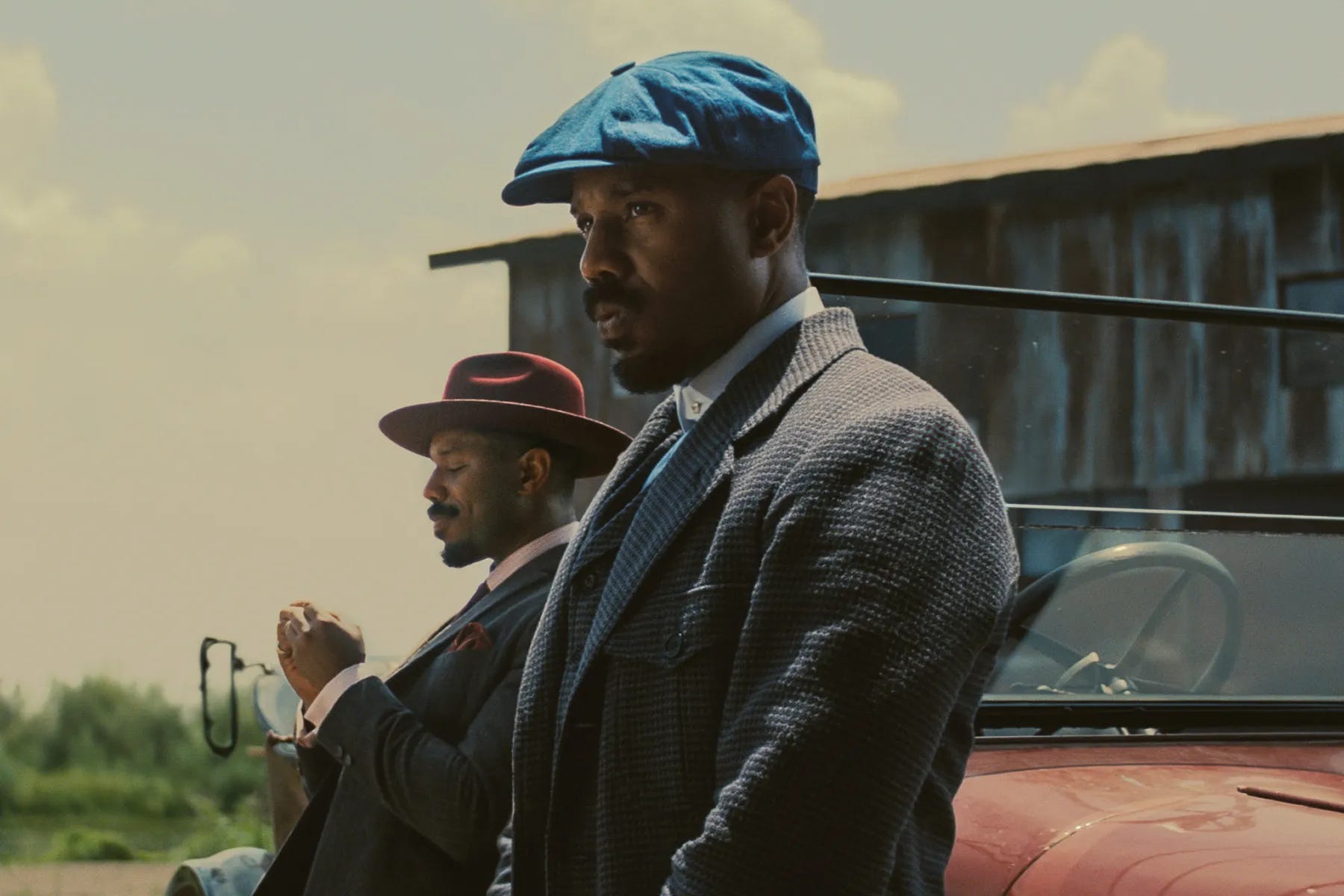
Ryan Coogler’s Sinners shattered a ceiling that had stood for 75 years. The vampire horror film set during Jim Crow secured 16 Oscar nominations, breaking the record of 14 held by All About Eve (1950), Titanic (1997), and La La Land (2016).
Sinners blew through it because of a structural change: the Academy finally introduced a Best Casting category in 2024, the first new competitive award since Best Animated Feature in 2001. That extra nomination slot pushed Sinners from a hypothetical 15 to the actual 16. Without it, the film still would have set a new record, but the Casting award made it mathematically impossible for any previous film to have matched.
Horror has spent a century in the Academy’s tech ghetto.
Good for makeup and sound design, rarely a best Picture. Only six horror films have ever been nominated for Best Picture. One won (The Silence of the Lambs in 1991). Sinners is the first vampire film ever nominated for Picture, Director, and Actor simultaneously.
The Warner Bros. context adds another layer of absurdity. The studio achieved its best nomination morning ever with 33 total nods, including both Sinners (16) and Paul Thomas Anderson’s One Battle After Another (13), while actively being sold to Netflix for $72 billion. It’s a power move and a funeral at the same time.
Meanwhile, PTA remains the most nominated filmmaker in history without a competitive win.
One Battle brought him three more personal nods (Picture, Director, Screenplay), continuing a streak that now rivals Stanley Kubrick’s. He’s 0-for-many and staring down the Sinners juggernaut. At the opposite end, Timothée Chalamet became the youngest actor ever to receive three Best Actor nominations at age 30 (matching Marlon Brando).
The non-English film surge continued with Joachim Trier’s Sentimental Value landing four acting nominations, breaking the previous record of three.
Whether Sinners converts its 16 nominations into wins on March 15 remains to be seen. Titanic won 11 of its 14. La La Land famously lost Best Picture despite leading the pack. But the number 16 is now the benchmark, a moment when a genre film with a majority-Black cast and a story rooted in specific American trauma achieved the kind of saturation-level Academy support previously reserved for musicals about Hollywood or boats that sink.
The Best Film Editing race has one winner in my eyes, and it’s Andy Jurgensen for One Battle After Another. Film editing is a strange category because unlike cinematography or costume design, the best work often doesn’t announce itself. It’s about disappearing into the service of the film, extracting the absolute best of a director’s vision, a story’s momentum, and actors’ performances.
Jurgensen did exactly that with One Battle’s near-three-hour runtime. In a year where Sinners is dominating the conversation with 16 nominations, Jurgensen’s work stands out as the kind of invisible excellence that makes a film great rather than just impressive. If the Academy understands what editing actually is, this one’s not even close.
Leica explores $1.2 billion sale: Up from under $100 million in 2004, an absurd return for a niche brand that survived the smartphone era by leaning into heritage and luxury. Leica’s whole thing is being a slow-moving prestige brand with mystique, but new investors in 2026 want fast growth and faster returns, which typically means diluting what made the brand special in the first place.
Adobe commits $10 million to creators via its Film & TV Fund: The program supports emerging and mid-career filmmakers with grants, product access, and training, announced at Sundance with application details coming “later this year.” For now, interested filmmakers can email createchange@adobe.com to get updates.
This week we’re watching:
YouTube updated its advertiser-friendly guidelines to allow full ad revenue on content about abortion, self-harm, suicide, and domestic/sexual abuse. As long as it’s not explicitly graphic or descriptive.
Previously, these topics got slapped with the yellow dollar icon (limited monetization) no matter how you handled them, which meant serious narrative work got penalized the same way slop did.
Now creators can actually earn money for handling sensitive themes with restraint, instead of sanding their scripts into brand-safe mush. Topics like child abuse and eating disorders are still off-limits.
YouTube’s framing this as “listening to creator feedback,” which really means they finally figured out their algorithm couldn’t tell the difference between art and exploitation, and advertisers are fine with it as long as it’s not too graphic.
Retail Therapy
Ruko’s sprinting to fill DJI drone gap

Ruko just launched the U11MINI 4K, a pocket aerial drone with 4K/30fps video, 8K stills, a 48MP sensor, 3-axis gimbal, and an integrated touchscreen controller so you don’t need to tether to your phone.
It weighs under 249g (FAA-exempt), claims 64 minutes of flight time and 20k ft of range, and costs $389.99. The specs look decent on paper, but calling it “your first pocket aerial drone” is doing a lot of heavy lifting.
This is a company most people haven’t heard of trying to replace DJI, which dominated the consumer drone market for a reason.
Whether Ruko (or any of the other inevitable challengers) can actually match DJI’s build quality, software, and camera performance remains to be seen, but at least there’s something available while the FCC ban keeps new DJI units out of the US.