
Hi everyone!
I’m packing up and heading to Cine Gear LA this week — caffeine, demos, and questionable booth snacks included.
If you’re going to be there, or if you’ll be in LA, I’d love to meet up and show you what we’ve been building with Eddie AI.
Book a time to meet with us.
Cine Gear LA, June 5–6, 2026
Eddie AI’s Booth: S1611, Stage 16
Location: Universal Studios Lot, Universal City, CA
—Shamir

Also this week:
Higgsfield screened an AI feature at “Cannes”, the Alamo Drafthouse phone petition hit 10,000 signatures, Hollywood’s top 18 executives made $746 million while 17,000 jobs were cut, and Ron Howard put real actors in real fire in 1991 and nobody’s tried it since.
Higgsfield screens 95-minute AI feature at Cannes but not at Cannes. Hell Grind was made by 15 people in 14 days for under $500K, generating 16,181 shots to land 253 final ones. Filmmakers received backlash for not making it clear it wasn’t actually part of the official festival
Amazon greenlit three AI-generated kids’ shows and one creator already dropped out. Jorge Gutierrez withdrew his series Punky Duck 48 hours after announcing it, following backlash over his previous anti-AI stance. BuzzFeed’s entry also drew fire from the original character creator.
The Alamo Drafthouse phone petition hit 10,000 signatures. The chain now requires mobile ordering during movies but the Austin audience booed the new policy in unison.
A self-funded audio creator went from indie projects to showrunning DC’s Batman podcast in four years. Hit #1 on Apple Podcasts. Worth reading if you’ve never considered audio as a final destination for cinematic storytelling.
IndieWire gathered five experts on short film strategy at Cannes. The biggest takeaway: apply to festivals when submissions open, not at the deadline. Apply late and you’re slotting into someone else’s programme. A 30-minute short takes the slot of two films. And if you’re building an audience in the US, start with a mailing list, not a social following. Instagram doesn’t convert but email does.
Cate Blanchett announced the second round of the Displacement Film Fund at Cannes five filmmakers receive €100,000 each for shorts about displacement, with premieres at IFFR 2027. The first round’s films got sold-out screenings and are heading to Film Forum for Oscar qualifying runs.
The YouTube Auteurs
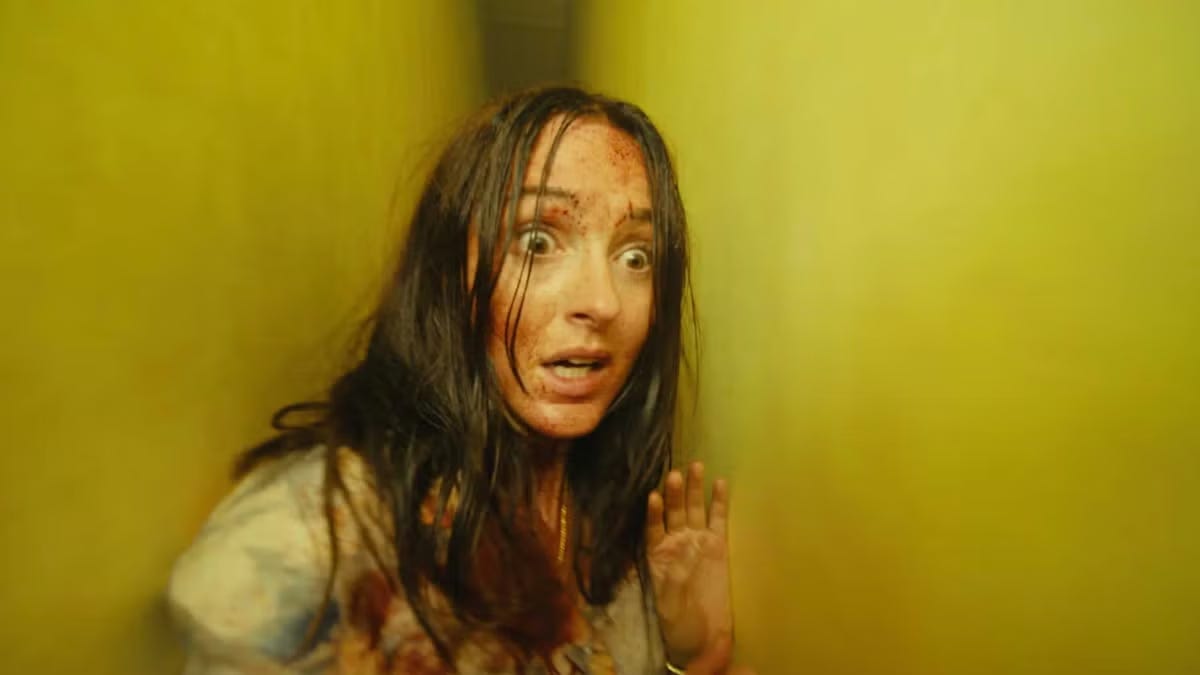
Three horror films are dominating the US box office right now, and none of them came through the traditional pipeline.
Curry Barker’s Obsession, made for under $1 million, Markiplier’s Iron Lung, self-distributed on a $4 million budget with practically zero marketing spend, crossed $50 million worldwide.
And Kane Parsons’ Backrooms, directed by a 20-year-old for A24, is tracking $40–50 million in its opening weekend breaking the previous record of $25 million for Civil War.
YouTube is the thread that connects all of them.
These filmmakers didn’t bother with film schools, proof-of-concept shorts at Sundance, or development deals. Their audiences were built on YouTube and let the algorithm do what festival programmers used to do which is surface talent.
Parsons uploaded his first Backrooms video as a high schooler testing Blender animations and it hit 20 million views in two weeks.
Barker has reportedly been offered eight figures sight unseen for his next pitch. Markiplier just announced Iron Lung‘s digital release will be a YouTube exclusive because, as he put it at Cannes, “YouTube is my home.”
Horror has always been the genre where unknown directors break through cheaply. Think of Sam Raimi, James Wan, Robert Eggers, Ari Aster all started with shorts.
But the difference now is where the audience relationship forms.
Hollywood is scrambling to catch up.
Dylan Clark has been tapped to adapt his YouTube hit Portrait of God for Universal and offered the Blair Witch reboot. Neon signed Sam Evenson to adapt his viral short Mora. The pipeline from YouTube upload to studio deal is now shorter than the pipeline from film school to first feature.
None of this means YouTube replaces the festival circuit as Sundance, Cannes, and TIFF still do something an algorithm can’t. They curate and confer legitimacy in ways that matter for a filmmaker’s long-term career.
But for directors who never considered YouTube as part of their path, this moment is worth paying attention to. It’s not the only route. But pretending it isn’t one at all means ignoring the three films currently dominating the box office.
Also Markiplier is building a YouTube distribution system so other filmmakers can sell their films the same way.
If you wanted a single image to capture where independent film distribution is heading, it’s a YouTuber with 37 million subscribers hand-packaging Blu-rays in his living room while Hollywood executives try to figure out what just happened.
Ron Howard put real actors in real fire for Backdraft in 1991 and nobody’s done it since. The crew built a steel tank called “Big Bertha” that ejected flame at 1,200 square feet. ILM handled what was too dangerous to shoot live. Thirty-five years later, it’s still the benchmark for practical fire effects on screen.
Hollywood’s top 18 execs made $746 million in 2025 while 17,000 jobs were cut across the industry. Zaslav topped the list at $165 million with a pay ratio of 1,378 to 1. AMC Theatres’ CEO made $15 million while the median employee made $12,756. A Los Angeles nonprofit is pushing an “Overpaid CEO Tax” for the November ballot.
DJI released an independent security audit showing no backdoors or data leaving the US. The firm tested two drone models over five months and found zero critical vulnerabilities. DJI is using the findings to appeal its FCC ban. Whether a clean pen test shifts a decision rooted in geopolitics is another question.
HOVERAir launched a waterproof self-flying drone that takes off and lands on water. The AQUA is 249g, shoots 4K at 100fps, tracks subjects via millimeter-wave radar, and floats if it tips over. Built for surfers and water sports, not adapted from a land drone. Starts at $1,299.
This week we’re watching:
A documentary about the computer graphics lab that built the backbone of modern animation and the feature film it never finished.
In 1974, eccentric millionaire Alexander Schure founded a CG lab at the New York Institute of Technology in a mansion on Long Island’s Gold Coast, hired Ed Catmull to run it, and told his animators he wouldn’t need them once the computers worked.
The team invented the alpha channel, the first RGB digital paint system, and reflection mapping. They tried to make the world’s first all-CG feature, The Works, but one engineer calculated it would take a whole seven years to render.
Then George Lucas called, Catmull and Alvie Ray Smith left for Lucasfilm, and the lab that seeded Pixar, RenderMan, and modern VFX slowly wound down.
A must watch for anyone interested in the origins story of modern animation.
Retail Therapy: The camera that watches your life so you don’t have to remember it

The Looki L1 is a clip-on AI camera that records short clips throughout your day and organises everything by context automatically. At the end of the day, it generates a highlight reel or, and this is genuinely unhinged, turns your footage into comic strips.
You can also ask questions about your own day, like what you ate or how long you worked, and it answers from the footage.
It’s a personal surveillance device you voluntarily wear, except they promise end-to-end encryption and no data training.
Thirteen-hour battery, IP67 waterproofing, and the existential question of whether you want an AI that knows more about your Tuesday than you do. This could be a really fun gadget for a documentary filmmaker or a YouTuber who’s been meaning to vlog for years but never does.
Available at looki.ai for $249.99
https://shapeofcinema.substack.com/p/obsession-2026?r=8dbojf