
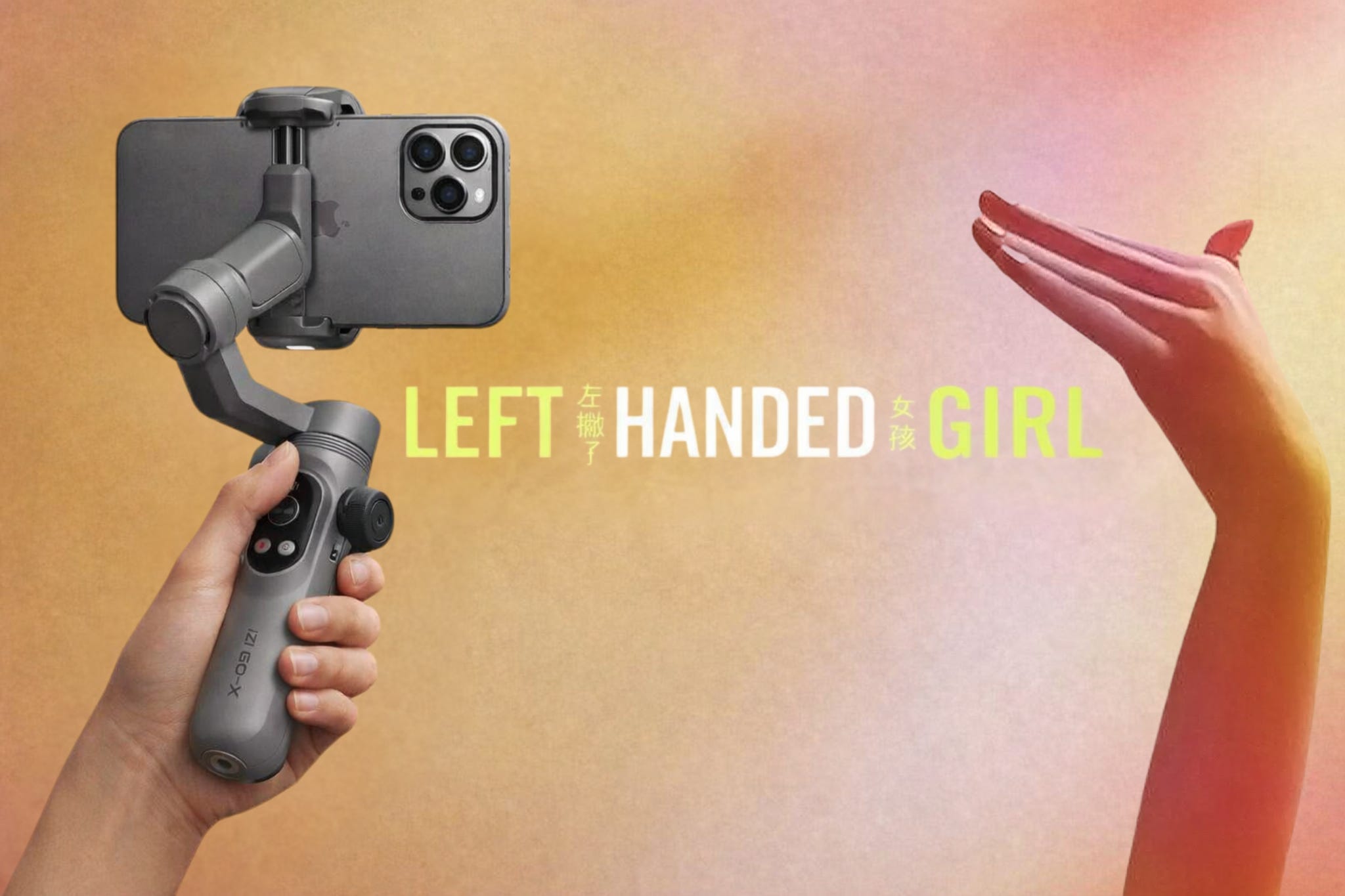
iPhone filmmaking has been around a while now but it was Sean Baker’s Tangerine that really proved its legitimacy at Sundance way back in 2015.
Baker went on to make The Florida Project and Red Rocket, but there is one name far fewer people would have noticed: Shih-Ching Tsou, his long-time producer, closest collaborator, and right-hand woman.
Tsou and Baker met as students at The New School in 2004, but it wasn’t until 2025 that Tsou directed her solo feature debut, Left-Handed Girl.
The film premiered at Cannes, was selected as Taiwan’s Oscar submission, and is now streaming on Netflix. It follows Shu-Fen, a single mother drowning in her late husband’s medical debt, as her teenage daughter I-Ann sells stimulants from neon-lit roadside kiosks.
Meanwhile, her five-year-old daughter I-Jing is punished for being left-handed, a trait her grandfather condemns as the “Devil Hand.”
In many non-Western cultures, using your left hand for eating or greeting is considered disrespectful at best, and devil work at worst. Being born into a Nigerian household, I know the struggle :)
For Tsou, the only possible camera to capture the intimacy of a colourfully chaotic Taipei, was the iPhone.
And what I found most interesting about the film is that the title isn’t just about a child using her “wrong” hand. It’s also about everything deemed “wrong” by traditional cinema: the wrong hand, the wrong camera, the wrong stories told the wrong way.
But it all feels right.
From Right to Left
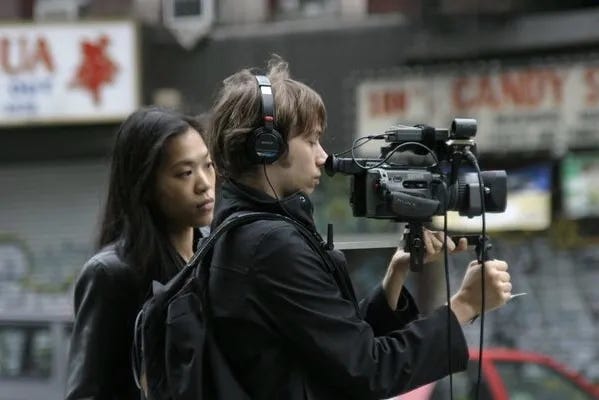
In 2003, Tsou and Baker co-directed Take Out, a film about a Chinese delivery worker racing to pay off a debt. Shot guerrilla-style in a real restaurant and on rainy New York streets without permits.
For the next two decades, they refined this aesthetic while their roles shifted. Baker directed films like Tangerine, The Florida Project, and Red Rocket while Tsou produced.
When Baker shot Tangerine on an iPhone 5s in 2015, Tsou witnessed firsthand how the tech enabled stories traditional cinema couldn’t access.
With Left-Handed Girl, they swapped positions, with Tsou directing while Baker produced and edited (also co-wrote).
Baker’s editing brings Western indie pacing to Taiwanese family drama, creating sharp, unsentimental cuts that differ from the long takes typical of Taiwanese directors like Hou Hsiao-Hsien.
Dogme 25

There’s a Dogme 95 feel to Left-Handed Girl, which is entirely by design.
For those who missed it (or weren’t born yet): Dogme 95 was a filmmaking manifesto launched in 1995 by Danish auteurs Lars von Trier and Thomas Vinterberg.
They were reacting against what they saw as Hollywood’s cosmetic excess. Subjective lighting, filters, orchestral scores and any other elements doing emotional work the actors should be doing.
The rules were strict:
shoot on location
use only natural light
no added music unless it’s happening in the scene
handheld cameras only
no genre conventions
no director credit.
Left-Handed Girl doesn’t exactly follow all rules but it functions as a spiritual successor. Call it “Neo-Dogme” for the streaming era.
Devil Hand, Devil Camera

Left-Handed Girl’s central metaphor aligns perfectly with its methodology. The grandfather’s prohibition against the “Devil Hand” mirrors cinema’s traditionalist rejection of the iPhone as “not a real camera.”
By using the wrong tool, Tsou finds truer, more intimate expression. By using the wrong tool, the camera can hide. For five-year-old Nina Ye, an iPhone is a familiar, almost invisible toy, while an Arri Alexa is closer to a weapon.
That discretion becomes practical the moment the film enters the Tonghua Night Market.
There, traditional cinematography quickly breaks down. Aisles are barely three feet wide. Light shifts every few feet. From the fluorescent seafood stalls to warm tungsten fried chicken stands to the flashing RGB from arcade machines.
You’d be forgiven for thinking Tsou wanted to torture her DPs, Ko-Chin Chen and Tzu-Hao Kao but they made the chaos work beautifully.
They armed themselves with five iPhone 13 Pro Max units, borrowed from Apple. Mounted in Beastgrip Pro cages with prototype anamorphic lenses to get that widescreen look and horizontal lens flares.
They also added “Black Forest” diffusion filters to soften the digital sharpness, making the neon lights bloom instead of just glaring.
The phones ran FiLMiC Pro, specifically the 4K Lux mode, which maximizes dynamic range in low light The iPhone’s built-in stabilization is good, but for the long tracking shots they used gimbals.
Post is where the magic actually happened, as it usually does with smartphone filmmaking.
The color grading in DaVinci Resolve took the flat, log-style footage from FiLMiC Pro and sculpted it into the final saturated look.
Colorists Luke Cahill and Chin Chia Chan managed to match the wildly different color temperatures of the market stalls and make everything feel cohesive instead of looking like your shitty vacation footage.
Waiting for Baker
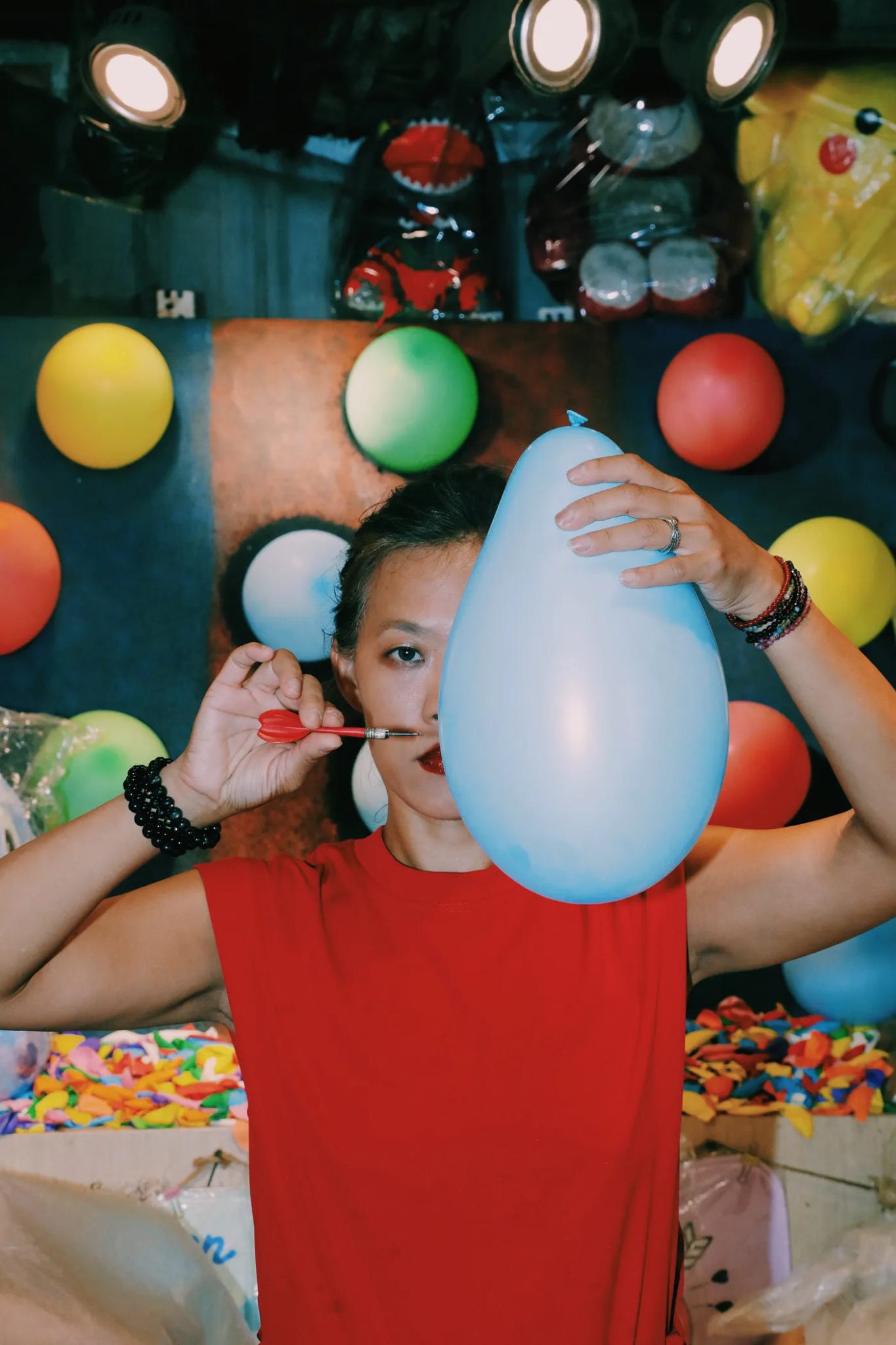
The idea for Left-Handed Girl dates back to 2001, when Tsou was still in high school and her grandfather scolded her for holding a kitchen knife with her left hand, calling it “the devil’s hand.”
She mentioned the moment to Baker, who immediately saw a film in it. They took photos during a trip to Taiwan that year and began developing the concept, but it was far too ambitious for two film students, so they shelved it and made Take Out instead.
Take Out toured festivals starting in 2004 but didn’t get a theatrical release until 2008. Around the same time, Baker’s Prince of Broadway came out, and they thought maybe now was the moment.
In 2010, they returned to Taiwan for a month for further development. Two years later the project was announced but fell apart when financing collapsed. Even as Baker’s star power rose, no one was eager to fund a low-budget Taiwanese-language drama about women working a night market.
They finally managed to secure financing and shoot in 2022 over 35 days.
But Tsou had to wait yet again.
This time for Baker to edit, which he couldn’t do because he was finishing Anora. Two more years. By the time Left-Handed Girl finally premiered at Cannes in 2025, Baker had just won four Oscars, including Best Film Editing 2 months prior.
Tsou has said the timing somehow worked out, which feels like an understatement.
Because an iPhone-shot film probably does land a bit differently when your editor/producer/ co-writer just swept the Academy Awards.
Left-Handed Girl is currently streaming on Netflix and you should check it out :)